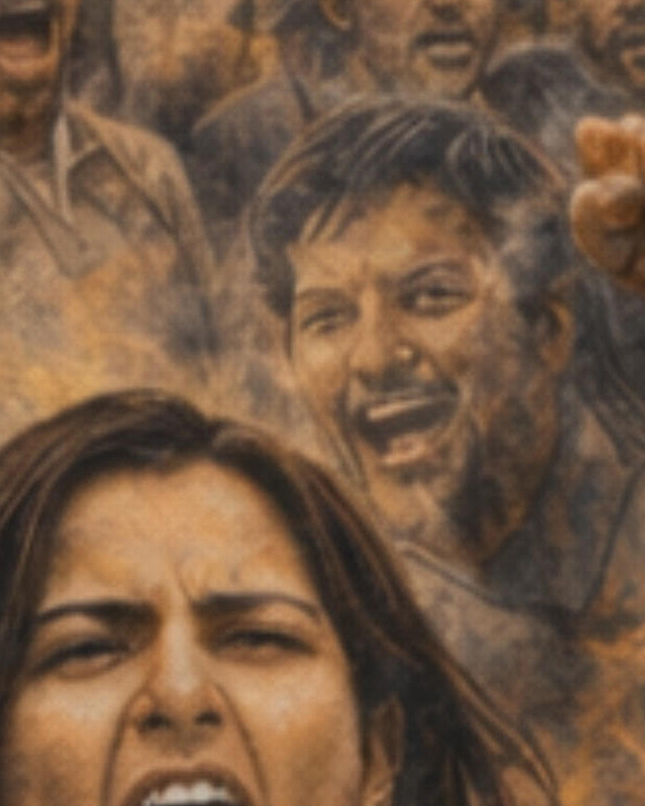
Iran is witnessing a surge of protests across multiple cities, as frustrations over a collapsing currency and economic hardship have ignited broader political dissent in recent days . What began over the past few days as spontaneous demonstrations by shopkeepers and traders in Tehran – sparked by the rial’s plunge to a record low – has quickly spread nationwide . Students at universities from the capital to provincial cities have joined in, and many ordinary citizens are taking to the streets. Initially focused on plummeting living standards and inflation hovering around 40–50%, the protests have evolved into a wider cry for freedom, equality, and democratic change, with chants targeting Iran’s authoritarian rulers. This upheaval poses a serious challenge to the country’s conservative establishment, which now faces both public anger at home and mounting pressure from abroad – including renewed international sanctions and even the specter of military strikes by its adversaries . It is the most significant unrest Iran has seen since the 2022 “Women, Life, Freedom” protests, underscoring deepening fissures between reformists and hardliners, and between the government and the governed. The immediate trigger for the latest protests has been Iran’s worsening economic crisis. Over the past year the national currency has lost nearly half its value, crashing to about 1.4 million rials per US dollar (from ~820,000 a year ago) on the unofficial market . This free-fall in the rial – accelerated after the United Nations reimposed sanctions on Iran’s economy in September – has driven up import prices and pushed inflation above 40%
Ordinary Iranians are struggling as prices of basic goods (like food, which is up 72% year-on-year) soar beyond reach . Many merchants find it impossible to price their goods amid wild currency fluctuations and fear they will incur huge losses if they sell now and cannot restock later. As one Tehran analyst explained, “Merchants don’t know if after they sell their goods today, they will be able to buy more… if they’re supposed to sell at a huge loss, they come to the streets and make themselves heard”. The breaking point came when the rial hit a historic low over the weekend, prompting shopkeepers in major Tehran markets (such as the Grand Bazaar and the electronics hub of Alaeddin Mall) to shut their stores in protest . Beginning on Sunday, December 28, crowds of traders and customers gathered in downtown Tehran chanting against the government. By the next day, strikes and rallies spread beyond the market corridors and into the streets and squares of the capital. This wave of unrest then radiated to other cities: reports describe demonstrations from Isfahan and Yazd to Hamadan, Qeshm Island, Zanjan, and beyond, as people vent their anger at economic mismanagement and hardship . Notably, this movement has bridged social groups – uniting bazaar merchants (a traditionally regime-aligned class) with university students and the broader urban public – reflecting a widening loss of faith in the government’s ability to solve the crisis Although the protests were initially economic in their grievances, they have rapidly taken on a political character. On the first day, slogans centered on the cost of living and the dollar’s exchange rate. By the second and third day, however, crowds were heard shouting “Death to the dictator!” and “Seyyed Ali will be toppled this year”, directly attacking Supreme Leader Ayatollah Ali Khamenei’s rule . In multiple cities, chants shifted to “Freedom and equality!” and even nostalgic monarchist cries like “Reza Shah, bless your soul!”, indicating a yearning for a different form of governance. This quick transition from pocketbook issues to collective political slogans suggests that the economic shock has catalyzed long-simmering discontent with Iran’s theocracy . Many Iranians, especially younger generations, are openly demanding an end to decades of authoritarian rule and clerical supervision over daily life – a sentiment encapsulated in protesters’ calls for “azadi” (freedom) and democracy alongside their economic demands. Confronted with the growing unrest, Iran’s government has offered a mixed response – combining pledges of dialogue with familiar repression. President Masoud Pezeshkian (who took office earlier in 2025) has publicly acknowledged the protesters’ grievances and struck a conciliatory tone. On December 29, he announced that he “tasked the Interior Minister to hear the legitimate demands of the protesters through dialogue with their representatives,” vowing that the government would “listen patiently” and work to resolve the problems driving people into the streets. As a gesture of accountability, Pezeshkian also accepted the resignation of Iran’s central bank chief amid the currency chaos, replacing him with former banker Abdolnaser Hemmati in an effort to restore a semblance of economic competence . Moreover, officials have signaled plans for monetary reforms and measures to protect people’s purchasing power, with the president insisting that safeguarding “the livelihood of the people” is his “daily concern”. Yet these words of outreach have been accompanied by a heavy-handed security reaction on the ground. As demonstrations entered their second and third days, authorities deployed large numbers of riot police and security forces, who confronted crowds with tear gas, baton charges, and even live ammunition in some instances . Videos verified by journalists show protesters clashing with anti-riot units in Tehran – at one point pushing back security forces until volleys of tear gas drove them back.
In the city of Hamadan, security forces reportedly opened fire directly at demonstrators, according to footage obtained by Iran International TV . A now-iconic image circulating on social media shows a lone protester sitting defiantly in the middle of a Tehran street as a column of motorcycle-mounted police approaches – a scene likened to a new “Tank Man” moment of individual courage . Such displays of defiance have been met swiftly with force: witnesses describe that the solitary protester was beaten and hauled away moments after that photo was taken. Behind the scenes, Iran’s power centers appear divided over how to handle the crisis. The elected government under Pezeshkian – considered a pragmatist or reformist-leaning figure – seems inclined toward restraint and dialogue to calm public fury . In contrast, the hardline security establishment, led by the Islamic Revolutionary Guard Corps (IRGC) and backed by Supreme Leader Khamenei, has shown little tolerance for dissent. The IRGC has ominously warned of “sedition” and “cognitive warfare” afoot, framing the protests as a foreign-influenced plot and vowing to “quell the unrest” decisively. State-controlled media, for their part, are emphasizing that the demonstrations are solely about the exchange rate and “mobile phone retailers’” woes, pointedly downplaying any anti-regime sentiment . This internal divergence – a president advocating engagement versus security forces resorting to intimidation – highlights the longstanding rift between Iran’s reformist and conservative camps. It also raises the risk of miscalculation: if the security apparatus undermines the government’s overtures by using excessive force, it could further inflame public anger and weaken the civilian leadership’s credibility. At the heart of these protests is the Iranian people’s deep frustration not only with economic misery, but with decades of political repression and social inequality. Many protesters are motivated by values of equality, liberalism, and democracy, which they feel have been denied under the Islamic Republic’s rule. This is evident in the slogans ringing out on campuses and streets: “No to scarf, no to suppression – freedom and equality!” chanted female and male students together, directly rejecting the compulsory hijab and broader patriarchal controls. Such cries harken back to the “Women, Life, Freedom” movement of 2022–23, when Iranians rose up after the death of 22-year-old Mahsa Amini to demand women’s rights and an end to clerical authoritarianism . Hundreds were killed and tens of thousands arrested in that crackdown , yet the desire for change did not disappear. Today’s demonstrators carry that torch forward, insisting on personal freedoms, gender equality, and a voice in how their country is run – principles aligned with modern liberal and leftist ideals of social justice. Protesters also speak the language of social and economic justice. Iran is a resource-rich nation, but years of corruption, mismanagement, and inequality have bred resentment among the populace. Many see a stark divide between a privileged clerical–military elite and ordinary citizens struggling to make ends meet . Economic grievances thus merge with class grievances. It is not lost on the public that even as they endure 50% inflation and joblessness, vast sums are spent on elite projects or foreign adventures, and officials live in comfort. This critique – that the system serves the few at the expense of the many – resonates with left-leaning logic emphasizing equality. Demonstrators have even adopted classic protest refrains like “Don’t be afraid, we are together,” signaling solidarity across social groups against the entrenched power structure . In short, the perspective of the people in these protests goes beyond immediate economic relief: they are fundamentally questioning the legitimacy and justice of the Islamic Republic’s governance. From calls for a secular, democratic system to demands that basic needs like water and energy be managed competently and equitably, the protesters’ vision is one of a more open, fair, and modern Iran that respects its citizens’ dignity. The current turmoil also reflects the broader context of Iran’s internal power struggle between reformists (or moderates) and hardline conservatives. Since the 1990s, Iranian politics have been defined by this tug-of-war: on one side, reformist leaders and their supporters push for gradual liberalization, social freedoms, and engagement with the world; on the other, the conservative establishment – anchored by the Supreme Leader, the IRGC, and hardline clerics – resists change and clings to ideological purity and authoritarian control. These tensions have sharpened in recent years. After a period of relative opening under President Hassan Rouhani (2013–2021), the pendulum swung back when hardliner Ebrahim Raisi took power in 2021, overseeing the brutal suppression of the 2022 protests. By 2025, facing public disillusionment and economic crisis, the regime allowed the more moderate Masoud Pezeshkian to assume the presidency, in what analysts saw as an attempt to regain public trust without ceding true power. Pezeshkian’s reformist instincts are now colliding with the deep state’s conservative reflexes, as seen in his call for dialogue versus the IRGC’s calls for a crackdown. This is not a new story in Iran: previous uprisings – from the student protests of 1999, to the Green Movement after the contested 2009 election, to the nationwide unrest in 2017–2018 – have all been flashpoints in the reformist vs. hardliner saga. Often, hopeful talk of reform has been thwarted by the hardliners’ entrenched power (backed by instruments like the Guardian Council, which vets candidates, and the security forces). The “legitimacy deficit” the state now faces, however, appears unprecedented. When even Tehran’s Grand Bazaar merchants, once stalwart backers of the clerical regime, join strikes and chant against the Supreme Leader, it signals a collapse of the old social bargain. Some in the establishment have hinted at this crisis of confidence – Iran’s own state media has grudgingly admitted to “economic mismanagement and state corruption” fueling public anger . Meanwhile, prominent reformist voices (many of whom have been silenced or sidelined) argue that only meaningful political relaxation – freeing political prisoners, allowing free elections, loosening social restrictions – can address the nation’s woes. Conservatives, however, remain wary, fearing that concessions would only embolden their opponents and lead to the dismantling of the Islamic Republic itself. Thus the impasse continues, with the fate of the protests likely to influence which faction gains the upper hand. If the unrest grows, hardliners might double down on repression (as they did in 2022), or – if faced with a general strike or untenable instability – elements of the regime could reluctantly consider compromises to appease the public. Iran’s domestic strife is unfolding against a backdrop of high international tensions, which in turn shape how both the regime and the world respond to the protests. In recent months, Tehran has been under renewed Western pressure over its nuclear and missile programs. In June 2025 a brief war erupted when Israel, with U.S. support, launched a 12-day bombing campaign against Iranian nuclear facilities – an unprecedented direct military confrontation. Although that conflict ended, it left Iran’s leadership on edge, and the economy reeling from the damage and investor panic. Washington and Tel Aviv have maintained a hard line: Donald Trump signaled support for further Israeli strikes on Iran, warning that if Tehran rebuilds its military capabilities or advances its nuclear work, the U.S. will “hit them hard” again. This hawkish stance has fed Iranian fears of an external attack – a concern the regime often exploits to justify crackdowns as “security measures.” Indeed, as protests flared this week, Iranian officials were quick to blame foreign enemies for stoking unrest. The Interior Ministry claimed the currency’s collapse was driven by “enemy inducements” and accused “hostile psychological operations” of encouraging strikes and riots . Such rhetoric of a “foreign-backed sedition” aligns with the hardliners’ narrative and attempts to discredit genuine domestic dissent. International reactions to the protests have been cautiously supportive of the Iranian people. Western governments and human rights organizations have criticized Iran’s use of force against peaceful protesters, recalling the regime’s past human rights abuses. Notably, Israel has openly cheered on the demonstrators this time. Israel’s Foreign Ministry posted in Farsi that “people in Iran are exhausted with the regime and the collapsed economy,” affirming that Israel “has always stood with the Iranian people” . Several Israeli figures, including former Prime Minister Naftali Bennett, released videos encouraging Iranians and stating that “all the nations of the free world stand with you in your just struggle” . In an extraordinary message on X (Twitter), even the Mossad’s official Farsi account urged Iranians to continue rising up, saying “We are with you… in the field as well” – a statement implying active support by Israel’s intelligence in destabilizing the regime. Such overt encouragement from Israel is unprecedented and has been seized upon by Tehran to validate its claims of foreign orchestration. The United States and European countries, for their part, have mostly issued standard calls for Tehran to respect the right to peaceful protest and to address its people’s legitimate demands. However, given the concurrent geopolitical standoff, there is an undercurrent of strategic interest: a sustained popular revolt could weaken Tehran’s hand internationally, potentially forcing it to divert attention inward or even destabilizing a government that Western hawks view as a threat. At the same time, analysts warn that too much external pressure or military action (such as further Israeli strikes) could backfire by rallying nationalist sentiment around Iran’s rulers . The regime has already tried to fan patriotism, with President Pezeshkian declaring Iran is in a “full-scale war” with the U.S., Israel, and Europe – framing the economic pain as the result of enemy plots rather than government failings. The coming days will be pivotal for Iran. The protesters have thus far demonstrated remarkable resilience, extending strikes and demonstrations into a third and fourth day despite arrests and violence . Should the momentum continue – for instance, if more sectors of society join in or if a nationwide general strike takes hold – the Islamic Republic could face one of the gravest internal tests in its history. A prolonged strike would grind economic activity to a halt and strain the state’s ability to govern, potentially forcing concessions . On the other hand, Iran’s security forces have shown in the past that they are willing to inflict bloodshed on a massive scale to preserve the regime’s grip on power. Much may depend on the unity (or fractures) within the ruling elite: if hardliners remain firmly behind a crackdown and the Revolutionary Guards stay loyal, the state may again quell the unrest by force – at a terrible human cost and with only a temporary respite gained. But if reformist-minded officials or pragmatists like Pezeshkian gain more influence from this crisis, they might press for a different approach, perhaps offering policy changes or easing social restrictions to placate the public. Internationally, the trajectory of these events will be closely watched. A destabilized Iran could have ripple effects across the Middle East – affecting global oil markets, regional security (from Iraq and Syria to the Persian Gulf), and the balance of power vis-à-vis Israel and Saudi Arabia. Foreign powers will have to calibrate their responses: supporting Iranians’ democratic aspirations and condemning repression, while avoiding steps that allow Tehran to rally nationalist backlash. For now, Iran stands at a crossroads. The ongoing protests highlight the Iranian people’s yearning for dignity, economic justice, and political freedom. Whether those aspirations can translate into lasting change – or whether they will be crushed once more by the conservative rulers – will shape the fate of the country in the months and years ahead. The struggle between an entrenched theocracy and a society in search of modernity continues, and Iran’s future hangs in the balance as this new chapter of turmoil unfolds.