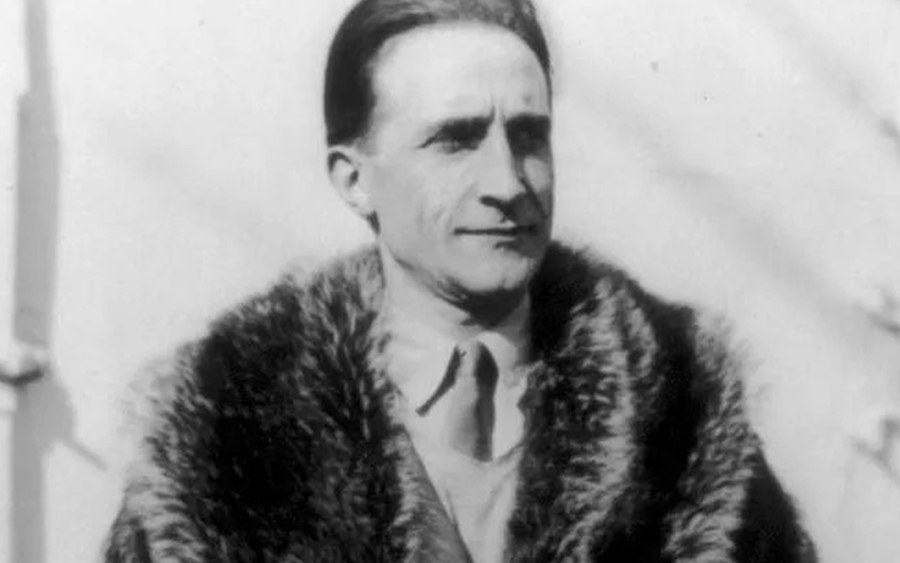
Marcel Duchamp stands as one of the most radical figures in the history of modern and contemporary art, not only because of the objects he created but also due to the theoretical foundations he laid in his essays and writings, which challenged the artistic process and the commercialization of art itself. His intellectual engagement with the nature of art, artistic authorship, and the systems that sustain the art world was as revolutionary as his visual contributions. Throughout his career, Duchamp sought to redefine art as an intellectual pursuit rather than a purely aesthetic one, undermining the traditional expectations of artistic skill, craftsmanship, and the economic structures that governed artistic production.
His ideas, expressed through both his works and his essays, marked a turning point in art history, setting the foundation for conceptual art, performance art, and postmodern artistic practices. Duchamp’s resistance to the commodification of art was particularly radical in an era when the art market was beginning to dominate artistic production and reception. While many of his contemporaries were producing works that fit into existing commercial and institutional frameworks, Duchamp deliberately worked against these conventions, both through his provocative artistic gestures and through his writings, which systematically deconstructed the myths surrounding artistic genius, originality, and artistic labor.
His rejection of the traditional artistic process was most clearly articulated through his invention of the readymade, a concept that he not only materialized through works like Fountain (1917) but also elaborated upon in his writings. In his essays, Duchamp argued that art was not defined by its physical properties or craftsmanship but by the artist’s decision to designate something as art. This seemingly simple yet deeply subversive act dismantled centuries of artistic tradition, where value was placed on skill, originality, and materiality. Duchamp’s argument that a manufactured object, chosen arbitrarily, could enter the realm of art was not merely an aesthetic provocation but a philosophical stance that challenged the very ontology of art itself.
The implications of this shift were enormous, as it suggested that artistic meaning was not intrinsic to the object but constructed through context, discourse, and institutional validation. His writings on the readymade further complicated this idea by insisting that the artist’s role was not necessarily to create but to select and reposition, shifting the focus of art from production to concept. This approach undermined the traditional art market, which relied on the uniqueness and authenticity of the artwork as a commodity. If art could be an ordinary object, then the mechanisms that determined value in the art world—such as authorship, authenticity, and scarcity—were thrown into question.
Duchamp’s skepticism toward the commercial structures of the art world was not just theoretical; it was an integral part of his practice. He famously resisted participating in the conventional trajectory of artistic success, deliberately avoiding mass production, signing works under pseudonyms, and even withdrawing from art-making altogether at times, claiming to have devoted himself to chess. This self-imposed artistic exile was itself a conceptual statement, a refusal to conform to the expectation that an artist must continually produce and sell work to remain relevant. His writings reinforce this resistance, frequently expressing disdain for the idea of art as a career or as a market-driven enterprise.
Duchamp’s The Creative Act (1957) is among the most significant texts articulating his views on the relationship between the artist, the artwork, and the audience. In this essay, he introduces the idea that the creative process is not solely under the control of the artist but is completed by the viewer. This notion radically redefined artistic authorship, shifting the focus from the artist as a solitary genius to the interactive relationship between the work and its audience. By stating that “the creative act is not performed by the artist alone; the spectator brings the work in contact with the external world by deciphering and interpreting its inner qualifications and thus adds his contribution to the creative act,” Duchamp effectively dismantled the hierarchy between artist and viewer. This idea was deeply subversive because it implied that meaning was not dictated by the artist but co-created by those who engaged with the work.
The implications of this concept would reverberate through later artistic movements, particularly conceptual art, installation art, and performance art, where audience participation and interpretation became fundamental components of the work. Duchamp’s critique of the art market was also deeply embedded in his rejection of traditional artistic labor and the fetishization of the art object. His refusal to produce work that conformed to commercial expectations was a direct challenge to the economic forces that governed artistic production. His use of replicas and multiples, such as the Boîte-en-valise (1941), a portable museum containing miniatures of his works, further complicated the idea of originality and value in art. By creating these portable collections of his works, Duchamp played with the idea that an artwork’s value was not in its physical uniqueness but in the ideas it represented.
This undermined the traditional art market’s reliance on scarcity and exclusivity, as he demonstrated that art could be disseminated and reproduced without losing its conceptual integrity. His critique of the commercialization of art was not limited to his own practice but extended to the entire art world. In interviews and writings, he often expressed his belief that modern art had become a form of commodity trading, where aesthetic innovation was secondary to financial speculation. His critique anticipated the concerns of later artists and theorists who would analyze the intersection of art and capitalism, such as Guy Debord’s concept of the spectacle, which described how culture had become a domain of mass consumption rather than critical engagement. Duchamp’s distinction between “retinal” and “intellectual” art was another crucial element of his challenge to the artistic process.
He criticized the dominance of visual pleasure in artistic appreciation, arguing that art had become too focused on what he called the “retinal” aspect—art that merely pleased the eye without engaging the mind. This criticism was particularly directed at Impressionism and other movements that emphasized visual experience. Duchamp’s writings repeatedly stress the need for art to be a mental rather than purely visual experience, advocating for works that required intellectual engagement rather than passive observation. This perspective laid the foundation for later conceptual art, where the idea behind the work was often more important than the physical execution. His engagement with language, wordplay, and coded meanings in both his art and writings further demonstrated his commitment to art as an intellectual endeavor. His works often contained hidden messages, puns, and linguistic games, which required interpretation and active participation from the viewer. This approach was most clearly exemplified in The Bride Stripped Bare by Her Bachelors, Even (1915-1923), also known as The Large Glass, a work that was accompanied by extensive notes that complicated rather than clarified its meaning.
His insistence on ambiguity and multiplicity of meaning was another challenge to the traditional artistic process, which often sought to convey a clear message or narrative. Duchamp’s interest in chance and randomness as part of the creative process further disrupted conventional artistic methods. In works like Three Standard Stoppages (1913-14), where he dropped threads onto a surface and used their random curves as templates, Duchamp introduced the idea that artistic composition did not have to be entirely controlled or intentional. His writings elaborate on this embrace of chance, suggesting that randomness could be as valid as deliberate design in the creation of meaning. This idea would later influence artists like John Cage, whose experiments with indeterminacy in music echoed Duchamp’s embrace of chance in visual art. Duchamp’s impact on art history cannot be overstated. His rejection of traditional artistic values and his challenge to the commercialization of art paved the way for entire movements that followed.
Conceptual artists such as Joseph Kosuth and Sol LeWitt directly built upon his ideas, prioritizing the intellectual and theoretical aspects of art over material execution. Performance artists, installation artists, and those engaged in institutional critique all owe a debt to Duchamp’s radical redefinition of art’s purpose and function. His writings continue to be studied as essential texts in understanding the evolution of contemporary art, as they provide the theoretical foundation for many of the artistic innovations of the 20th and 21st centuries. By systematically questioning every aspect of the artistic process—from authorship to value, from creation to reception—Duchamp not only changed the course of art history but also ensured that the very definition of art would remain open to continual reinterpretation.
Duchamp’s skepticism towards the commercialization of art was another major component of his philosophy. He resisted the idea that art should be produced for the market, and he actively avoided becoming an artist in the conventional sense. While many of his contemporaries sought success through galleries and collectors, Duchamp deliberately withdrew from these structures, often claiming that he had abandoned art altogether to focus on chess. This rejection of artistic production as a career choice was itself a conceptual act, a way of resisting the commodification of creativity. He saw art as something that should evade ownership, financial speculation, and institutional control, an idea that deeply influenced later artists who sought to critique the art market and its economic dependencies.
His philosophy also rejected the notion of the artist as a solitary genius. In The Creative Act, one of his most important essays, Duchamp argued that the meaning of an artwork is not determined solely by the artist but is completed by the viewer. He believed that artistic interpretation was an essential part of the creative process, as meaning was formed through dialogue between the artwork and its audience. This idea radically redefined the role of the artist, shifting focus away from the idea of individual mastery and towards a more fluid, interactive relationship between art and society. Duchamp’s emphasis on the viewer’s role anticipated later theories in postmodernism and deconstruction, where meaning is seen as unstable and contingent on context.
Another key aspect of Duchamp’s philosophy was his attack on the fetishization of artistic craftsmanship. He saw no intrinsic value in technical skill, arguing that artistic quality was an arbitrary concept imposed by cultural and economic institutions. This perspective was particularly subversive in a period when artists were still expected to demonstrate mastery of their medium. By submitting objects like Bicycle Wheel or Bottle Rack as art, Duchamp deliberately removed the element of artistic craftsmanship, instead suggesting that art was a matter of conceptual framing rather than technical execution. This idea deeply influenced later avant-garde movements, particularly conceptual artists who prioritized ideas over material form.
Duchamp’s relationship with chance and randomness also played a significant role in his philosophical outlook. Unlike traditional artists who sought to control every aspect of their work, Duchamp embraced chance as a legitimate component of artistic creation. In works like Three Standard Stoppages, he allowed random elements to shape the outcome, challenging the idea that art must be carefully composed. This embrace of randomness resonated with later artists, particularly in the realms of experimental music, performance art, and process-based practices. His willingness to relinquish control over the creative process further disrupted traditional ideas about authorship and artistic intentionality.
His engagement with language and wordplay was another crucial element of his philosophy. Duchamp frequently used puns, double meanings, and coded messages in both his works and his writings, seeing language as an artistic medium in its own right. He played with the instability of meaning, often creating works that defied straightforward interpretation. This fascination with linguistic ambiguity was deeply connected to his broader rejection of fixed artistic definitions. It also aligned his work with later thinkers like Jacques Derrida, whose theories of deconstruction emphasized the fluidity and instability of meaning in language and text.
Duchamp’s critique of art institutions was both theoretical and practical. He understood that museums, galleries, and critics played a significant role in shaping what was considered valuable or meaningful in art. His readymades were a direct challenge to institutional authority, as they questioned who had the power to define art. By selecting ordinary objects and placing them in artistic contexts, he demonstrated that meaning in art was not inherent but constructed through social and institutional validation. This critique anticipated later institutional critique artists like Hans Haacke and Andrea Fraser, who examined how museums and galleries function as ideological structures.
His concept of the infrathin, a term he coined to describe imperceptible differences or transitions between states, was another dimension of his artistic philosophy. Though difficult to define, Duchamp used this term to describe phenomena that exist on the edge of perception, such as the warmth left by a recently touched object or the gap between two nearly identical images. This idea suggested that art could exist in subtle, nearly invisible forms, challenging the expectation that art must always be tangible or easily identifiable. His exploration of such ephemeral concepts prefigured minimalist and conceptualist approaches that sought to dematerialize the art object.
Duchamp’s legacy is profound, as his ideas fundamentally altered the trajectory of modern and contemporary art. His philosophy dismantled the traditional hierarchies of artistic production, placing emphasis on thought rather than materiality, context rather than intrinsic value. His rejection of commercial art markets, his embrace of chance, his redefinition of authorship, and his engagement with language all contributed to a radical rethinking of what art could be. His impact can be seen in conceptual art, performance, installation, and institutional critique, as well as in the broader discourse surrounding the nature and purpose of art. Duchamp did not just create works of art; he redefined the very conditions under which art could exist, ensuring that his influence would endure long beyond his own time.