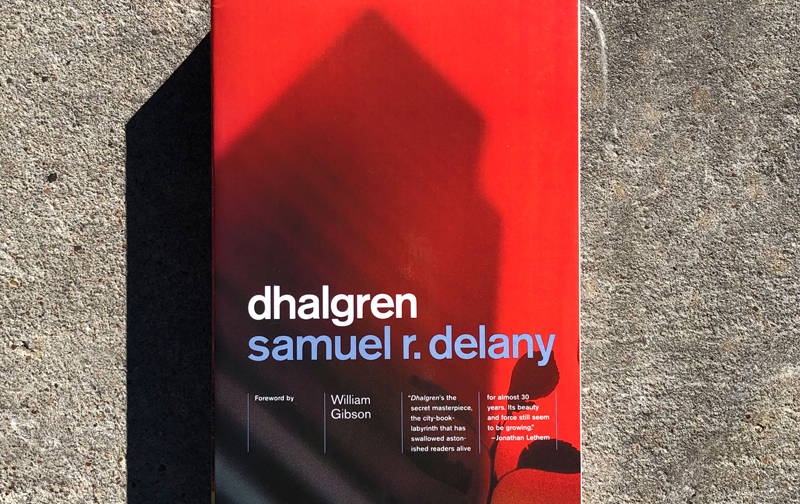
Samuel R. Delany’s Dhalgren is a literary labyrinth, a sprawling epic that defies categorization and invites endless interpretation. Its fashion and style, both in terms of narrative structure and thematic content, are as enigmatic as the city of Bellona itself. The novel is a meditation on identity, perception, and the boundaries of reality, and Delany’s writing mirrors these themes with a complexity that challenges readers to surrender to its dreamlike flow. The fashion within Dhalgren is not limited to clothing but extends to the very way people present themselves in a city where time and meaning seem to unravel. In Bellona, fashion becomes a form of self-invention and personal mythology. The inhabitants wear their disillusionment and desires on their sleeves, adorning themselves with the remnants of a crumbling world. Clothing is improvised, eclectic, and often symbolic. The Kid, the novel’s amnesiac protagonist, shifts through different identities, and his clothing choices reflect this fluidity. He moves through Bellona like a chameleon, absorbing and reflecting the chaos around him. The sartorial choices in Dhalgren underscore the novel’s deeper preoccupation with transformation — personal, social, and metaphysical.
Delany’s writing style is as kaleidoscopic as the city he describes. He eschews traditional narrative structures, opting instead for a fragmented, nonlinear approach that mirrors the disorientation of Bellona’s inhabitants. The prose is lush, poetic, and sometimes labyrinthine, weaving layers of meaning into every description. Delany’s sentences stretch and coil, pulling readers into a hypnotic rhythm that evokes the hazy, dreamlike quality of life in Bellona. His use of language is both precise and elusive, crafting a narrative that refuses to be pinned down. Dialogue flows seamlessly into inner monologue, which in turn dissolves into vivid sensory detail, creating a reading experience that feels more like inhabiting a consciousness than following a story. The city itself becomes a character, its shifting landscapes and eerie silences rendered in prose that flickers between beauty and dread. Delany’s writing demands attention, patience, and a willingness to let go of conventional expectations. It is a style that revels in ambiguity, where meaning slips through the cracks, and readers are left to piece together their own understanding of events.
The fashion of Dhalgren extends beyond clothing and writing into the very fabric of the narrative itself. Delany constructs the novel like a patchwork garment, stitching together disparate moments, perspectives, and realities into a whole that is more than the sum of its parts. The book resists easy categorization, blending science fiction, surrealism, and postmodernism into a singular vision. Just as the characters in Bellona repurpose the detritus of their fallen city into new forms of expression, Delany reclaims and reconfigures literary tropes, creating something entirely unique. The novel’s structure is deliberately disjointed, with time folding in on itself and events repeating in new permutations. This narrative fashioning forces readers to confront the fluidity of memory and identity, challenging them to navigate the shifting terrain of Bellona alongside its inhabitants.
Critically, the novel’s style has been both lauded and derided. Admirers praise Delany’s ambition and the sheer beauty of his prose, which elevates even the most mundane details into moments of poetic resonance. They see Dhalgren as a bold experiment in form and storytelling, a work that refuses to conform to genre expectations and instead carves out its own literary space. For these readers, the novel’s stylistic excess is not a flaw but a feature, a necessary consequence of trying to capture the ineffable experience of life in Bellona. Critics, however, argue that Delany’s prose can be overwhelming, his descriptions too dense, his narrative too fragmented. Some feel that the novel’s ambition outstrips its execution, leaving readers adrift in a sea of words without a clear path forward. They question whether the stylistic flourishes serve the story or whether they become an end in themselves, a dazzling display of linguistic prowess that obscures rather than illuminates.
Yet perhaps this tension is precisely what makes Dhalgren endure. The novel’s refusal to be easily understood mirrors the experiences of its characters, who are themselves searching for meaning in a world that defies explanation. Delany’s style is not just a vehicle for the story but an integral part of its meaning. The prose becomes a landscape, shifting and mutating like Bellona itself, where every sentence is a new path and every paragraph a new horizon. Fashion, in this sense, is not merely a theme but a narrative principle. The novel wears its influences and ambitions on its sleeve, embracing excess and contradiction as essential elements of its design. Just as the inhabitants of Bellona adorn themselves with the remnants of their past lives, Dhalgren adorns itself with language, layering meaning upon meaning, until the boundaries between self and story, reader and text, begin to dissolve.
Ultimately, Dhalgren is a work of art that demands engagement on its own terms. It is a novel that resists easy answers, inviting readers to lose themselves in its labyrinthine passages and emerge changed. The fashion and style of Dhalgren are inseparable from its thematic concerns, each reflecting the other in an intricate dance of meaning and form. Whether one sees Delany’s stylistic choices as moments of brilliance or lapses into self-indulgence, there is no denying the novel’s power to provoke and inspire. It stands as a testament to the possibilities of literature, a work that dares to dream beyond the boundaries of genre and convention, crafting a narrative as rich and enigmatic as the city of Bellona itself.