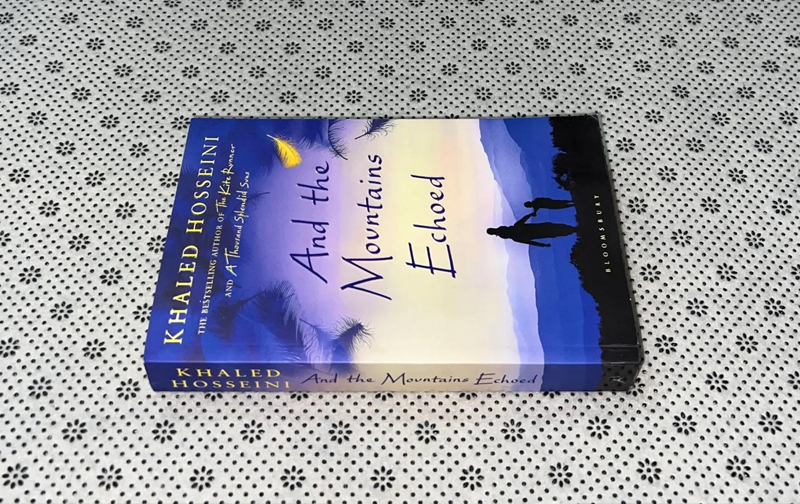
Khaled Hosseini’s And the Mountains Echoed is a sweeping narrative that traverses landscapes, emotions, and generations, weaving a complex tapestry of interconnected stories. The novel’s fashion and style, both in terms of its literary craftsmanship and the sartorial details it employs, reveal a nuanced understanding of personal identity, cultural expression, and storytelling. Hosseini’s writing style is characterized by its poetic sensitivity, emotional depth, and meticulous attention to detail, allowing the reader to immerse themselves not only in the lives of the characters but also in the textures and colors that clothe them, both literally and metaphorically.
The novel spans multiple countries and decades, moving from the rural landscapes of Afghanistan to the sophisticated avenues of Paris and the sunlit streets of Greece. This shifting geographical backdrop subtly influences the fashion choices and cultural markers present in each character’s life, reflecting not only their personal journeys but also the broader socio-political contexts shaping their existence. In the Afghan portions of the narrative, clothing is more than mere fabric; it becomes a symbol of heritage, modesty, and resilience. Women don traditional attire such as chadors and burqas, garments that serve both as protective coverings and as visual representations of the social restrictions imposed upon them. Men wear shalwar kameez, practical and dignified, a nod to tradition and cultural pride. Through these details, Hosseini paints a portrait of Afghanistan that is rich with color and meaning, where the weight of history and custom hangs heavy in the folds of each garment.
In contrast, when the story shifts to Western settings, clothing takes on a different resonance. In Paris, for example, characters embrace Western fashion as a sign of adaptation and modernity. Idris and Timur, two Afghan men navigating life abroad, embody a blend of Eastern heritage and Western influence. Their clothing choices reflect the duality of their identities — neither fully Afghan nor entirely Western, caught between two worlds. Hosseini uses fashion as a metaphor for this tension, illustrating the inner conflicts of characters who straddle cultural divides. The Western clothing they adopt becomes a form of camouflage, a means of blending into their new environments while quietly carrying the weight of their past.
The author’s writing style mirrors this layered complexity. Hosseini is known for his lyrical prose, where descriptions of clothing and environment serve to deepen the reader’s understanding of character and place. His attention to sartorial detail is never gratuitous; rather, it offers subtle clues about the inner lives of his characters. A threadbare coat or a carefully knotted scarf can speak volumes about loss, longing, or belonging. His descriptions are often imbued with nostalgia, evoking a sense of yearning that mirrors the emotional undercurrents of the story itself. The act of dressing or undressing becomes symbolic — a ritual of transformation, vulnerability, or resistance.
Critics of Hosseini’s fashion of writing have noted his penchant for sentimentality, arguing that his prose occasionally veers into the realm of melodrama. Yet it is precisely this emotional richness that has endeared him to millions of readers worldwide. His storytelling is deeply humane, his characters rendered with compassion and complexity. In And the Mountains Echoed, his narrative style is more fragmented than in his previous works, reflecting the fragmented nature of memory and diaspora. Each chapter shifts perspective, offering glimpses into different lives, each with its own distinct voice and rhythm. This narrative choice mirrors the patchwork of identities and experiences that define his characters, creating a literary mosaic that is as intricate and beautiful as the Afghan carpets that feature so prominently in the story.
The novel’s exploration of fashion extends beyond clothing to encompass the broader notion of personal presentation and identity. Characters grapple with the roles they are expected to play versus the selves they long to reveal. Pari, for instance, finds herself drawn to the arts and the bohemian lifestyle of Paris, a stark contrast to the conservative upbringing she left behind. Her fashion choices reflect this shift, as she embraces a freer, more expressive style. In this way, clothing becomes a language of self-discovery, a means of asserting autonomy and creativity.
Hosseini’s fashion of writing is similarly bold and expressive. He employs a rich tapestry of metaphors and similes, painting scenes with words that linger long after the page is turned. His descriptions are often cinematic, evoking a sense of place and mood that is almost tangible. He has a gift for capturing the small moments — the brush of fabric against skin, the weight of a gaze, the hush of a room — and imbuing them with significance. This meticulous attention to detail creates a sensory experience for the reader, where every sound, scent, and texture adds depth to the narrative.
Yet, for all its beauty, Hosseini’s writing is not without its critics. Some argue that his emotional intensity can feel heavy-handed, that his characters occasionally veer into archetypes rather than fully fleshed-out individuals. In And the Mountains Echoed, the shifting perspectives and timelines have been seen by some as disjointed, disrupting the narrative flow. However, others view this fragmentation as a deliberate stylistic choice, reflecting the fractured nature of memory and the diaspora experience. Each character’s story adds another layer to the overarching narrative, much like the threads of a tapestry coming together to form a larger picture.
In essence, the fashion and style of And the Mountains Echoed — both in terms of clothing and literary craft — speak to a broader exploration of identity, loss, and connection. Clothing serves as a marker of cultural heritage, personal transformation, and social expectation, while Hosseini’s writing style mirrors these themes through its lyrical prose and shifting perspectives. His storytelling is richly textured, weaving together threads of memory and emotion to create a narrative that resonates deeply with readers.
Hosseini’s fashion of writing is, at its core, an act of empathy. He invites readers to step into the shoes of his characters, to feel the weight of their choices and the pull of their pasts. Whether through a carefully chosen garment or a poetic turn of phrase, he reveals the intimate struggles and quiet triumphs that define his characters’ lives. In this way, And the Mountains Echoed is more than a story — it is an invitation to witness the beauty and pain of being human, told with grace, compassion, and an unflinching eye for detail. The novel’s fashion and style, both literal and literary, serve as a testament to Hosseini’s skill as a storyteller and his deep understanding of the human condition.