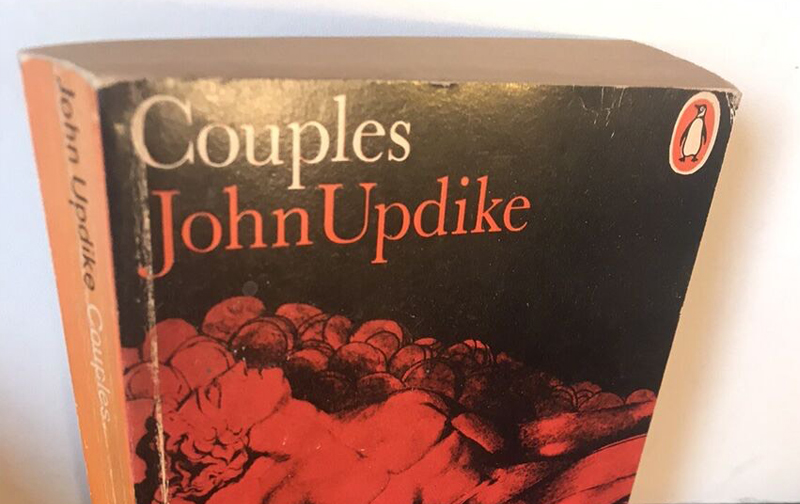
John Updike’s novel “Couples” has long been celebrated not only as a candid exploration of American relationships but also as an incisive commentary on the social mores and aesthetic preoccupations of its time. In reading “Couples,” one is immediately struck by the way Updike weaves together a tapestry of human intimacy, desire, and vulnerability with a remarkable attention to the details of fashion and style. His narrative is saturated with descriptions that elevate everyday appearance to the level of art, while simultaneously interrogating the cultural forces that shape personal expression and social identity. The novel functions on multiple levels—as both a detailed portrait of suburban life and a study in the way that fashion, both literal and metaphorical, reflects the inner lives of its characters.
Updike’s prose is unmistakably elegant and precise. His style of writing is itself a kind of fashion—a distinctive, artful manner that is as much about form as it is about content. In “Couples,” every gesture, every article of clothing, and every meticulously rendered setting becomes a vehicle for exploring the tensions between appearance and reality. The novel’s characters move through a world where what they wear, how they groom themselves, and the physical spaces they inhabit are laden with meaning. Clothing is not merely a matter of covering the body; it is an expression of personality, a badge of status, and a reflection of the cultural zeitgeist. Updike’s acute observations reveal that fashion, in this sense, is inseparable from identity. His characters are both shaped by and active participants in the prevailing trends of their era, and through their interactions, he paints a portrait of a society in which style and substance are constantly at odds.
At the heart of the novel lies a subtle yet persistent critique of modern life. Updike’s narrative suggests that the pursuit of style—whether in terms of physical appearance, social comportment, or even in the realm of writing—can often be a form of escapism, a way to mask deeper insecurities and desires. There is a sense that the dazzling surface of fashionable living, with its artful displays and carefully curated images, may conceal an undercurrent of ennui and disillusionment. The novel’s depiction of couples, both in their public interactions and private moments, often hints at the transient nature of modern relationships—a fleeting alignment of appearances that belies a more chaotic emotional undercurrent. In this way, Updike’s work is as much a critique of the fashionable exterior as it is an exploration of the complex interiority of his characters.
The fashion of writing in “Couples” is an essential aspect of its enduring appeal. Updike’s language is at once lush and incisive, a combination that mirrors the dual nature of the subject matter he portrays. His descriptions of clothing and physical appearance are rendered with a painterly quality, full of nuance and detail. Yet, behind the lyrical surface lies a keen critical eye—a constant questioning of the assumptions that underpin social conventions. Updike does not merely describe his characters’ sartorial choices; he examines them, laying bare the contradictions and ironies inherent in a society that prizes image over substance. His writing style, with its oscillation between sensual detail and intellectual rigor, offers a commentary on the very act of representation. It is as if Updike’s pen has become a mirror reflecting not only the fashions of the day but also the cultural obsessions that drive them.
One of the most intriguing aspects of “Couples” is the way in which Updike’s narrative operates on both a literal and metaphorical level when it comes to fashion. On the literal level, the characters’ choices in clothing and personal presentation serve as signifiers of their social status, desires, and ambitions. The detailed accounts of their sartorial decisions reveal much about the era’s shifting attitudes toward beauty, propriety, and individuality. Yet, these same descriptions also function metaphorically, suggesting that the external trappings of life are often mere costumes—masks that people wear to navigate the expectations of their communities. Updike’s work invites the reader to consider the possibility that the pursuit of style, in all its various forms, is a kind of performance. The characters are actors on a stage, carefully curating their appearances to fit into a larger narrative of success, desirability, and modernity. This dual reading of fashion—as both a tangible reality and an abstract construct—adds a rich layer of complexity to the text.
Updike’s critique of fashion is both subtle and pointed. While he revels in the beauty and artistry of a well-crafted sentence or an exquisitely tailored suit, he is also acutely aware of the potential pitfalls of an overemphasis on aesthetics. There is an inherent tension in the way that modern society elevates surface appearances to an almost sacred status, often at the expense of deeper, more authentic connections. In “Couples,” this tension is played out in the realm of personal relationships, where the glossy veneer of physical attractiveness and social polish can mask a profound sense of isolation and dissatisfaction. Updike’s characters, in their relentless quest for fashionable perfection, often find themselves adrift in a sea of superficiality. Their relationships, while outwardly vibrant and full of promise, are marked by a latent emptiness—a disconnect between the carefully curated images they present to the world and the unvarnished reality of their inner lives.
The interplay between fashion and writing in Updike’s work also speaks to a broader commentary on the nature of art and expression. In “Couples,” the act of writing becomes a metaphor for the process of self-fashioning. Just as individuals craft their outward appearance to align with societal norms, so too does the writer construct a narrative that is as much about the performance of language as it is about the transmission of ideas. Updike’s prose is deliberately self-conscious—a reminder that the very act of describing the world is an act of creation. His sentences, with their rhythmic cadences and intricate details, evoke the tactile experience of handling fine fabric or admiring the craftsmanship of a bespoke garment. This parallel between the art of writing and the art of dressing suggests that both are endeavors in which authenticity is perpetually at risk of being sacrificed on the altar of style. The writer, much like the individual striving to be fashionable, must constantly negotiate the delicate balance between substance and surface, between sincerity and artifice.
In many respects, “Couples” can be seen as a meditation on the ways in which modern life is defined by its contradictions. The novel’s detailed attention to fashion—both in the literal sense of clothing and in the broader sense of style and appearance—serves as a microcosm for the contradictions inherent in contemporary society. There is a persistent ambivalence in Updike’s portrayal of the fashionable: on one hand, he celebrates the artistry and creativity that can be found in the way people choose to present themselves; on the other, he remains deeply skeptical of a culture that prizes image above all else. This ambivalence is perhaps best encapsulated in the way Updike’s narrative shifts between admiration and critique. His descriptions of elegant ensembles and meticulously arranged settings are imbued with a sense of wonder and delight, yet they are also undercut by a recognition of the inherent superficiality of these displays. In this delicate balancing act, Updike seems to be urging his readers to look beyond the glittering surface of modern life and to seek out the more enduring truths that lie beneath.
The cultural context in which Updike was writing is also crucial to understanding the significance of his commentary on fashion. The late 1960s were a period of profound social change—a time when traditional norms were being upended and new forms of expression were emerging with unprecedented vigor. In this milieu, the emphasis on style and appearance took on new meanings. Fashion became a symbol of liberation and experimentation, a way for individuals to break free from the constraints of conventional society. Yet, as Updike’s narrative makes clear, this newfound freedom was accompanied by its own set of challenges. The same exuberance that propelled the era’s cultural revolutions also engendered a kind of aesthetic volatility—a relentless pursuit of the next new thing that left little room for the kind of enduring values that had once defined a generation. In “Couples,” Updike captures this tension with remarkable sensitivity. His characters are caught between the allure of the new and the comfort of the familiar, their lives marked by a ceaseless oscillation between the desire to be at the forefront of fashion and the inevitable disillusionment that follows when the sheen of novelty begins to wear off.
Throughout the novel, the critique of fashion is interwoven with a broader examination of modernity itself. Updike’s narrative suggests that the obsession with style is not merely a superficial concern but a symptom of deeper societal shifts. The relentless focus on appearance, whether in the form of clothing, decor, or even linguistic expression, reflects a culture that is increasingly divorced from its own roots. The characters in “Couples” seem to be engaged in a constant performance, their lives dominated by a preoccupation with image and presentation. This preoccupation, however, is depicted not as a harmless indulgence but as a potentially corrosive force—one that can erode the very foundations of authentic human connection. Updike’s writing exposes the inherent irony in a society that values the ephemeral over the eternal, the decorative over the substantive. In his eyes, the modern fixation on fashion is emblematic of a broader cultural malaise—a tendency to prioritize the superficial glitter of appearances over the enduring substance of character and experience.
The language that Updike employs to describe fashion is itself a testament to his mastery of literary style. His prose is both lush and economical, a blend of vivid imagery and subtle understatement that mirrors the dual nature of fashion in contemporary life. When he describes a character’s outfit or a meticulously arranged interior, there is an almost tactile quality to his words—a sense that the reader can feel the texture of the fabric, the cool sheen of a polished surface, or the delicate interplay of light and shadow. This sensory richness is balanced by a measured, analytical tone that invites readers to question the cultural assumptions underlying these displays of beauty. In this way, Updike’s work operates on two levels simultaneously: it is an indulgence in the pleasures of aesthetic detail and a critical inquiry into the social forces that shape our understanding of beauty and style.
There is also a profound sense of ambivalence in the way Updike treats the concept of fashion. While he is undeniably captivated by the transformative power of style—the way in which a change of clothes can alter one’s mood, identity, or social standing—he is equally aware of its limitations. The characters in “Couples” often find that the very tools they use to construct their desired images can become sources of constraint, trapping them in roles that feel increasingly hollow and contrived. This recognition of the double-edged nature of fashion is one of the novel’s most compelling aspects. Updike does not offer a simplistic condemnation of superficiality; rather, he invites the reader to consider the complex interplay between appearance and reality, between the desire to impress and the need to be understood. The result is a narrative that is as intellectually challenging as it is aesthetically rewarding—a work that forces its audience to confront the paradoxes at the heart of modern life.
In reflecting on the fashion of writing itself, one cannot ignore the self-referential nature of Updike’s style. His prose is, in many respects, a commentary on the art of writing—a deliberate attempt to craft sentences that are as evocative and meticulously tailored as the outfits his characters wear. There is a performative aspect to his literary technique, a recognition that language, like fashion, is a tool for constructing identity. Updike’s sentences are at once both ornamental and functional, serving the dual purpose of dazzling the reader with their beauty and conveying complex ideas about love, desire, and the human condition. This fusion of form and content is a hallmark of his work—a reminder that the way we present ourselves, whether in the written word or in the clothes we wear, is never a matter of chance but a carefully orchestrated performance. Through his innovative use of language, Updike challenges us to reconsider the boundaries between art and life, between the written page and the world it seeks to describe.
What emerges from this intricate interplay between fashion and writing is a broader meditation on the nature of modernity. In “Couples,” the characters’ struggles with identity and intimacy are inextricably linked to the cultural forces that define their era—a time when the pursuit of style was both a liberating act and a potential source of alienation. Updike’s portrayal of fashionable life is never uncritical; it is imbued with a sense of irony and melancholy, as if the very beauty of modern life is tinged with a recognition of its inherent impermanence. The novel’s critique of fashion, then, is not a rejection of beauty per se but a call for a more thoughtful, reflective engagement with the world—a plea to look beyond the superficial allure of the moment and to seek out the deeper truths that lie beneath.
Ultimately, John Updike’s “Couples” stands as a multifaceted work that transcends simple categorization. It is at once a celebration of the aesthetic pleasures of modern life and a sobering critique of its inherent contradictions. Through his deft handling of language and his unflinching examination of the cultural rituals that define us, Updike crafts a narrative that is as much about the art of living as it is about the art of writing. His exploration of fashion—both in the literal sense of clothing and in the broader, more symbolic sense of style—offers a window into the complexities of contemporary identity. It reveals how the pursuit of beauty can become a double-edged sword, one that both elevates and confines us, offering fleeting moments of transcendence even as it reinforces the boundaries of our social roles.
In reading “Couples,” one cannot help but be struck by the enduring relevance of its themes. The tension between appearance and authenticity, the interplay between the ephemeral and the eternal, and the delicate balance between artistic expression and social conformity are issues that continue to resonate in today’s fast-changing world. Updike’s incisive observations, rendered in language that is as elegant as it is unflinching, serve as a reminder that the quest for beauty, in all its myriad forms, is a timeless aspect of the human experience. His work challenges us to examine the ways in which we construct our identities—through the clothes we wear, the words we write, and the images we project—and to question whether these constructions truly capture the essence of who we are, or whether they are merely elaborate costumes in an endless performance.
There is a certain poignancy in the way Updike’s narrative grapples with the fleeting nature of modern life. The fashionable trends that dazzle and delight one moment may fade into insignificance the next, leaving behind only the ghost of what once was. This impermanence, so central to the modern condition, is mirrored in the lives of the characters themselves, whose attempts to cling to a sense of stability are often undermined by the relentless march of time. Yet even in this acknowledgment of transience, there is a measure of hope—a suggestion that beauty, though ephemeral, can still leave a lasting impression, that style, even when it is destined to fade, has the power to transform our perception of the world. Updike’s work ultimately encourages us to embrace the paradoxes of life, to find meaning in the interplay between the transient and the eternal, and to recognize that the very act of striving for beauty is, in itself, a profoundly human endeavor.
In the final analysis, the enduring appeal of “Couples” lies in its ability to capture the complexities of modern existence with both elegance and candor. John Updike’s exploration of fashion and style—whether through the tangible medium of clothing or the more abstract realm of literary expression—serves as a powerful reminder that our lives are defined as much by the images we project as by the truths we conceal. His narrative is a testament to the enduring power of art to illuminate the contradictions of our times, offering a vision of modern life that is as richly textured as it is deeply human. Through his unerring eye for detail and his unyielding commitment to truth, Updike challenges us to reconsider our own preoccupations with appearance and to seek out, beneath the surface of everyday life, the genuine connections and experiences that truly matter.
In this way, “Couples” transcends its immediate subject matter to become a meditation on the art of living itself—a reminder that while fashion may be ever-changing, the search for meaning, beauty, and authenticity is a constant, unyielding pursuit. The novel invites its readers to look beyond the superficial trappings of modern life and to engage with the deeper, often contradictory, realities that lie beneath. It is a work that, in its lyrical exploration of style and substance, offers not only a portrait of a particular moment in time but also a timeless reflection on the human condition.