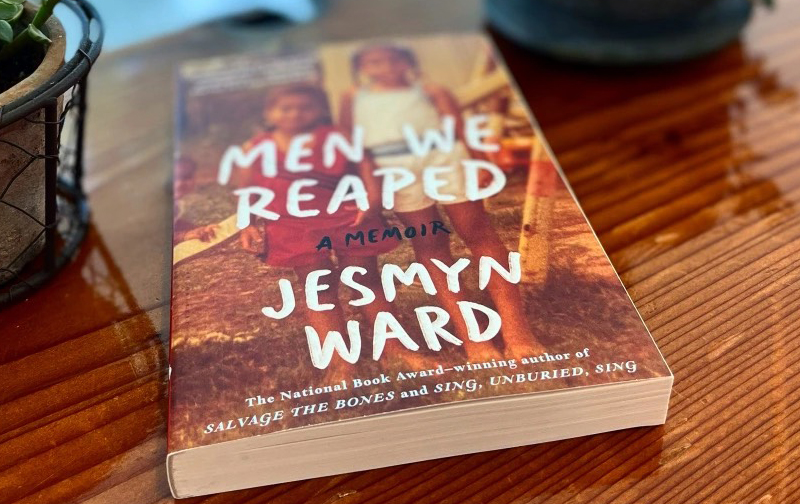
Jesmyn Ward’s Men We Reaped is a poignant memoir that weaves personal tragedy with broader social commentary, and in doing so, Ward’s fashion and style — both in writing and in crafting narratives — stand out as distinctive and powerful. The memoir recounts the lives and untimely deaths of five young Black men close to Ward, including her own brother, in rural Mississippi. Through this exploration of loss, Ward’s writing style and narrative choices reveal a deliberate fashion of storytelling that is as carefully curated as a designer’s collection. The “fashion” of Ward’s writing lies not only in her eloquence and rhythm but also in the way she stitches memory, pain, and societal critique into a tapestry that is both intimate and universal.
In Men We Reaped, Ward’s narrative fashion is shaped by her ability to blend the personal with the political. She alternates between two timelines: one recounting her own life and family history, and the other chronicling the deaths of the young men. This structural choice mirrors the layered complexity of grief and memory, much like how layers in fashion can add depth to an ensemble. Ward does not simply present events in a linear fashion; instead, she threads stories together, allowing readers to experience the ebb and flow of emotions, much like the waves of grief that never truly recede. This fashion of storytelling is deliberate, creating an immersive experience that demands the reader’s attention and empathy.
Ward’s writing style is rich with lyrical prose, marked by vivid imagery and emotional honesty. Her sentences are often long and winding, resembling the meandering paths of memory. This choice creates a rhythm that echoes the slow, painful process of recalling loss. Her descriptions of the Mississippi landscape, with its oppressive heat and lush vegetation, serve as a metaphor for the weight of grief and the beauty of resilience. This attention to detail is reminiscent of a designer’s eye for texture and color, crafting a sensory experience that envelops the reader. The way Ward layers personal reflections with broader social commentary is another hallmark of her style, akin to how a fashion designer might layer fabrics and patterns to create a cohesive look.
The fashion of Ward’s writing also lies in her ability to give voice to those who have been silenced. In Men We Reaped, she resurrects the stories of her loved ones, ensuring that they are not forgotten. This act of remembrance is both a personal and political statement, challenging the societal forces that contributed to these deaths. Ward’s choice to center her narrative around these lives is a radical act of love and defiance, much like how fashion can be used as a form of resistance and self-expression. In this sense, Ward’s writing is more than a recounting of events; it is a reclamation of agency and dignity.
Critics have often praised Ward’s lyrical prose and emotional honesty, noting that her writing style transcends mere storytelling to become a form of art. The fashion of her criticism lies in her ability to weave personal narratives with broader societal critiques. She does not shy away from exposing the systemic racism and economic disenfranchisement that shaped the lives and deaths of these young men. Her critique is subtle yet powerful, embedded in the fabric of her narrative rather than stated outright. This approach allows the reader to arrive at their own understanding, guided by Ward’s evocative storytelling.
Ward’s writing has been compared to that of literary giants such as Toni Morrison and William Faulkner, both of whom used language as a tool to explore race, memory, and loss. Like Morrison, Ward employs a lyrical style that blurs the lines between past and present, creating a dream-like quality that draws the reader into her world. Like Faulkner, she captures the complexities of the Southern experience, portraying a landscape that is as beautiful as it is haunted. Yet, Ward’s voice is uniquely her own, shaped by her experiences as a Black woman in the rural South. Her writing fashion is not derivative but rather a continuation of a tradition, tailored to fit her own perspective and experiences.
In terms of literary fashion, Men We Reaped stands out for its unflinching honesty and emotional depth. Ward does not shy away from pain or grief; instead, she embraces them, using her words to give form to feelings that are often too difficult to articulate. This raw honesty is part of what makes her writing so powerful. There is no artifice in Ward’s prose — every word feels necessary, every sentence carefully crafted to convey both meaning and emotion. Her writing is a testament to the power of storytelling as a means of healing and understanding, much like fashion can serve as a means of self-expression and identity.
The critical reception of Men We Reaped has been overwhelmingly positive, with many praising Ward’s ability to navigate personal grief while shedding light on systemic issues. Critics have noted that Ward’s storytelling is both intimate and expansive, drawing the reader into her personal experiences while simultaneously offering a broader social critique. This duality is part of what makes her writing so compelling. She does not simply tell a story; she creates a space for reflection and understanding, inviting the reader to bear witness to lives that might otherwise be forgotten.
In the world of literature, Ward’s fashion is one of resilience and resistance. She uses her words to confront pain and injustice, creating a narrative that is both beautiful and heartbreaking. Her writing style is a reflection of this resilience, with its lyrical prose and layered storytelling. Each sentence is carefully crafted, much like a designer meticulously selects fabrics and patterns to create a cohesive collection. Ward’s fashion of writing is one of honesty and vulnerability, inviting the reader into her world and allowing them to experience her grief and hope firsthand.
Ultimately, Men We Reaped is a masterful work that transcends genre and convention. Ward’s writing is as much about bearing witness as it is about healing, offering a space for remembrance and reflection. Her fashion of storytelling is deliberate and powerful, weaving personal narrative with social critique to create a tapestry of loss and resilience. Through her words, Ward honors the lives of those she lost, ensuring that their stories are not forgotten. In this sense, her writing is more than just a memoir — it is a testament to the power of storytelling as a means of survival and resistance.
Ward’s Men We Reaped is not just a book; it is an experience, a journey through grief and memory that leaves a lasting impression. Her fashion and style of writing are unique, blending lyrical prose with unflinching honesty to create a narrative that is both deeply personal and profoundly universal. In a world where stories of Black lives are often marginalized or overlooked, Ward’s work stands as a powerful reminder of the importance of storytelling and the enduring power of memory. Through her words, she breathes life into those who have been lost, ensuring that they are not forgotten. This act of remembrance is not just personal — it is political, a form of resistance and a testament to the resilience of the human spirit.