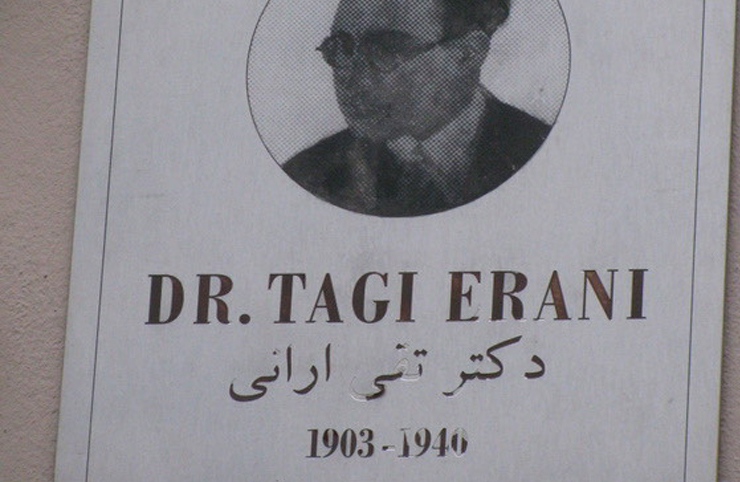
Left-wing politics in Iran has experienced many ups and downs since its emergence in the Constitutional era to the contemporary world. This movement, whose roots were formed in socialist and Marxist ideas, has undergone significant changes under the influence of numerous domestic and foreign factors. Prominent sociologists and writers such as Taqi Arani, Ehsan Tabari, Samad Behrangi, and Ali Ashraf Darvishian played a key role in explaining and spreading leftist ideas in Iran.
The beginning of the formation of left-wing politics in Iran dates back to the Constitutional era. During this period, freedom-loving and justice-seeking ideas found their way to Iran through contacts with intellectuals from the Caucasus and Russia. Taqi Arani, one of the first serious theorists of Marxism in Iran, tried to explain socialist issues to the people in simple language by publishing the magazine “Donya”. Arani believed that: “Science and thought should serve freedom and equality,” and his vision inspired subsequent generations of intellectuals.
In the 1950s and 1960s, the Tudeh Party of Iran was formed as the largest leftist party in the country. This party played an important role in political developments by emphasizing the rights of workers and peasants. Ehsan Tabari, one of the prominent theorists of the Tudeh Party, emphasized in his works such as “Scientific Worldview”: “Socialism is not a wish, but a historical necessity for the realization of social justice.” Tabari’s views strongly influenced the class-based and justice-oriented approach of the left wing in Iran.
During this period, committed writers such as Samad Behrangi expressed social concerns and the fight against oppression and tyranny with stories such as “The Little Black Fish.” Behrangi believed: “Life must be spent on change, otherwise it will be a fruitless death.” His writings reflected a critical view of social and economic inequalities in society and inspired a younger generation that sought fundamental changes.
In the 1970s, armed leftist organizations such as the People’s Revolutionary Guards Organization emerged. These organizations turned to armed struggle under the influence of anti-colonial revolutions in the Third World. Sociologists believe that the formation of these organizations was a reaction to the authoritarian structure and the lack of open political space in the country. The theories of people such as Frantz Fanon, especially his book “The Wretched of the Earth”, influenced the struggle strategies of these groups.
With the Islamic Revolution of 1979, the left wing played an active role in revolutionary struggles, but after the revolution, and especially in the 1980s, severe repression of leftist movements began. Many members of leftist parties and groups were imprisoned or executed, and left-wing politics entered a period of stagnation.
However, in the 1990s and 2000s, with the relative opening of the political space, leftist ideas once again emerged in the form of social and cultural critiques. Writers and intellectuals such as Ali Ashraf Darvishian continued to emphasize the importance of social justice and the rights of the underprivileged in their works. Darvishian said in an interview: “A writer cannot remain silent in the face of suffering and injustice; he must be the voice of the voiceless.”
In the contemporary world, left-wing politics in Iran no longer exists in its traditional form, but its ideas are still alive among some intellectuals, academics, and social activists. Analyses by sociologists such as Homayoun Katouzian, who emphasize the role of the authoritarian structure and the cycle of tyranny and chaos in Iranian history, have helped to re-understand leftist politics in the historical context of Iran. Katouzian believes: “The lack of independent civil institutions and the suppression of political freedoms have hindered the sustainable growth of justice-oriented thinking in Iran.”
In recent years, discussions related to social justice, women’s rights, environmental issues, and criticism of neoliberalism have emerged in the works of younger writers. They believe that justice-oriented movements should adopt new approaches by understanding the realities of today’s society and benefiting from past experiences.
Overall, left-wing politics in Iran has followed a complex and challenging path. From early efforts to introduce socialist ideas to armed struggles and then entering the field of cultural and social criticism, this movement has always been searching for ways to achieve justice and equality in society. Iranian political sociology shows that left-wing politics, despite repression and defeats, continues to live in the form of new discourses that are appropriate to the needs of the present era.