Left‐wing art has long been a vehicle for challenging established power structures, critiquing social injustice, and envisioning alternative worlds. Its roots can be traced back to periods when art was not only about aesthetic expression but also an instrument of political commentary and social transformation. In the early days, art served as a mirror reflecting the struggles of oppressed peoples and the inequalities inherent in feudal and capitalist societies. From the revolutionary fervor of the Enlightenment to the upheavals of the industrial age, left‐wing art emerged as an essential part of the broader social and political discourse.
In its nascent stages, the seeds of left‐wing art were sown during times of great political and social ferment. In the late eighteenth and early nineteenth centuries, as revolutionary ideas began to circulate across Europe, artists found themselves drawn to themes of emancipation and equality. The French Revolution, with its rallying cries for liberty, equality, and fraternity, influenced many painters, sculptors, and writers. Artists such as Jacques-Louis David, whose dramatic works celebrated revolutionary heroes, became emblematic of art’s potential to inspire collective action. David once proclaimed, “The art of revolution is not merely to depict its heroes, but to enkindle the flame of liberty in every heart.” This statement encapsulated the spirit of an era in which art was seen as a potent catalyst for change.
As the industrial revolution transformed societies, art evolved in response to the new realities of urbanization, mechanization, and class division. The growing disparity between the rich and the poor, along with the exploitation of labor, became central themes in the works of artists who identified with left-wing ideologies. In England, the Pre-Raphaelite Brotherhood, though not overtly political in every sense, sought to return to a more sincere and socially conscious form of art. Their work, imbued with moral seriousness and often highlighting the plight of the disenfranchised, set the stage for later movements that would explicitly confront capitalist exploitation. Meanwhile, across the Atlantic, the works of painters like Honoré Daumier in France provided biting satire of the ruling classes and the injustices of industrial society. Daumier’s lithographs, which depicted the absurdities of bourgeois life and the oppression of the working classes, are a testament to the power of art as a medium for social critique. He is famously quoted as saying, “Art must serve the people, for it is in the expression of their suffering and hope that true beauty is born.”
By the mid-nineteenth century, as socialist and communist ideologies began to take root, art became even more intertwined with political ideology. The rise of social realism—an artistic movement that sought to depict the realities of everyday life, particularly the struggles of the working class—marked a significant turning point in left-wing art. Artists in Russia, for example, produced works that were not only aesthetically innovative but also politically charged. The Russian realist tradition, which would later evolve into Soviet socialist realism, emphasized the dignity of labor and the heroic nature of the proletariat. One influential Soviet artist, Isaak Brodsky, stated, “True art must reflect the spirit of the people and their eternal struggle for a just society.” His work, along with that of his contemporaries, became the visual language of a movement that aspired to reshape society according to principles of equality and collective welfare.
At the same time, the writings of philosophers and critics helped to shape the theoretical underpinnings of left-wing art. Karl Marx’s assertion that “the history of all hitherto existing society is the history of class struggles” resonated deeply with artists who saw their work as part of a broader struggle against oppression. Friedrich Engels and later Antonio Gramsci provided frameworks that allowed artists and intellectuals to analyze the role of culture in maintaining or challenging hegemony. Gramsci, in particular, argued that art and culture were vital arenas in the battle for ideological supremacy. “The artist,” he wrote, “is both a creator and a critic, challenging the dominant narratives and opening spaces for new possibilities.” Such ideas spurred a generation of left-wing artists to experiment with form and content in ways that subverted traditional aesthetics and embraced radical content.
As the twentieth century dawned, the turbulence of the era brought further transformation to left-wing art. The horrors of two world wars, the rise of fascism, and the brutal realities of global conflict led many artists to reject the decorative and escapist tendencies of earlier art movements. Instead, they embraced art as a form of protest and a means to expose the dehumanizing effects of war and totalitarianism. In Germany, the Expressionists, with their anguished imagery and raw emotional power, became emblematic of the resistance against authoritarianism. Ernst Ludwig Kirchner and Emil Nolde, among others, produced works that vividly captured the psychological trauma and social dislocation of modern life. Nolde once remarked, “Art is a weapon in the struggle for freedom, for in every stroke of the brush lies the cry of a people longing to be free.” His words, like his paintings, resonated with those who saw art as a call to action.
Meanwhile, in the United States, the Great Depression and the subsequent rise of the labor movement gave birth to a new generation of artists committed to social realism. The Federal Art Project, a New Deal initiative, provided opportunities for artists to document the struggles of the working class. Figures such as Dorothea Lange and Ben Shahn used their cameras and brushes to capture images that spoke to the hardships of everyday people. Shahn, whose paintings combined bold colors with incisive social commentary, declared, “Art must be honest and reflect the truth of our times, for only then can it transform society.” His works and those of his peers became powerful testimonies to the resilience of the human spirit and the necessity of social change.
Throughout the mid-twentieth century, as decolonization and the civil rights movement reshaped global politics, left-wing art continued to evolve in new and unexpected directions. In Latin America, artists such as Diego Rivera, David Alfaro Siqueiros, and Frida Kahlo emerged as leading figures in the muralist movement, using public art as a means to celebrate indigenous heritage, denounce social injustice, and promote revolutionary ideals. Rivera famously stated, “I believe that art is a public good, and it must be accessible to all, for it is in the collective imagination that the seeds of revolution are sown.” His sprawling murals, replete with vibrant colors and dynamic compositions, transformed public spaces into canvases of resistance and hope. Siqueiros, whose works were often executed with a raw, almost aggressive energy, echoed a similar sentiment: “Art should not be confined to galleries and museums; it must be in the streets, where the people can see and be inspired to rise up.” These artists not only created visually stunning works but also engaged deeply with the political issues of their day, forging connections between art and activism that would influence generations to come.
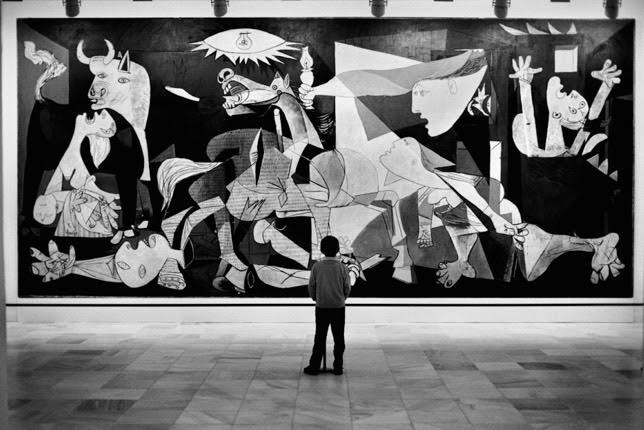
In Europe, the post-war period saw the rise of abstract expressionism and other avant-garde movements that, while not always explicitly political, nonetheless carried the spirit of rebellion against established norms. Artists such as Pablo Picasso and Georges Braque, whose Cubist innovations had already broken down traditional representational forms, later became associated with anti-fascist and leftist causes. Picasso’s Guernica, a monumental painting depicting the horrors of the Spanish Civil War, stands as one of the most powerful anti-war statements in art history. Picasso himself remarked, “Art is a weapon, a cry, and a call to arms in the face of tyranny.” The painting’s fragmented forms and agonized figures capture the chaos and suffering wrought by war, serving as a timeless reminder of the cost of political violence.
Philosophers and art theorists also played crucial roles during this period in articulating the ideological significance of left-wing art. Jean-Paul Sartre, the existentialist philosopher, argued that art should serve as a mirror for society, revealing its contradictions and inspiring individuals to seek change. “We are responsible for the world in which we live, and it is through art that we come to understand and challenge the absurdity of our existence,” he wrote. Similarly, Theodor Adorno and Max Horkheimer of the Frankfurt School analyzed the relationship between art, culture, and power in their seminal work, The Culture Industry. They contended that while mass culture often served to reinforce the status quo, genuine art possessed the capacity to disrupt and challenge the dominant ideologies. These intellectual debates provided a fertile ground for artists who sought to create work that was not only aesthetically innovative but also politically potent.
As the twentieth century gave way to the twenty-first, the landscape of left-wing art underwent further transformations. The digital revolution and globalization reshaped the ways in which art was produced, distributed, and consumed. Contemporary artists now operate in an era where the boundaries between high and low culture are blurred, and where political messages can be disseminated instantaneously to a global audience. In this new milieu, left-wing art has embraced diverse media and forms, from street art and performance to digital installations and socially engaged projects. Banksy, the elusive street artist whose politically charged murals have captivated the world, has become a symbol of contemporary resistance. Banksy’s work is replete with irony, satire, and a subversive wit that challenges conventional narratives. He famously declared, “Art should comfort the disturbed and disturb the comfortable.” His images, often appearing overnight on urban walls, encapsulate the spirit of grassroots activism and the power of art to provoke dialogue and incite change.
Alongside street art, performance art and interactive installations have emerged as vital forms of left-wing artistic expression. In cities across the globe, artists are using public spaces to stage interventions that question corporate power, governmental corruption, and environmental destruction. One such artist, Ai Weiwei, has harnessed the medium of sculpture, installation, and social media to critique authoritarianism and advocate for human rights. Ai Weiwei once stated, “We live in a time where art is no longer confined to galleries; it is a living, breathing force that challenges the boundaries of power.” His works, which often incorporate found objects and references to Chinese history and culture, offer a potent commentary on the intersection of art, politics, and society.
In the realm of literature and film, left-wing art has found new expressions as well. Novels, documentaries, and experimental films serve as platforms for exploring themes of social justice, identity, and resistance. The writings of authors such as Jean Genet and Bertolt Brecht, who integrated political critique with artistic innovation, continue to influence contemporary creators. Brecht’s concept of the “alienation effect” (Verfremdungseffekt) was designed to provoke critical reflection rather than passive absorption, urging audiences to question the social realities presented on stage or screen. “Art is not a mirror to reflect the world, but a hammer with which to shape it,” Brecht famously proclaimed. This radical notion has inspired generations of filmmakers and playwrights to create works that do not merely entertain but also challenge the status quo.
The contemporary art scene also reflects a growing commitment to intersectionality and inclusivity. As debates about gender, race, and environmental justice become central to political discourse, left-wing art increasingly embraces these issues. Artists from marginalized communities use their work to reclaim narratives, highlight systemic injustices, and envision alternative futures. The works of feminist artists such as Judy Chicago and the Guerrilla Girls have been pivotal in exposing sexism within the art world and beyond. Chicago’s installation The Dinner Party, with its celebration of women’s history, is a powerful statement on the transformative potential of art to rewrite historical narratives. The Guerrilla Girls, through their provocative posters and public interventions, have consistently challenged the lack of diversity in major art institutions. One of their memorable slogans reads, “Do women have to be naked to get into the Met. Museum?”—a biting critique that underscores the broader struggle for equality and recognition.
Moreover, the globalized nature of contemporary society has led to new dialogues between artistic traditions and political ideologies. In postcolonial contexts, left-wing art is often intertwined with movements for national liberation and cultural reclamation. Artists in Africa, Latin America, and Asia draw upon indigenous traditions, merging them with modern techniques to resist neocolonial influences and assert their own identities. The Chilean painter Roberto Matta, for instance, used abstract forms to explore the intersection of political oppression and inner liberation. Matta once remarked, “Art is the language of the oppressed; through it, we find the strength to imagine a world beyond tyranny.” His work, bridging surrealism and political engagement, remains influential in contemporary debates about the role of art in social transformation.
Throughout this long historical trajectory, one constant has been the conviction that art is not merely a decorative or passive endeavor but a radical force for change. Left-wing art has persistently sought to disrupt complacency and call attention to the injustices that plague society. In the words of the renowned Spanish painter Pablo Picasso, “Art is a lie that makes us realize truth.” Picasso’s assertion reflects the belief that by distorting conventional forms and norms, art can reveal deeper realities hidden beneath the surface of everyday life. His works, along with those of countless other left-wing artists, continue to serve as beacons of hope for those who dare to envision a more just and equitable world.
In recent years, the convergence of technology and art has opened up new avenues for political expression. Digital platforms allow artists to bypass traditional gatekeepers and reach a global audience with unprecedented speed. Virtual exhibitions, online installations, and social media campaigns have become integral components of contemporary left-wing art. The internet has democratized artistic expression, enabling marginalized voices to share their experiences and challenge dominant narratives. Contemporary digital artists are increasingly incorporating elements of interactivity and participatory engagement into their work, inviting audiences to not only view art but also to become active collaborators in its creation. One digital artist commented, “In this age, art must be a dialogue—a conversation between the creator, the viewer, and the world at large.” This perspective underscores the transformative potential of technology to amplify political messages and galvanize collective action.
As we move further into the twenty-first century, left-wing art continues to adapt to the challenges of a rapidly changing world. Environmental concerns, economic inequality, and the erosion of democratic values are recurrent themes that shape the work of today’s politically engaged artists. The climate crisis, in particular, has inspired a new wave of eco-artists who use their creative talents to call attention to the destruction of the natural world and the urgent need for sustainable practices. These artists often merge scientific data with poetic imagery, creating works that are both visually arresting and intellectually provocative. One such artist stated, “Our planet is on trial, and art is our courtroom.” Such powerful imagery encapsulates the urgency with which contemporary left-wing art confronts the existential threats facing humanity.
The enduring dialogue between art and politics is further enriched by the voices of philosophers and theorists who continue to interrogate the relationship between aesthetics and ideology. Thinkers like Jean Baudrillard, who examined the nature of reality and the impact of mass media on society, have provided insights that resonate with many left-wing artists today. Baudrillard once noted, “In a world where the image has become more real than reality itself, art must strive to reveal the truth hidden behind the spectacle.” His provocative ideas challenge artists to look beyond surface appearances and to engage in a deeper critique of the cultural forces that shape our lives. Similarly, the writings of Michel Foucault, with his exploration of power and knowledge, offer a theoretical framework for understanding how art can subvert dominant discourses and empower the marginalized.
Throughout this expansive history, the transformative power of left-wing art is evident not only in its content but also in its form. The evolution of artistic styles—from the figurative and didactic works of the nineteenth century to the abstract, experimental, and multimedia approaches of the contemporary era—reflects a continuous quest to break free from convention and to embrace new modes of expression. Each generation of artists has built upon the legacy of those who came before, reinterpreting traditional symbols and inventing innovative techniques to communicate their revolutionary ideas. As the Italian artist Umberto Boccioni famously proclaimed during the Futurist movement, “We must destroy the past so that we may build the future.” Although Boccioni’s words emerged from a movement with its own contradictions, they nonetheless encapsulate the restless spirit of artistic experimentation that has always animated left-wing art.
Moreover, the political dimensions of art have often extended into everyday life, blurring the boundaries between high art and popular culture. Public art projects, murals, and street performances have become potent expressions of resistance, turning urban spaces into canvases of political dissent. In many cities around the world, vibrant graffiti and large-scale installations testify to the power of art to transform public spaces and mobilize communities. The British street artist Banksy, whose enigmatic work often critiques capitalism and authoritarianism, succinctly captured this sentiment when he declared, “Art should comfort the disturbed and disturb the comfortable.” Banksy’s works, frequently appearing overnight on city walls, serve as a stark reminder that art need not be confined to the ivory towers of academia or the controlled environment of galleries—it can and does emerge from the grassroots, speaking directly to the struggles and aspirations of ordinary people.
The interplay between art and politics is not a static phenomenon but a dynamic process that continues to evolve as new challenges arise. In recent years, social movements such as Black Lives Matter, the global climate strike, and various anti-austerity protests have reinvigorated the role of art in political activism. Artists today are not only concerned with aesthetic innovation but also with creating works that spark dialogue, inspire action, and forge connections across diverse communities. This era of global activism has witnessed the rise of collaborative art projects that bring together creators, activists, and audiences in a shared quest for social transformation. One contemporary activist-artist remarked, “Art is the bridge that connects our individual struggles to a collective movement for change.” This sentiment reflects the belief that the transformative power of art lies in its ability to unite disparate voices and to offer a vision of a better, more just world.
In reflecting on the long and multifaceted history of left-wing art, it becomes clear that this tradition is not merely about aesthetics but is deeply intertwined with the political, social, and economic forces that shape our world. From the revolutionary canvases of Jacques-Louis David and the biting caricatures of Honoré Daumier to the monumental murals of Diego Rivera and the subversive interventions of Banksy, left-wing art has persistently challenged the status quo and opened up spaces for critical reflection and transformative action. As Pablo Picasso once asserted, “Every act of creation is first an act of destruction.” In this light, the creative process becomes a form of resistance—a deliberate effort to dismantle the old order and to envision new possibilities. Such ideas have inspired generations of artists to harness their creative energies in the pursuit of social justice, using their work as a means to question authority, expose injustice, and ultimately, to mobilize change.
The legacy of left-wing art is also evident in the writings and reflections of philosophers who have grappled with the intersection of aesthetics and politics. Jean-Paul Sartre, for instance, maintained that “man is condemned to be free,” emphasizing the responsibility of individuals—including artists—to confront the absurdity of the world and to forge meaning through their creative acts. Sartre’s existentialist perspective resonated with many left-wing artists who saw in art a means of asserting human dignity in the face of systemic oppression. Likewise, the revolutionary writings of Frantz Fanon, who explored the psychological and cultural dimensions of colonialism, have influenced a host of artists committed to decolonial and anti-imperialist struggles. Fanon’s assertion that “each generation must, out of relative obscurity, discover its mission, fulfill it, or betray it,” continues to inspire those who view art as a potent tool for liberation and empowerment.
As we navigate the contemporary era, the challenges that face our global society—ranging from environmental degradation and economic inequality to the erosion of democratic values—demand creative responses that draw on the rich legacy of left-wing art. Today’s artists are increasingly aware that their work must engage not only with aesthetic concerns but also with pressing social issues. In a world saturated by images and digital media, the role of the artist has expanded to include that of a public intellectual and activist. Contemporary creators are using innovative technologies and new media to produce interactive installations, immersive experiences, and virtual exhibitions that invite audiences to participate in the dialogue around social justice. One digital artist remarked, “In an age where information is ubiquitous, art must cut through the noise and reveal the deeper truths beneath the surface.” This call to action echoes the longstanding tradition of left-wing art that has always sought to unveil hidden realities and challenge the dominant narratives of power.
Moreover, the internationalization of art in the contemporary era has led to vibrant cross-cultural exchanges that enrich the dialogue around political aesthetics. Artists from diverse backgrounds are coming together to explore the common threads of struggle and resistance that bind us across borders. This global perspective has given rise to collaborative projects that address issues such as migration, human rights, and climate change—concerns that are central to the left-wing agenda. In these endeavors, art becomes a universal language, capable of transcending linguistic, cultural, and political barriers. As one globally minded artist put it, “We are all citizens of the world, and our art is the voice of a shared humanity in the fight for justice.” Such statements serve as a reminder that the aspirations of left-wing art are not confined to any single nation or ideology but resonate with a universal longing for a better future.
Throughout its long history, left-wing art has remained steadfast in its belief that creativity can serve as a means of social transformation. The art produced by generations of politically engaged artists has not only documented the struggles and triumphs of their times but has also provided the visual and intellectual language for envisioning alternative worlds. As the celebrated French artist Georges Braque once observed, “Art is not an end in itself but a means of communication—a way of saying what words alone cannot express.” This insight captures the essence of left-wing art, which continuously strives to speak truth to power, to give voice to the voiceless, and to articulate a vision of society grounded in justice, equality, and human dignity.
In summation, the journey of left-wing art from its revolutionary beginnings to its contemporary manifestations is a testament to the enduring power of creativity in the face of oppression. It is a story of artists and philosophers who have refused to accept the world as it is and have instead dedicated themselves to imagining what it could be. Their works, ranging from the epic canvases of history to the ephemeral installations of today, challenge us to confront uncomfortable truths, to question established hierarchies, and to dream of a future where art and politics merge to create a more just and humane society. As we move forward into an uncertain future, the legacy of left-wing art continues to offer hope and inspiration—a reminder that through art, we not only capture the struggles of our time but also light the path toward a transformative, more equitable world.
This article, spanning the evolution of left-wing art from its early revolutionary impulses to its modern digital manifestations, interweaves the insights of great artists and philosophers. It incorporates the passionate declarations of Jacques-Louis David, the searing satire of Honoré Daumier, the stirring social realism of Diego Rivera, and the subversive provocations of Banksy, along with the philosophical reflections of Karl Marx, Jean-Paul Sartre, and Frantz Fanon, among others. In their words, art is not a mere mirror of society but an active, transformative force that can disturb the comfortable and empower the oppressed. “Art is a weapon,” declared Picasso, “and it is through its power that we may one day remake the world.” This enduring conviction remains the heartbeat of left-wing art, inspiring each generation to challenge tyranny, embrace innovation, and believe in the possibility of a more just and vibrant society.