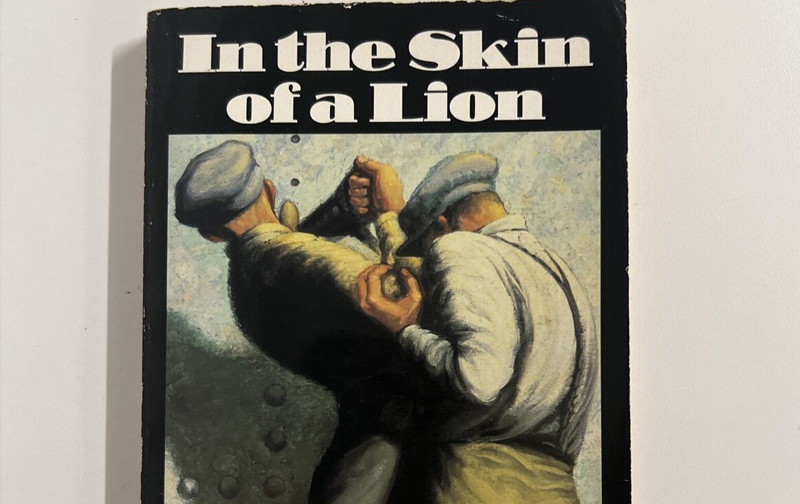
Michael Ondaatje’s In the Skin of a Lion is a novel that defies easy categorization, moving fluidly between historical fiction, postmodern narrative techniques, and poetic prose. As a literary work, it embodies a distinct fashion—both in its writing style and in the way it engages with history, memory, and identity. The novel’s aesthetic sensibilities extend beyond its narrative structure to its depiction of clothing, labor, and performance, making fashion an integral part of its thematic and stylistic landscape. Moreover, its reception among critics reflects the shifting intellectual and literary tastes of the time, situating it within a broader discussion of what constitutes literary elegance, innovation, and relevance.
Ondaatje’s writing is renowned for its lyricism, which is evident throughout In the Skin of a Lion. His prose is often described as cinematic, rich with sensory detail and a deliberate fragmentation that mirrors the novel’s thematic concerns. The novel’s style resists conventional linear storytelling, instead embracing a collage-like approach that assembles history through glimpses, memories, and seemingly disconnected moments that ultimately coalesce into a profound meditation on power, love, and invisibility. This narrative fashion aligns with postmodern sensibilities, favoring ambiguity over certainty and impression over exposition. Much like a designer who carefully selects textures and layers to create a compelling ensemble, Ondaatje constructs his novel with a meticulous attention to the weight and feel of each sentence, each moment.
The fashion of In the Skin of a Lion extends beyond its writing style to its depiction of clothing and physicality. The novel is deeply concerned with labor, particularly the experiences of immigrant workers who built Toronto’s bridges, tunnels, and waterworks in the early 20th century. Their clothing is not just functional but also symbolic—it marks their class, their struggles, and their aspirations. The laborers wear thick coats and sturdy boots, garments that speak to their endurance and the physical demands of their work. Alice, one of the novel’s central figures, moves through different roles and disguises, her attire reflecting her shifting identity and the performative nature of existence. Fashion, in this context, is both literal and metaphorical, embodying transformation, survival, and the invisible threads that connect individuals to history.
Ondaatje’s approach to character and narrative can be seen as an extension of his poetic sensibilities. He is not merely telling a story; he is sculpting it, layering textures and tones to create a world that feels both ephemeral and deeply rooted. His writing is often compared to the work of modernist and postmodernist authors, but it retains a unique cadence, a rhythm that feels almost musical. This stylistic elegance is what sets his work apart and makes it feel fashionable in the sense that it carries a distinct aesthetic identity. The novel’s prose is lush yet restrained, evocative without being overwrought, much like a well-tailored garment that fits perfectly without drawing undue attention to itself.
Critics of In the Skin of a Lion have often commented on its refusal to conform to traditional historical narratives. Some celebrate its fragmented structure and poetic sensibility, seeing it as a necessary intervention in historical fiction. Others, however, argue that its style can be overly elusive, making it difficult to grasp the political stakes of the story. This division reflects broader trends in literary criticism—what was once considered avant-garde may, over time, become conventional or even passé. Yet, the novel’s continued relevance suggests that its stylistic innovations remain compelling, resisting easy assimilation into the literary mainstream.
The fashion of literary criticism itself has evolved alongside In the Skin of a Lion. When it was first published in 1987, postmodernism was at its peak, and the novel’s fragmented storytelling and self-conscious engagement with history were seen as hallmarks of an intellectually rigorous and aesthetically sophisticated literary work. In more recent years, however, there has been a shift toward valuing storytelling that is more direct, more attuned to questions of accessibility and political urgency. This shift has led some contemporary critics to reassess Ondaatje’s work through a different lens, considering how its stylistic choices impact its engagement with social and historical realities.
One of the novel’s most striking qualities is its emphasis on invisibility—not just of its characters, who are often overlooked by official history, but also in the way it constructs meaning through gaps and silences. This narrative fashion aligns with the broader trends of literary minimalism and suggestion rather than overt declaration. Ondaatje does not give his readers a straightforward historical account; instead, he offers fragments, impressions, and moments of lyrical beauty that invite the reader to participate in the act of meaning-making. This stylistic choice is both a strength and a challenge, requiring readers to engage with the text in a way that is active rather than passive.
Just as fashion is cyclical, so too is the reception of literary styles. The poetic and fragmented nature of In the Skin of a Lion was once seen as cutting-edge, a refreshing departure from the more straightforward historical novels of its time. Today, in an era that often prioritizes clear and urgent storytelling, its aestheticized approach to history may be read differently, with some critics questioning whether its style serves or obscures its subject matter. Yet, much like a timeless piece of clothing that continues to find new relevance in changing contexts, Ondaatje’s novel persists as an essential work of literature, its beauty and complexity ensuring that it remains an object of fascination and debate.
Ultimately, In the Skin of a Lion is a novel that embodies fashion in multiple senses. Its prose is carefully crafted, imbued with a stylistic elegance that mirrors the work of a designer assembling a collection. Its characters move through a world where clothing is both practical and symbolic, where labor and identity are expressed through fabric and form. And its critical reception reflects the shifting tastes of the literary world, where what is considered innovative today may be reassessed tomorrow. Ondaatje’s novel is not just a story—it is an experience, one that lingers, much like the memory of a striking piece of fashion, long after it has been encountered.