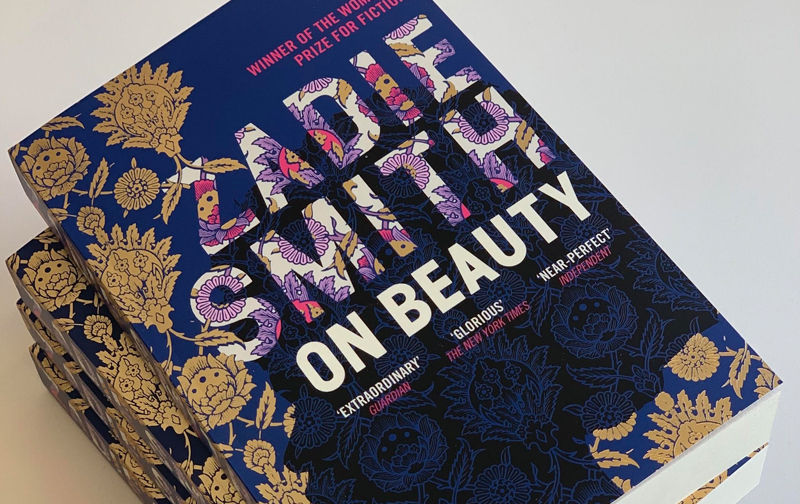
Zadie Smith’s On Beauty is a novel that navigates the intersections of art, culture, race, and identity, all while maintaining a distinct literary style that is both sharp and deeply human. Fashion and style, in both literal and metaphorical senses, play a crucial role in shaping the novel’s characters and themes. Clothing and personal appearance become markers of identity, status, and personal transformation, reflecting deeper tensions between tradition and modernity, intellect and aesthetics. The novel, set against the backdrop of an elite academic environment, critiques not only the rigid structures of higher education but also the way people present themselves—how they fashion their identities to fit into, or rebel against, their surroundings.
Just as On Beauty explores fashion in a cultural and personal sense, it also showcases a particular fashion of writing—one that is deeply influenced by E.M. Forster’s Howards End yet reinterpreted through a contemporary, multicultural lens. Smith’s prose is layered, vibrant, and full of intellectual energy, blending humor with profound emotional insight. Her sentences often move with a rhythm that feels conversational yet precise, capturing the complexities of her characters without ever feeling overindulgent. There is an elegance in the way she structures her narrative, allowing different perspectives to clash and intertwine, creating a dynamic and textured reading experience.
The fashion of its critics is another layer of interest. As with much of Smith’s work, On Beauty received a wide spectrum of responses, with some praising its wit, depth, and literary ambition, while others critiqued its overt homage to Forster and its sometimes sprawling narrative. The novel’s engagement with issues of race, privilege, and liberal hypocrisy made it particularly relevant in academic and literary circles, sparking debates about its portrayal of identity politics. Critics often analyze Smith’s ability to weave intellectual discourse into everyday life, questioning whether her approach enhances or burdens the novel’s emotional core.
The style of writing in On Beauty is unmistakably Smith’s—intelligent yet unpretentious, observant yet warm. Her ability to balance satire with sincerity allows the novel to tackle big ideas without losing sight of the personal. She writes with an eye for detail, capturing the small gestures and unspoken tensions that define relationships. The dialogue is sharp, often humorous, and filled with the kind of exchanges that reveal more than the characters intend. At its heart, On Beauty is a novel about contradictions—between old and new, black and white, intellect and feeling—and Smith’s writing style mirrors these contrasts, shifting fluidly between registers, perspectives, and moods.
In both content and execution, On Beauty is a novel deeply concerned with fashion and style, whether through the literal clothes its characters wear, the intellectual trends it critiques, the literary tradition it engages with, or the unique and masterful way Smith crafts her sentences. It is a novel that, much like its characters, is constantly negotiating its place within tradition while forging something entirely its own.