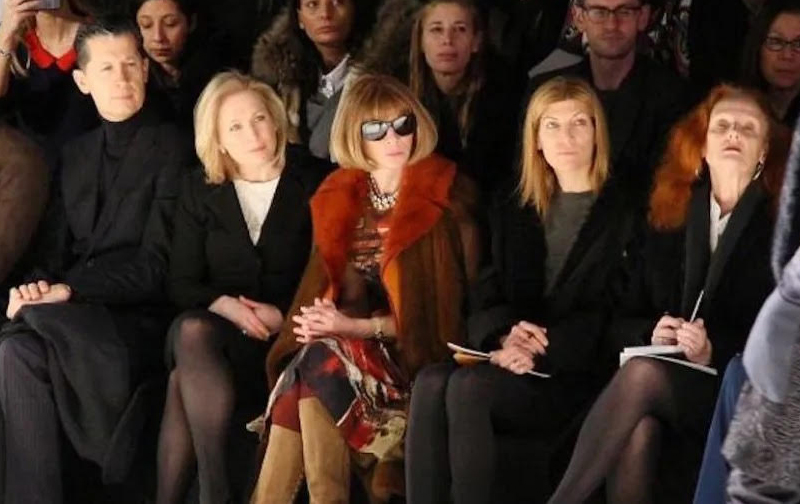
The lights dim and a hush falls over the runway. In the front row, a sea of glowing phone screens rises as influencers and celebrities angle for the perfect Instagram shot. Where once a discerning critic might have quietly taken notes with pen and paper, now there is applause on cue and effusive praise posted online before the final model has exited. The scene raises an uneasy question: in today’s fashion world, is anyone still whispering that the emperor has no clothes? Or has the independent voice of fashion criticism been all but drowned in a chorus of brand worship?
Fashion has always occupied a peculiar place between art and commerce, between creative expression and capitalist enterprise. As early as the 19th century, intellectuals and wits mocked its ephemerality. Oscar Wilde quipped that “fashion is a form of ugliness so intolerable that we have to alter it every six months” , capturing the cyclical fugacity that makes fashion at once alluring and suspect. Sociologists too noted the paradox of fashion as both conformist and rebellious. In 1904, Georg Simmel observed that “fashion is a product of class distinction” that allows individuals to imitate the elite even as it ultimately self-destructs when the imitation becomes too widespread. Thorstein Veblen, surveying the sartorial habits of the Gilded Age, remarked how the “best” fashions, seen with the distance of a few years, often strike us as “grotesque, if not unsightly”. Even Napoleon Bonaparte – no stranger to the strategic power of appearance – purportedly declared that “fashion condemns us to many follies; the greatest is to make oneself its slave”, underscoring that to be in thrall to style was to surrender a measure of one’s autonomy to mere clothes. Such critiques from thinkers and social commentators established early on that fashion should not be immune from scrutiny – indeed, that its very nature invites critical analysis of society’s vanities and norms.
Historically, however, explicit fashion criticism in the media lagged behind these theoretical barbs. For much of history, reports on clothing were either instructional (dictating trends to those who wished to be in vogue) or moralistic. In the 1850s, when American women’s rights activists like Amelia Bloomer advocated a radical new “bloomer” costume (a short dress worn over billowing trousers), the press responded not with open-minded analysis but with ridicule. Newspapers caricatured “bloomerism” as “a dangerous precedent” that threatened gender norms and mocked these women for adopting attire deemed unfeminine. Fashion commentary was thus often a tool to enforce social conventions – a far cry from independent criticism. The tension between conformity and critique was present even then: what women saw as a liberating reform in dress was dismissed by mainstream media as a laughable affront to decency.
As fashion became a more formalized industry in the late 19th and early 20th centuries, with the birth of haute couture in Paris and magazines like Vogue (founded 1892) and Harper’s Bazaar (1867) spreading the gospel of style, one might expect a parallel rise in critical voices. Yet the early fashion press mostly served as an enthusiastic celebrant of the latest modes rather than a stern judge. The magazines were, after all, often beholden to the very designers and advertisers whose creations filled their pages. Fashion journalism developed as a hybrid of reportage and promotion: describing new trends, extolling the virtues of this season’s silhouette, perhaps gently noting when a hemline felt novel or passé, but rarely did it bite the manicured hand that fed it. The relationship between brands and publications was symbiotic – and suffused with potential conflicts of interest from the start.
Still, moments of genuine critique pierced the polite veneer. The debut of Christian Dior’s “New Look” in 1947 stands as a dramatic early instance of fashion criticism making headlines. Dior’s extravagant postwar designs – with sumptuous yards of fabric in an age of rationing – provoked outrage in some quarters. Critics in Europe and America decried the New Look as wasteful and regressive; women on the streets even harassed those wearing Dior’s voluminous skirts, seeing them as unpatriotic excess. Competing designers joined in the censure. The legendary Coco Chanel – herself no stranger to the demands of commerce – sneered that “Dior doesn’t dress women. He upholsters them!”. Such barbed commentary revealed a fault line: was Dior’s work to be lauded as masterful creativity reviving French couture, or condemned as an indulgence that ignored the egalitarian spirit of the wartime austerity? Interestingly, commerce ultimately won that round. As scarcity eased, public sentiment shifted and “fashion magazines embraced Dior”, helping to cement his status as a global icon despite the initial critiques. The episode showed both the power and the limits of criticism: voices spoke out forcefully, but the machine of fashion – driven by desire, glamour, and business – swiftly absorbed the rebellion, distilling Dior’s “excess” into an officially sanctioned new beauty. It was an early harbinger of a dynamic that persists: genuine critique flaring up, only to be co-opted or neutralized by commercial momentum.
By the mid-20th century, the fashion ecosystem had matured, and with it emerged a new breed of fashion critic in the Anglophone media – one that sometimes relished the role of industry gadfly. Nowhere was this more evident than in the pages of Women’s Wear Daily (WWD) under the reign of John Fairchild. Fairchild, who helmed WWD from the 1960s through the ’90s, transformed a staid trade journal into a lively daily chronicle of fashion’s highs and lows. He did so with venomous wit and little fear of offending the powerful. “WWD under Fairchild took no prisoners,” one account recalls, noting that he was unafraid to publish negative reviews even of lauded designers. His unapologetic critiques earned him the nickname “Unfairchild.” Designers who fell afoul of WWD’s judgment could find themselves skewered in print or pointedly snubbed. As Fairchild himself reflected, “I have learned in fashion to be a little savage”. Oscar de la Renta wryly noted of Fairchild’s approach, “If the story was about you, you hated it, and if the story was about somebody else, you enjoyed it.” In other words, Fairchild restored a certain teeth to fashion reporting – a willingness to say that a collection bombed or a designer faltered, at a time when most glossy magazines offered only polite applause. Under his influence, fashion criticism became newsworthy in its own right, complete with feuds and gossip. WWD’s brisk, critical voice arguably helped elevate fashion to a matter of broader cultural interest, not just a niche concern of socialites. Yet even this era of brash criticism was entangled with the industry’s rhythms. Fairchild’s power derived from his publication’s influence – and when designers fought back, it underscored the delicate balance. Yves Saint Laurent, enraged by a WWD review in 1987, retaliated by banning the paper from his couture shows for two seasons. Fairchild eventually made a peace offering (a lavish book of praise about YSL) to mend fences, indicating that even the fiercest critic sometimes bowed, however grudgingly, to the prestige of the brands he covered. The dance between critic and creator was becoming equal parts duel and duet.
If the postwar decades saw the rise of the professional fashion critic (in newspapers and trades, if not so much in ad-dependent glossies), the late 20th century and turn of the millennium saw those critics attain a new kind of cultural legitimacy. Newspapers like The New York Times and The Washington Post appointed dedicated fashion critics whose prose could be as nuanced and pointed as any theater or literary review. By the 1990s and early 2000s, figures like Cathy Horyn at the Times and Robin Givhan at the Post became icons in their own right, known for their sharp eyes and sharper tongues. Givhan even won the Pulitzer Prize for Criticism in 2006 – a milestone that signaled that evaluating a Galliano show could be as culturally significant as reviewing a Broadway play or a presidential speech. This was a high-water mark for the idea of fashion criticism as an independent intellectual endeavor: these writers could wax poetic on the sociopolitical meaning of hemlines or lambaste a designer’s lapse in taste with a freedom that seemed to put creativity above commerce. Their readership extended beyond buyers and industry insiders to any reader interested in the spectacle and substance of fashion as a cultural phenomenon.
Yet even at this zenith, shadows of change loomed. In a 2015 reflection on the state of fashion media, Cathy Horyn herself identified a troubling void: “I think the biggest hole is in criticism. I think there should be more informed criticism.” Why the hole? Horyn pointed to the changing economics of media – “in the ’90s, the newspapers started losing their A-section and department-store advertising, and that paid for fashion writers”. In short, as traditional journalism’s revenue model declined, one of the first things to be cut was often the independent fashion voice. Newspapers that once carried pages of department store ads (and thus had a stake in covering fashion seriously) saw those ads migrate or vanish, and with them went budgets for critics. Meanwhile, the glossy magazines that survived did so increasingly by becoming ever more cozy with brands. The cozy relationship was hardly new, but it grew more unabashed. Editors-in-chief became celebrities aligned with big fashion houses; publishers leaned on editors to keep advertisers happy. In 2017, longtime British Vogue fashion director Lucinda Chambers gave a remarkably candid interview after parting ways with the magazine. She admitted that she had put a mediocre product on the cover solely because the brand was a major advertiser. “The June cover with Alexa Chung in a stupid Michael Kors T-shirt is crap… He’s a big advertiser, so I knew why I had to do it,” Chambers confessed . The veneer of editorial independence had cracked, at least momentarily, revealing how explicitly commercial interests could dictate content at even the most esteemed fashion publication. Around the same time, an internal document from Harper’s Bazaar leaked, showing upcoming editorial spreads sorted by brands, ranked in priority and clearly divided between “Advertisers” and “Non-Advertisers” – a blunt illustration that those who paid played, and those who didn’t, didn’t get coverage. These revelations were startling only for their honesty; the underlying dynamic had long been understood yet seldom spoken so plainly. Fashion criticism within mainstream media was increasingly tamed, domesticated by the pressures of advertising and the allure of access.
For a moment in 2012, it seemed open season on Cathy Horyn, the Times critic: after she cheekily described Oscar de la Renta as “far more a hot dog than an éminence grise of American fashion,” the infuriated designer took out a full-page ad in WWD to retort that she was a “stale 3-day-old hamburger”. A few weeks later, newly appointed Yves Saint Laurent designer Hedi Slimane, miffed by even a mildly lukewarm write-up (and by Horyn’s mere influence), blasted her in an open letter as a “schoolyard bully” and an “average writer,” vowing she would never be invited to his shows. Even pop star Lady Gaga jumped in, releasing a snarky song lyric attacking Horyn’s personal style. These bizarre episodes underscored how fraught the critic–designer relationship had become by the twilight of the old media era: an influential review could still wound a brand’s ego (and image) enough to provoke very public counterattacks.
For the broader public, the tenor of fashion commentary was evolving as well. The early 2000s had been the era of televised “fashion police” and magazine “Who Wore It Better?” spreads – a sometimes cruel spectacle of stylists and pundits dishing out barbs about celebrities’ outfits and bodies. By the mid-2010s, that kind of catty criticism was broadly out of favor. A collective fatigue with toxic judgments had set in; as one writer noted, the “old ways” of snark had led to “problematic… moments” – for instance, a TV host making racist quips about a young actress’s dreadlocks, or tabloids mocking a pregnant star as “Shamu”. In response, a robust Body Positivity movement took hold and turned the tables, declaring such insults unacceptable and pressuring even the biggest brands to change. Soon tentpole companies from Victoria’s Secret to Chanel were “strong-armed into” more inclusive PR moves to stay relevant . In this climate, certain forms of “critique” – especially those trafficking in personal ridicule or narrow standards of beauty – were rightly consigned to the past. (Sadly, along with that bad trash-talk, some of the good-faith critique would also be swept aside in the ensuing wave of hyper-positivity.)
The notoriously fickle industry was also being transformed by technology. As Suzy Menkes noted, social media turned fashion weeks into a “whirligig” spinning out of control, with designers pressured to produce up to ten collections a year. The Times runway critic (Menkes’s peer, Cathy Horyn) reminisced about the messy exuberance of earlier eras when models were at the center “of a respectable orgy”, whereas now global branding demanded guests sit primly so photographers could get clean shots. “It’s pretty embarrassing, like sitting in study hall,” Horyn wrote. The control and judgment of a select few arbiters was challenged; designs that once took months to reach the public were now broadcast and copied within seconds. The old hierarchies were crumbling. Bloggers, Instagrammers, and self-made “fashion historians” on YouTube or TikTok began to offer commentary and critiques outside traditional channels. Some brands, like Oscar de la Renta with his pared-down show guest list, tried to tune out the “circus” of “30,000 people… unrelated to the clothes”. But ultimately, business is business: without adapting to the new media ecosystem, even venerable houses risked obsolescence.
In this new landscape, what qualifies as “fashion criticism” itself became a contested notion. On one end of the spectrum, legacy voices like Horyn persisted (after leaving the NYT, she continued penning incisive reviews for The Cut). On the other end, a cacophony of new voices arose: Instagram accounts and YouTube channels dedicated to fashion commentary that ranged from scholarly to scathing to outright silly. In a sense, criticism fragmented. Some online commentators took up the mantle of serious critique, translating deep research and theory into accessible formats for a young audience. Video essayists dissected the history of Margiela or the symbolism in McQueen’s oeuvre, attracting hundreds of thousands of viewers hungry for substance beyond the gloss. Digital platforms allowed a more interdisciplinary approach – bringing in sociology, philosophy, anthropology. A TikTok historian might explain the subversive brilliance of Vivienne Westwood’s punk designs to viewers who’d never opened a fashion magazine; an Instagram carousel might break down the semiotics of a Balenciaga sneaker using memes and Marxist theory in equal measure. It could be argued that in these corners of the internet, the spirit of independent fashion criticism found new life. Indeed, one stylist observed that today “people… want longer, more researched, more informative or at least very unique pieces”, noting that the rise of historical deep-dives is one way to enjoy fashion “without being prompted to go buy it”. Another writer linked “the rise of commentary” to the fading allure of the static influencer – “Visuals are out and intellectuals are in. It’s not enough to be aspirational anymore; you have to be dynamic, but most importantly smart”. In a hopeful light, one could say the democratization of criticism has allowed for a more inclusive and varied conversation around fashion’s meaning.
Yet democratization has a double edge. Alongside the thoughtful new critics came an overwhelming tide of what might be called promotional or perfunctory coverage masquerading as critique. Many influencers built massive followings by effectively becoming extensions of brand marketing teams. They attend shows as invited guests, wear gifted outfits, and post enthusiastic impressions that blur the line between personal opinion and sponsored content. Because their livelihoods often depend on brand partnerships, few influencers can risk the candor of a Horyn or a Givhan. The result is a feedback loop of hype: collections are “amazing,” “stunning,” “iconic” – every adjective straight from the press release. Any truly negative or dissenting opinion is either couched in polite euphemism or simply omitted (why post about a show you hated, when silence avoids controversy?). Thus the independent critique risks extinction not by direct censorship but by being drowned out in a sea of cheerleading.
Sensing that void, some took it upon themselves to be watchdogs. The Instagram account Diet Prada, for instance, emerged as an antidote to uncritical buzz. Run by two young fashion insiders, it called out design copycats, industry misdeeds, and offensive behavior with unvarnished boldness. When luxury house Dolce & Gabbana ran a tone-deaf ad campaign in China in 2018, Diet Prada eviscerated it, pointing out the “stereotypical and sexist” imagery and even sharing purportedly leaked messages in which the brand’s co-founder made racist remarks . The public outrage was so severe that D&G’s Shanghai show got canceled and #BoycottDolce trended. But the brand retaliated quietly: in 2019 it filed a defamation lawsuit in Italy against Diet Prada’s founders, seeking over €4 million in damages. “This lawsuit is outrageous, on a number of levels,” observed Susan Scafidi of Fordham’s Fashion Law Institute, noting the ethical absurdity of a company that publicly apologizes for its misstep and then “quietly turn[s] around and bring[s] a lawsuit”. The Diet Prada saga encapsulates the new frontier of fashion criticism: independent voices using social media to hold brands accountable, and the brands in turn deploying legal or PR might to silence them. It’s a high-stakes chess game of critique and commerce played out in tweets and court filings.
Not only within the West has this tension played out. Non-Western voices breaking into the global fashion scene have often encountered misunderstanding from Western critics. When Japanese designer Rei Kawakubo unveiled her radical, deconstructed “Destroy” collection in Paris in 1982 – an austere parade of slashed sweaters and shapeless black skirts – many observers were baffled. Some thoughtlessly dismissed it as “Hiroshima chic” or “postatomic” fashion, a label dripping with Eurocentric condescension that Kawakubo later said “had it all wrong”. What those critics derided in 1982 as an alien, unfathomable aesthetic was, by the 1990s, recognized as a profound reinvention of silhouette and form. Collections once met with derision came to be lauded by the likes of Vogue as “extraordinary… high concept and beautiful” marriages of art and attire. The journey from ridicule to reverence in Kawakubo’s case revealed both the limits of critical imagination (especially when faced with ideas from outside the Western canon) and its capacity to adapt over time. It was a stark reminder that fashion criticism, to remain vital, must be open to the new – and humble enough to admit when yesterday’s judgement might have missed the mark.
Meanwhile, in emerging fashion markets across Asia and the Middle East, there is a budding awareness of the need for genuine critique to nurture their own industries. In India, for instance, observers have noted with concern that much of the fashion commentary has devolved into viral social-media takedowns of celebrity outfits – sensationalist and shallow, aiming for clicks rather than insight. “Fashion criticism has shifted from thoughtful analysis to viral social media content, and it’s a worrying trend,” wrote one Indian commentator in 2025 . Just as India’s designers achieve global recognition, the fear is that without serious critical engagement, creativity will plateau under the weight of Instagram fodder. A similar story plays out in other regions: local fashion weeks attract influencers eager for selfies, while thoughtful journalists struggle for space. The tension between critique and commerce is thus not solely a Western phenomenon; it’s the inevitable growing pain of any fashion scene maturing in the glare of capitalism and connectivity.
Throughout all these developments, the underlying question persists: is fashion criticism today a genuine, independent voice or merely an echo of brand marketing? The answer, paradoxically, is both. On the grand stage of global fashion, one can find ample evidence of critics acting as handmaidens to industry – applauding every new line from a mega-brand, engaging in what is essentially PR for luxury houses. The proliferation of “content creators” has made brand worship a mainstream mode of engagement; one doesn’t have to read between the lines to see the commerce driving the commentary. And yet, scattered across that same stage are the defiantly independent voices, the court jesters and truth-tellers who remind us that fashion is more than commerce – it’s culture, history, a mirror and a lamp. The evolution of fashion criticism has taught us that it will always be pulled between these poles.
Perhaps the true evolution we are witnessing is not the death of fashion criticism, but its diffusion. It is no longer concentrated in a handful of critics with prestigious mastheads; it has diffused into the culture at large, for better and worse. This diffusion means critical thinking about fashion might pop up in a rapper’s lyric mocking designer logos, or in a Twitter thread deconstructing the gender politics of a red-carpet dress, even as formal runway reviews wane. The risk, of course, is that in diffusion the potency of critique is diluted – that the clear voice saying “this doesn’t work” is lost in a sea of fire emojis and ad copy. The challenge for the future will be ensuring that critical voices don’t fall completely silent or get drowned out by the din of the fashion circus.
As Roland Barthes once wrote, “Every new fashion is a refusal to inherit… a subversion against the oppression of the preceding fashion.” Fashion always contains the seed of rebellion. So too does fashion criticism, which at its best is an act of both understanding and rebellion – a refusal to simply inherit the narrative that the brands spin, a subversion of the easy applause. It strives to extract “the poetry within history” from clothing and “distill the eternal from the transitory,” as Charles Baudelaire said of modernity. In that sense, the role of the critic is not to tear down fashion, but to illuminate it. And if the critic sometimes bites, it’s in the service of keeping fashion honest, human, and in dialogue with the world around it.
Fashion criticism today stands at a crossroads: part-academic, part-poetic, at times cowed by commerce and at times daringly free. The hope is that the next generations – whether journalists, influencers, or scholars – continue the hard, vital work of critiquing fashion’s follies and celebrating its artistry in equal measure. After all, as Napoleon (of all people) warned, the greatest folly would be to become a slave to fashion. The critic’s voice, independent and clear, is what helps prevent that, ensuring that even amid the glitter and spectacle, we keep our wits about us and our eyes open to what’s really on display.