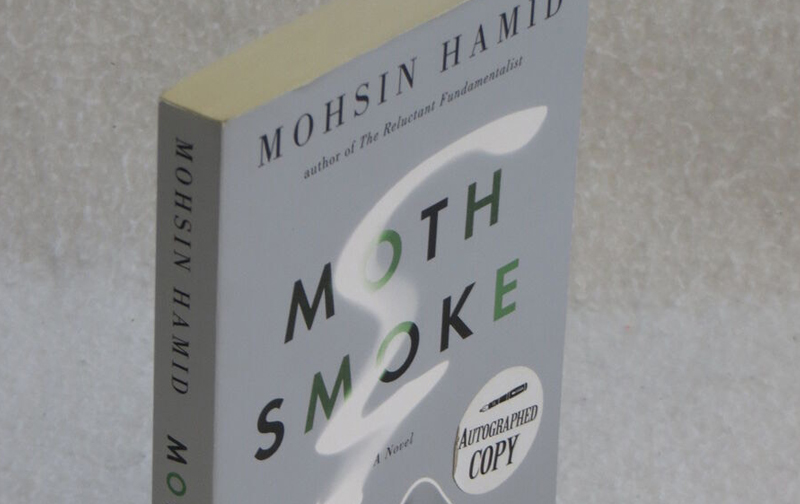
Mohsin Hamid’s debut novel, Moth Smoke, is a work that challenges the reader not only with its narrative daring but also with a style that is as unconventional as it is provocative. In this sprawling exploration of modern urban life in Lahore, the fashion of the novel—its overall aesthetic, structure, and mode of expression—emerges as a vibrant tapestry woven with the threads of personal desire, social decay, and the ceaseless tension between ambition and self-destruction. The novel’s narrative is as much a portrait of a society in transformation as it is a reflection on the inner workings of its protagonist’s turbulent psyche. The language is lyrical and arresting, oscillating between poetic flourishes and stark, uncompromising realism, which in turn creates an atmosphere where each sentence pulses with an energy that is both mesmerizing and, at times, disconcerting.
From the outset, Moth Smoke positions itself in a realm that defies the traditional constraints of conventional storytelling. Rather than following a linear plot, the narrative unfolds through a series of interlaced voices and shifting perspectives. Darashikoh Shehzad, known colloquially as Daru, narrates his descent from a position of relative privilege to a state of utter dissolution, a journey that mirrors the collapse of societal ideals in a country struggling to reconcile tradition with modernity. His voice is at once confessional and accusatory, imbued with a self-awareness that oscillates between self-justification and self-destruction. The narrative technique, which fluidly incorporates first-person introspection, second-person immediacy, and occasional third-person observations, is a deliberate stylistic choice that blurs the boundaries between the personal and the universal, the subjective and the objective. This multiplicity of voices serves not only to deepen the characterizations but also to reflect the fragmented nature of contemporary urban existence.
The fashion of the novel is evident in its audacious narrative structure, which eschews the neat compartmentalization of chapters and traditional arcs in favor of a more experimental, collage-like form. Hamid invites the reader to become an active participant in the narrative, challenging them to piece together the disparate elements of Daru’s life as one would assemble a jigsaw puzzle. This method of storytelling echoes the sensibilities of modernist literature, where the fragmentation of narrative mirrors the fractured reality of the modern world. At its core, Moth Smoke is a novel about desire—an exploration of the ways in which individuals are drawn to that which is both alluring and dangerous. The central metaphor of the moth, drawn irresistibly to a flame, operates on multiple levels. On one level, it captures the self-destructive nature of Daru’s pursuit of pleasure, a quest that ultimately leads him to the brink of annihilation. On another level, it serves as a broader allegory for the state of Pakistan itself—a country that, in its feverish pursuit of modernity and power, risks being consumed by the very forces it seeks to harness.
The language of Moth Smoke is a study in contrasts. Hamid’s prose is at once elegant and gritty, oscillating between moments of heightened poeticism and raw, unvarnished depictions of urban decay. His descriptions of Lahore are painted in vivid, almost tactile detail—images of crowded streets, opulent mansions juxtaposed with impoverished alleyways, and a society riven by class divisions are rendered with a clarity that leaves little to the imagination. Yet, within this visual feast, there is an undercurrent of melancholy and foreboding. The very elements that lend the city its seductive charm also serve as harbingers of its inevitable downfall. In many ways, the style of the novel mirrors its thematic concerns: just as the characters are caught between the allure of wealth and the inevitability of decay, so too is the narrative caught between a celebration of life’s excesses and a lament for its transience.
Critically, Moth Smoke has garnered both praise and criticism for its innovative approach. Many have lauded Hamid for his fearless exploration of taboo subjects and his unflinching portrayal of a society in moral disarray. His characters are unashamedly flawed, their inner lives marked by a disquieting mixture of ambition, envy, and a desperate yearning for connection. Daru’s transformation from a seemingly privileged banker into a figure ensnared by drugs, crime, and forbidden love is rendered with a complexity that defies simple moral categorization. Instead of presenting a neatly ordered progression from virtue to vice, Hamid exposes the ambiguous nature of human behavior—where every action is tinted by conflicting desires and the inexorable pull of fate. This multifaceted portrayal of character is a testament to Hamid’s ability to capture the nuanced realities of life, where the line between hero and antihero is perpetually blurred.
Yet, the novel is not without its detractors. Some critics have found the narrative’s experimental structure to be overly ambitious, arguing that the constant shifts in perspective and the intermingling of narrative voices can lead to moments of disorientation. The reliance on metaphoric imagery, while richly evocative, may at times seem self-conscious or even gratuitous, as if the author is attempting to impose a layer of symbolic meaning on every element of the story. There is a certain tension in the text between the desire to create a work of art that is as intellectually stimulating as it is emotionally resonant, and the risk of alienating readers who prefer a more straightforward narrative approach. Despite these criticisms, it is precisely this willingness to challenge conventional norms that has cemented Moth Smoke’s status as a landmark work in contemporary literature.
The novel’s treatment of class and social stratification is particularly noteworthy. In a society where the divisions between the rich and the poor are stark and often insurmountable, Hamid uses Daru’s personal decline as a microcosm for the broader societal malaise. The opulent lifestyles of Lahore’s elite, characterized by their obsession with air conditioning, designer clothes, and conspicuous consumption, stand in sharp contrast to the harsh realities faced by those who are left behind. This dichotomy is not presented as a simple moral failing on the part of the wealthy, but rather as an inevitable consequence of a system that prizes material success above all else. The rich, in their pursuit of comfort and status, have built a world that is increasingly isolated from the struggles of everyday life—a world where empathy and social responsibility are often sacrificed on the altar of progress and profit. In this sense, Moth Smoke is as much a critique of modern capitalism as it is a personal narrative of downfall.
Hamid’s narrative technique is also deeply reflective of his own cosmopolitan identity. Born in Pakistan and educated in the West, he occupies a unique position as both an insider and an outsider—a perspective that is palpably evident in the novel. His depiction of Lahore is informed by a deep, personal knowledge of the city, yet it is filtered through a lens of critical distance that allows him to question and subvert its dominant cultural narratives. This duality of perspective is one of the novel’s most compelling features, imbuing it with a richness that transcends regional boundaries and speaks to universal themes of identity, alienation, and the search for meaning in a rapidly changing world.
The stylistic innovations in Moth Smoke extend beyond its narrative structure and thematic concerns to encompass its very language. Hamid’s prose is characterized by a playful yet incisive wit, a quality that serves to both charm and unsettle the reader. There are moments when the language seems to dance across the page—vivid, almost hallucinatory sequences that evoke the sensory overload of a city in crisis. At the same time, there is an economy of expression that ensures every word, every image, carries significant weight. This balance between the ornate and the austere is a hallmark of Hamid’s writing, and it is particularly effective in conveying the inherent contradictions of modern life—where beauty and decay, passion and despair, coexist in a precarious equilibrium.
Critically, the reception of Moth Smoke has been as varied as the voices within its pages. Some have hailed it as a groundbreaking work that redefines the boundaries of South Asian fiction, while others have taken issue with its perceived excesses and structural complexity. Yet, regardless of these differing viewpoints, there is a consensus that the novel is a work of profound ambition—a literary experiment that dares to confront the multifaceted realities of contemporary existence. Its impact lies not merely in its narrative innovations or its aesthetic appeal, but in its capacity to provoke thought and elicit emotional responses from its readers. It challenges conventional notions of morality, success, and identity, inviting readers to reconsider their own assumptions about the world around them.
In reading Moth Smoke, one is compelled to reflect on the nature of artistic expression itself. The novel embodies a spirit of rebellion—a refusal to conform to the expectations of a formulaic narrative or a neatly defined moral framework. It is a work that celebrates ambiguity and complexity, embracing the idea that life, much like literature, is rarely black and white. The characters are imbued with a raw humanity that resists easy categorization; they are simultaneously admirable and repulsive, courageous and cowardly, driven by lofty ideals and base desires. This multifarious portrayal of human nature is one of the novel’s greatest strengths, as it mirrors the often paradoxical impulses that govern our own lives.
Ultimately, Moth Smoke stands as a testament to the transformative power of literature. It is a work that not only captures the zeitgeist of a particular time and place but also speaks to timeless concerns that resonate across cultures and generations. The novel’s exploration of desire, decay, and the inexorable pull of fate is rendered with a stylistic flair that is both innovative and deeply affecting. Hamid’s ability to weave together disparate narrative threads into a cohesive whole is nothing short of masterful, and his unflinching portrayal of a society in flux offers valuable insights into the human condition. The fashion of Moth Smoke—its striking visual imagery, its bold narrative experimentation, and its uncompromising critique of modern life—continues to inspire readers and provoke thoughtful debate among critics.
In a world where the pursuit of material success often obscures the more profound dimensions of existence, Moth Smoke serves as a powerful reminder of the fragility of our aspirations. It challenges us to confront the harsh realities that lie beneath the glittering surface of modernity, urging us to question the true cost of our desires. The novel’s enduring relevance is a testament to its capacity to capture the complexities of a society in transition—a society where the lines between beauty and corruption, hope and despair, are inextricably intertwined. Hamid’s work is a bold and fearless exploration of these themes, rendered in a style that is as inventive as it is evocative.
For readers who are willing to embrace its unconventional approach, Moth Smoke offers an immersive and thought-provoking experience. Its rich tapestry of language, imagery, and narrative innovation invites us to lose ourselves in a world where nothing is as it seems, and where every moment is charged with the tension of impending transformation. In this way, the novel is not only a work of art but also a mirror reflecting the myriad contradictions of modern life. It is a narrative that defies easy explanation, a story that continues to reveal new layers of meaning with each reading. In its portrayal of a man drawn inexorably toward his own destruction, Moth Smoke captures the essence of a society caught between the promise of progress and the peril of self-destruction—a society where the allure of the flame is both irresistible and ultimately fatal.
Through its bold stylistic choices and its uncompromising vision, Moth Smoke reaffirms the power of literature to challenge, transform, and illuminate. It is a novel that dares to ask difficult questions about the nature of desire, the cost of ambition, and the inevitable decay that accompanies the pursuit of fleeting pleasures. In doing so, it leaves an indelible mark on the reader—a lingering sense of both awe and melancholy, a recognition that within the dazzling dance of light and shadow, there exists a truth that is as inescapable as it is beautiful.