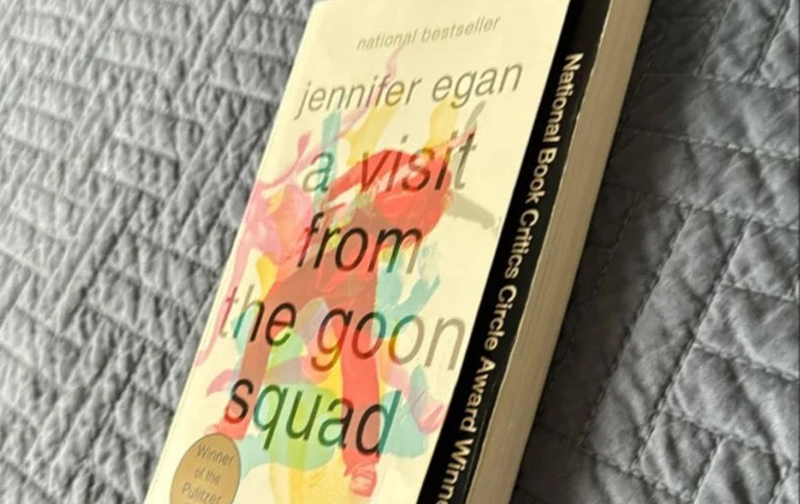
Jennifer Egan’s A Visit from the Goon Squad is a novel that defies traditional narrative structures and plays with time, perspective, and language in a way that mirrors the chaotic, unpredictable nature of life itself. When exploring the “fashion” and “style” of this novel, one can interpret these terms in two distinct but intertwined ways: the aesthetic choices Egan makes in crafting her prose, and the cultural fashion trends that subtly shape the characters’ identities throughout the story. The novel’s fashion and style operate as reflections of personal expression and societal change, both in the literal garments worn by the characters and the literary techniques Egan employs to weave together their fragmented lives.
Egan’s writing style is characterized by its bold experimentation and non-linear structure. Each chapter shifts focus to a different character, sometimes jumping decades forward or backward in time. This fragmented approach gives the narrative a kaleidoscopic quality, echoing the ways memory and identity are constructed over time. Her prose oscillates between sharp, minimalist dialogue and lush, descriptive passages that delve deep into her characters’ inner lives. This stylistic fluidity mirrors the shifting cultural landscape portrayed in the novel, where trends come and go, and people reinvent themselves with the passing decades.
Fashion, in A Visit from the Goon Squad, serves as a subtle but potent symbol of transformation and personal identity. Characters’ clothing choices often reflect their internal struggles and desires. Sasha, a kleptomaniac who steals out of compulsion and emotional turmoil, is frequently described in ways that highlight her contradictions: poised yet vulnerable, stylish yet incomplete. Her fashion choices become a form of armor, a way to project control in a life where she often feels powerless. Bennie Salazar, a music producer clinging to past glories, dresses in a manner that underscores his disconnect from the modern world. His use of gold flakes in his coffee and his nostalgia for the punk rock scene of his youth are mirrored in his attire, which feels out of step with current trends. Through these details, Egan uses clothing as a quiet but effective storytelling device, allowing readers to infer much about her characters’ emotional states and personal histories through the way they present themselves to the world.
The music industry, a major backdrop of the novel, also plays a significant role in shaping its characters’ fashion sensibilities. Punk rock aesthetics, with their ripped jeans, leather jackets, and DIY attitude, serve as both a fashion statement and a symbol of rebellion for many characters. The passage of time is marked not just by shifting musical tastes but by the evolution of style: what once signified defiance becomes commodified, a relic of a bygone era. In this way, fashion acts as a visual cue for the novel’s themes of loss and transformation, highlighting the inevitable march of time — the “goon squad” of the title — that catches up with everyone.
Egan’s writing style amplifies these themes through its innovative structure. One of the most striking examples is the PowerPoint chapter, in which Sasha’s daughter narrates the story through a series of slides. This unexpected narrative device breaks from traditional storytelling, embodying the fragmented, nonlinear nature of memory and communication in the digital age. It’s a bold stylistic choice that underscores Egan’s willingness to experiment, pushing the boundaries of what a novel can be. The slides, sparse and minimalist, create a sense of emotional distance while simultaneously offering profound insight into Sasha’s life and relationships. This unconventional chapter is emblematic of Egan’s broader approach to storytelling: she embraces disruption and dissonance, using form to mirror content in a way that feels fresh and urgent.
Critics of Egan’s style sometimes argue that her experimental approach can feel disjointed or overly intellectual, distancing readers from the emotional core of her characters. The constant shifts in perspective and timeline require readers to piece together the narrative like a puzzle, which can be challenging for those who prefer a more linear, character-driven story. However, this fragmentation is precisely what makes the novel so compelling. It reflects the dislocation and fragmentation of modern life, where technology, memory, and identity intersect in complex ways. Egan’s prose is sharp and incisive, often laced with humor and pathos. She captures the fleeting moments of beauty and sadness that define human existence, crafting sentences that resonate long after they’re read.
The novel’s exploration of time and memory is further enhanced by Egan’s use of recurring motifs and symbols. Music, of course, is the most prominent of these — a thread that binds the characters together across decades — but fashion, technology, and even language itself become markers of change. The characters’ evolving relationships with their own pasts mirror broader societal shifts, creating a narrative that feels both deeply personal and profoundly universal. Egan’s style captures this sense of inevitability, using abrupt transitions and subtle callbacks to emphasize the ways in which the past lingers, shaping the present in ways both seen and unseen.
In many ways, A Visit from the Goon Squad is a novel about reinvention. The characters reinvent themselves through music, through relationships, and, importantly, through fashion. Clothing becomes a means of self-expression, a way to project an identity that may or may not align with inner reality. This tension between appearance and authenticity is mirrored in Egan’s writing style, where surface details often mask deeper emotional truths. Her ability to balance these layers of meaning — to craft a narrative that is at once fragmented and cohesive — speaks to her skill as a storyteller.
Ultimately, Egan’s fashion and style, both in terms of the characters’ clothing and her narrative choices, work in tandem to create a portrait of lives shaped by time and circumstance. The novel’s unconventional structure and shifting perspectives mirror the fluidity of personal identity, while its attention to detail — from the texture of a jacket to the rhythm of a sentence — imbues the story with richness and depth. It’s a novel that demands attention and rewards close reading, revealing new layers with each revisit.
The brilliance of A Visit from the Goon Squad lies in its refusal to conform to expectations. Just as fashion evolves, so too does Egan’s prose, embracing change and experimentation at every turn. Her writing is both a reflection of and a reaction to the world she depicts — a world where time is relentless, memory is fragmented, and identity is constantly in flux. In this sense, Egan’s style is more than just a narrative choice; it’s a statement of intent, a declaration that storytelling can be as dynamic and unpredictable as life itself. The novel’s fashion and style are inseparable from its meaning, each thread woven into a tapestry that captures the beauty and melancholy of passing time. Through her bold stylistic choices and keen eye for detail, Egan crafts a narrative that lingers long after the final page, much like a favorite garment that grows more meaningful with age.