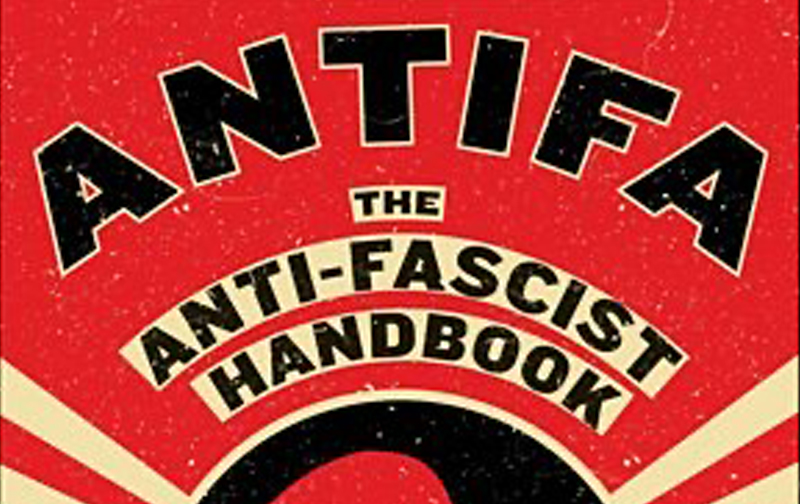
The struggle against fascism is not merely a historical issue but an ongoing battle that demands constant vigilance. Throughout history, authoritarian movements have sought to control public spaces, rewrite historical memory, and suppress dissenting voices. Anti-fascism is not simply opposition to one ideology—it is a broader commitment to resisting oppression, reclaiming public space for the people, and ensuring that the past is neither forgotten nor distorted. The resurgence of authoritarianism in recent years has made this struggle more urgent than ever, as reactionary forces attempt to erase histories of resistance and consolidate power through fear, nationalism, and control over cultural expression.
The rise of authoritarianism often begins with an attack on historical memory. Fascist regimes have always understood that controlling the past means controlling the future. George Orwell famously warned in 1984, “Who controls the past controls the future: who controls the present controls the past.” This manipulation of history is a crucial tool for reactionary movements, which seek to erase inconvenient truths, glorify oppressive regimes, and reframe historical struggles in their favor. In Italy, Mussolini’s government attempted to rewrite the nation’s past, emphasizing imperial grandeur while erasing the contributions of socialist and anarchist movements. Similarly, Francoist Spain suppressed the memory of anti-fascist resistance, replacing it with narratives of national unity and religious conservatism. These distortions serve to justify current power structures by eliminating alternative visions of society.
Walter Benjamin, in his Theses on the Philosophy of History, argued that “the tradition of the oppressed teaches us that the ‘state of emergency’ in which we live is not the exception but the rule.” His words remain relevant today, as authoritarian regimes and right-wing populists seek to normalize oppression by portraying their rule as the natural order of things. The preservation of historical memory is therefore an act of resistance. This is why activists fight to maintain monuments, preserve archives, and challenge historical revisionism. It is also why fascist and authoritarian governments so frequently attack historians, journalists, and artists who refuse to conform to their version of events.
Art has always played a central role in anti-fascist movements. From the anti-fascist murals of Mexico to the political posters of the Spanish Civil War, artists have used their work to counteract authoritarian narratives and mobilize resistance. One of the most iconic anti-fascist artists of the 20th century was Pablo Picasso, whose painting Guernica exposed the horrors of war and fascist violence. Created in response to the bombing of a Basque town by Franco’s forces and their Nazi allies, Guernica remains a powerful indictment of militarism and state terror. Picasso himself declared, “Painting is not made to decorate apartments. It is an instrument of war for attack and defense against the enemy.” His words reflect a broader truth: art is not neutral. In the face of authoritarianism, silence is complicity.
Street art and public interventions have long been important tools of resistance against authoritarianism. The work of artists like Banksy, Blu, and Shepard Fairey has carried strong anti-fascist messages, challenging state narratives and reclaiming public space for the people. The act of creating art in public spaces is itself an act of defiance, particularly in societies where authoritarian regimes seek to control every aspect of urban life. During the Chilean dictatorship of Augusto Pinochet, muralists risked their lives to create visual messages of resistance. The Brigada Ramona Parra, a collective of radical artists, painted bold, colorful murals advocating for social justice and freedom, defying the regime’s attempts to silence dissent.
The concept of reclaiming public space is central to anti-fascist activism. Authoritarian regimes seek to control not only politics but also the physical spaces in which people gather. Fascist aesthetics, from the massive rallies of Nazi Germany to the grandiose architecture of Mussolini’s Italy, were designed to instill fear and obedience. In contrast, anti-fascists emphasize public participation, collective ownership of space, and grassroots cultural expression. Occupations, protests, and community-led art projects serve as direct challenges to authoritarian control. As Henri Lefebvre argued in The Production of Space, “Space is political. It is ideological. It is never neutral.” When movements reclaim squares, streets, and public buildings, they are not just protesting—they are creating new possibilities for democratic life.
Fascism thrives on spectacle, but so does resistance. The Italian philosopher Antonio Gramsci emphasized the role of cultural hegemony in maintaining power, arguing that the ruling class not only controls economic and political structures but also shapes the ways people think and imagine their world. Anti-fascist cultural production, from literature to theater, serves to challenge this dominance. Bertolt Brecht, the German playwright and committed anti-fascist, developed epic theater as a way to engage audiences critically rather than passively consuming propaganda. He famously wrote, “Art is not a mirror held up to reality, but a hammer with which to shape it.” His plays, such as The Resistible Rise of Arturo Ui, exposed the mechanisms of fascist power and encouraged audiences to resist.
The relationship between authoritarianism and capitalism is another key aspect of anti-fascist critique. Historically, fascism has often served as a tool for preserving capitalist interests in times of crisis. In Italy and Germany, industrialists and conservative elites supported fascist movements as a way to crush labor unions and leftist political movements. Today, many of the far-right’s most influential figures receive support from corporate interests, media conglomerates, and billionaire donors. As Angela Davis has pointed out, “Fascism is not something that arises in opposition to capitalism; it is a response to capitalist crisis.” Anti-fascism, therefore, is not only about opposing authoritarian leaders but also about challenging the economic systems that sustain them.
Public memory is not only about the past—it is about the future. When fascists seek to erase the history of resistance, they are not just rewriting the past; they are attempting to eliminate possibilities for future liberation. This is why memory laws, such as those that criminalize Holocaust denial or recognize the crimes of past dictatorships, are often fiercely contested. It is also why grassroots movements fight to preserve sites of historical struggle, from former concentration camps to the mass graves of political prisoners. In Spain, activists have fought for decades to recover the remains of those murdered by Franco’s forces, despite resistance from conservative politicians who would prefer that history remain buried.
The role of media in the rise of authoritarianism cannot be ignored. Fascist and right-wing populist movements have been adept at using modern technology to spread their messages, from state-controlled television to social media campaigns that manipulate public opinion. At the same time, independent media and investigative journalism have been crucial in exposing corruption, state violence, and far-right extremism. Figures such as Julian Assange and Edward Snowden have revealed the extent to which governments surveil and control information, challenging the notion that so-called liberal democracies are free from authoritarian tendencies.
Anti-fascism is not a relic of the 20th century. It is a living movement that continues to evolve in response to new threats. From the rise of far-right populism in Europe and the United States to the repression of activists in authoritarian regimes across the world, the battle against fascism is far from over. The words of Primo Levi, a Holocaust survivor and writer, remain a warning to future generations: “Every age has its own fascism.” This means that anti-fascists cannot rely on past victories—they must remain vigilant, adaptable, and ready to challenge authoritarianism in all its forms.
As authoritarian movements seek to tighten their grip on history, public space, and cultural expression, anti-fascists continue to fight for a world where freedom, equality, and justice prevail. The struggle is ongoing, but history has shown that resistance is always possible. Through art, protest, and the preservation of historical memory, anti-fascist movements around the world refuse to let oppression go unchallenged. The fight against fascism is a fight for the future itself.