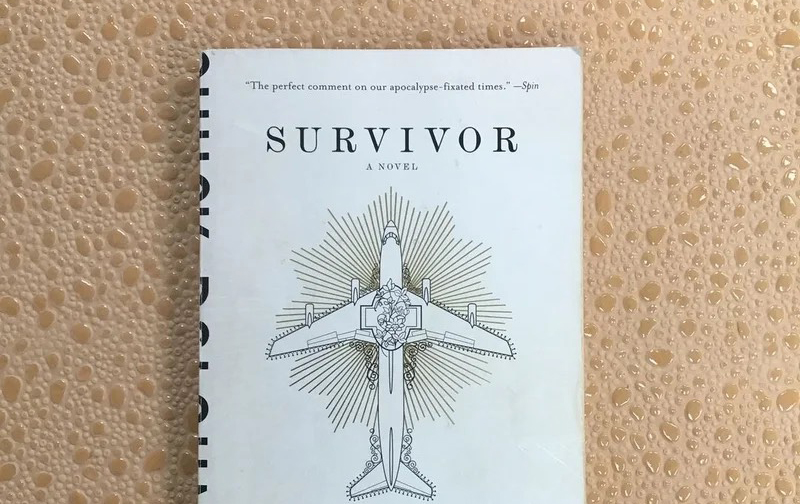
Chuck Palahniuk’s novel Survivor offers a kaleidoscopic exploration of identity, consumer culture, and the haunting resonance of modern myth. In this singular work, the language itself becomes a vehicle for both shock and introspection, using stylistic choices that are as deliberate as they are provocative. The narrative unfolds in a manner that challenges conventional storytelling, blending satire, dark humor, and an unflinching critique of society’s relentless appetite for novelty and conformity. At its heart, Survivor is a meditation on transformation—a journey that is as much about the physical aesthetics of its characters as it is about the stylistic flair that underpins every sentence.
The way Palahniuk presents the notion of fashion and style in Survivor is inextricably linked to the broader critique of American culture. Fashion in this context is not merely about the surface appearance or the clothes one wears; it is a metaphor for the carefully constructed identities that individuals adopt in a world dominated by consumerism. The characters’ appearances, their choices of dress, and the symbolic significance attached to these visual cues serve as both armor and a form of self-expression in a society that values the ephemeral over the authentic. Palahniuk’s prose is at once visceral and ironic, a reflection of a world where even the act of dressing becomes a ritual of self-destruction and reinvention.
The narrative style of Survivor is deceptively simple on the surface, yet it is layered with complexity. Palahniuk employs a direct, unadorned language that strips away the unnecessary flourishes of traditional literary style. This minimalism mirrors the stripping away of societal conventions that the characters themselves experience. In a narrative that often oscillates between the mundane and the surreal, the lack of ornamental language is not a deficiency but a deliberate choice that enhances the impact of each scene. The prose is unembellished, which forces the reader to confront the raw, often uncomfortable truths about modern existence. Every sentence is pared down to its essentials, leaving little room for the reader’s imagination to wander into comfort; instead, one is propelled into a world where each moment is saturated with both meaning and ambiguity.
This stylistic austerity is perhaps most evident in the way Palahniuk constructs his characters. They are defined by a sense of detachment that is both modern and deeply unsettling. The protagonists in Survivor are not heroes in the traditional sense; rather, they are anti-heroes who embody the contradictions of a society in decay. Their appearances and the choices they make in how they present themselves become a form of rebellion against the sanitized images promulgated by mainstream media. Clothing and physical appearance in the novel are imbued with significance that transcends mere aesthetics. They represent a rejection of the conventional narrative, a statement of individuality in a culture that values conformity above all else. The fashion of the characters is deliberately unconventional, an outward manifestation of the inner turmoil and dissent that drive the narrative forward.
Palahniuk’s style in writing is marked by an economy of language that is both innovative and challenging. His sentences often read like fragments of a larger, unspoken dialogue between the author and the reader—a conversation that is as uncomfortable as it is enlightening. There is a raw, almost brutal honesty in the way he conveys the internal states of his characters. This is not a world where every detail is glossed over for the sake of a neat narrative arc; instead, the reader is invited to dwell in the spaces between the words, to consider the unsaid and the implications of each stylistic choice. The use of repetition, short, declarative statements, and a rhythm that can swing from detached irony to explosive passion is all part of a deliberate strategy to unsettle and provoke. In Survivor, the form of the writing is as much a subject of critique as its content—a self-reflexive commentary on the way narratives are constructed and deconstructed in the modern era.
The critique embedded in Palahniuk’s prose extends to his narrative technique, which often employs an unreliable narrator to keep the reader in a state of perpetual uncertainty. This narrative choice underscores a central theme of the novel: the fluidity of identity. In a world where truth is fragmented and perceptions are manipulated, the reliability of the storyteller is itself in question. Palahniuk’s narrative is a dance between clarity and confusion, between the literal and the metaphorical. It is a style that forces readers to question not only the world presented in the text but also their own assumptions about narrative truth and authenticity. The interplay between form and content here is masterfully executed, as the stylistic choices echo the thematic concerns of the novel, blurring the line between reality and performance.
The aesthetic of Survivor is one that thrives on contradiction. The minimalist prose coexists with a richly textured exploration of societal decay and the human condition. Palahniuk’s depiction of fashion and style is not merely about surface appearances, but about the performance of identity. The characters’ adherence to or deviation from societal norms is meticulously detailed, offering a commentary on how appearances can be both a form of self-liberation and a mechanism of control. There is an inherent tension in this portrayal—a tension that mirrors the broader cultural anxieties of the time. The stark, unembellished style of writing is at odds with the elaborate symbolism that underpins the narrative, creating a dynamic interplay between what is seen and what is felt. In this tension lies the genius of Palahniuk’s approach: he invites the reader to consider the way in which style, in its many forms, is both a mask and a mirror.
Beyond the narrative techniques, Palahniuk’s overall approach to storytelling in Survivor can be seen as a radical departure from the conventional norms of literary fiction. His narrative voice is marked by an unapologetic rawness that challenges the reader to confront uncomfortable realities. The very structure of the text—its non-linear progression, its abrupt shifts in tone, and its deliberate avoidance of a neat, linear storyline—serves as a metaphor for the fractured nature of contemporary identity. In this way, the writing style is not simply a vehicle for the story but an integral part of its critique. Palahniuk’s rejection of traditional narrative forms can be seen as an act of defiance against a culture that values conformity and predictability over authenticity and spontaneity. The result is a work that is as much an experiment in literary form as it is a commentary on the state of modern society.
One cannot discuss the style of Survivor without acknowledging the impact of its rhythmic, almost hypnotic language. There is a cadence to the prose that is both unsettling and mesmerizing, drawing the reader into a world where the boundaries between fiction and reality blur. This rhythmic quality is achieved through the careful repetition of phrases, the use of short, staccato sentences, and the occasional burst of poetic imagery. Palahniuk’s ability to oscillate between a detached, almost clinical tone and moments of intense, lyrical beauty is a testament to his mastery of language. The effect is one of disorientation—a deliberate choice to unsettle the reader and challenge their preconceptions about narrative coherence. In this space of disorientation, the reader is forced to grapple with the underlying questions of identity and existence that the novel raises.
The critique of style in Survivor is not without its detractors. Some readers argue that the sparse, unadorned prose can feel overly simplistic, that the lack of detailed description leaves too much to the imagination. They contend that the deliberate minimalism, while effective in conveying a sense of urgency and rawness, sometimes sacrifices the depth of character development in favor of stylistic flair. However, such criticisms may overlook the broader intention behind Palahniuk’s approach. The minimalism is not an absence of detail but rather an invitation to the reader to participate in the creation of meaning. Each blank space, every terse sentence, forces the reader to fill in the gaps with their own interpretations, thereby engaging in a more active form of reading. This interactive relationship between reader and text is a hallmark of Palahniuk’s work, one that challenges traditional notions of passive consumption in favor of an engaged, almost collaborative form of storytelling.
The interplay between fashion and writing style in Survivor also invites a broader reflection on the role of aesthetics in contemporary literature. Fashion, in the context of the novel, is both literal and metaphorical. The physical appearance of the characters—how they dress, how they present themselves—mirrors the stylistic choices of the narrative. Just as a carefully chosen outfit can signal a particular attitude or social stance, so too can a deliberate narrative style evoke a specific emotional response from the reader. In Survivor, the aesthetics of style serve to reinforce the themes of transformation and identity. The characters are both products and critics of a culture obsessed with image and spectacle, and the novel’s stylistic choices underscore this tension. The result is a work that is as much about the art of appearance as it is about the art of storytelling.
At the core of Palahniuk’s stylistic experiment is a profound skepticism toward the constructed narratives that pervade modern life. Survivor is replete with moments that call into question the authenticity of personal and collective histories. The novel’s style, with its disjointed narrative and fractured timelines, mirrors the uncertainty and fluidity of memory itself. In a culture saturated with media images and superficial narratives, the search for an authentic self becomes a radical act. Palahniuk’s writing challenges the reader to discern between the real and the performed, between the genuine self and the persona that is shaped by external influences. This exploration of authenticity is one of the most compelling aspects of Survivor, as it forces a confrontation with the very idea of what it means to be human in a world where every aspect of identity can be commodified and manipulated.
The writing in Survivor is unafraid to expose the absurdities of modern life. There is a biting irony that runs through the text, a constant reminder that the structures of power and control are often as arbitrary as they are oppressive. This irony is not presented as a mere stylistic device but as a fundamental element of the narrative’s critique of society. The humor in the novel is dark, at times bordering on the macabre, yet it is always underpinned by a deep-seated sense of loss—a mourning for a time when authenticity and sincerity held more sway than cynical mimicry. This duality is central to Palahniuk’s stylistic vision: to simultaneously celebrate the beauty of raw, unfiltered expression while also acknowledging the pervasive influence of a culture that thrives on surface appearances.
In examining the aesthetic choices of Survivor, it becomes clear that Palahniuk is not merely crafting a story but is also engaging in a meta-commentary on the nature of storytelling itself. The novel’s style is self-aware, often drawing attention to its own artifice and the conventions of the narrative form. This self-referential quality invites readers to question the boundaries between fiction and reality, to consider the ways in which narratives are constructed and deconstructed in a society that values spectacle over substance. The act of reading Survivor becomes an exercise in critical engagement, a challenge to accept the given narrative at face value without questioning the underlying assumptions that shape it. In this sense, the book becomes a mirror reflecting the fractured, multifaceted nature of modern identity—a collage of images, impressions, and half-truths that defy easy categorization.
The subtle yet potent use of satire throughout Survivor is another testament to Palahniuk’s mastery of style. There is a relentless energy in the way he dissects the cultural artifacts of his time—be it the obsessive pursuit of physical perfection, the commodification of personal identity, or the empty promises of consumerist success. The satire in the novel is not merely a humorous aside; it is the very engine that drives the narrative forward, a mechanism through which the deeper, more disturbing realities of contemporary life are exposed. By using humor as a lens through which to view societal decay, Palahniuk forces readers to confront the contradictions inherent in their own lives. The result is a text that is as intellectually stimulating as it is emotionally jarring—a work that revels in its own contradictions and demands an active, critical response from its audience.
There is a palpable sense of tension that permeates the pages of Survivor—a tension that arises from the interplay between form and content, between the starkness of the prose and the richness of its underlying themes. The fashion and style depicted in the novel are not static or ornamental; they are dynamic, constantly evolving in response to the pressures of an ever-changing cultural landscape. The characters’ sartorial choices, like the language itself, are imbued with meaning, serving as a visual manifestation of their internal struggles and societal critiques. In this way, every detail—from a meticulously described piece of clothing to a seemingly offhand remark about appearance—carries with it layers of symbolic significance. This intricate weaving of aesthetics and narrative technique is one of the hallmarks of Palahniuk’s writing, a style that defies easy categorization and continues to provoke debate among readers and critics alike.
The overall impact of Palahniuk’s stylistic choices in Survivor is a work that is at once abrasive and deeply reflective. The narrative does not allow for complacency; it challenges preconceived notions of beauty, success, and identity with a relentless, uncompromising intensity. The stark, unyielding prose mirrors the brutal truths that lie beneath the surface of modern society, while the underlying humor provides a counterbalance—a reminder that even in the midst of chaos, there is room for irony and subversion. This synthesis of elements is what makes Survivor such a compelling and enduring work. It is a novel that refuses to be easily understood or neatly categorized, much like the culture it critiques. In its unvarnished depiction of modern life, Palahniuk has created a text that is as much a mirror as it is a window—a reflection of the fractured, often contradictory realities of contemporary existence.
As one delves deeper into the pages of Survivor, the reader is continually confronted with the unsettling realization that style is not merely an aesthetic choice but a form of resistance. The stripped-down, unembellished language is a rejection of the overly ornate narratives that dominate popular culture—a call to return to a form of storytelling that is honest, raw, and unapologetically real. This is a style that defies easy categorization, one that demands both intellectual engagement and emotional participation. It is a mode of writing that insists on the reader’s active involvement, compelling them to navigate the murky waters of truth and fiction, beauty and decay, laughter and despair. The act of reading becomes an exercise in self-examination, a journey into the heart of what it means to be human in a world where every aspect of identity is up for negotiation.
In many ways, the brilliance of Survivor lies in its refusal to offer easy answers or neatly packaged narratives. Palahniuk’s approach to style and fashion in the text is a continuous exploration of the tensions that define modern existence—a balancing act between the raw immediacy of lived experience and the carefully constructed images that we project to the world. The novel’s style is an ever-shifting terrain, one that resists the constraints of conventional literary forms and instead embraces the chaotic, unpredictable nature of reality. It is this willingness to embrace complexity, to revel in the ambiguity of meaning, that sets Survivor apart as a work of art in its own right. The text is a testament to the power of language to both reveal and obscure, to connect disparate ideas and to challenge the reader’s assumptions about the nature of truth itself.
Ultimately, what makes Chuck Palahniuk’s Survivor such a remarkable and enduring work is its unyielding commitment to exploring the intersections of fashion, style, and identity in a world that is as fragmented as it is spectacular. The novel’s stylistic choices are not merely an exercise in literary bravado; they are a deliberate, calculated response to the cultural forces that shape our lives. Every sentence, every carefully chosen word, serves as both a reflection of the society it depicts and a critique of the very narratives that define that society. In doing so, Palahniuk challenges us to look beyond the superficial trappings of modern life and to confront the deeper, more unsettling truths that lie beneath. The result is a work that is as intellectually challenging as it is emotionally resonant—a novel that continues to inspire debate, reflection, and a renewed appreciation for the transformative power of style.
In the end, Survivor stands as a bold declaration of the potential of literature to serve as a mirror to our times. It is a work that defies easy categorization, one that refuses to conform to the dictates of conventional narrative or aesthetic form. The interplay between fashion and writing style in the novel is a testament to Palahniuk’s skill as a storyteller—his ability to merge the visual with the verbal, the tangible with the abstract, in a manner that is both striking and profound. His prose, stripped of unnecessary embellishment, is imbued with a sense of urgency and authenticity that resonates long after the final page is turned. In its relentless pursuit of truth, however fragmented and elusive, Survivor challenges us to rethink our notions of identity, art, and the very nature of storytelling itself.
There is a lingering sense of defiance that pervades every line of Palahniuk’s work—a defiance against the expectations of a society that prizes conformity over authenticity. The aesthetic choices he makes, both in terms of narrative structure and the symbolic use of fashion, serve as a reminder that style is not merely a matter of outward appearance. It is an expression of resistance, a means by which we assert our individuality in the face of a homogenizing culture. Survivor, with its unyielding examination of modern life, is a clarion call to embrace the chaos of existence, to find beauty in the midst of disorder, and to recognize that every choice, no matter how seemingly insignificant, carries with it the power to redefine who we are.
In this way, Chuck Palahniuk’s novel becomes more than just a story—it transforms into a study of the self, a meditation on the myriad ways in which we construct our identities and the narratives that both empower and confine us. The unadorned, raw style of writing mirrors the bare truths of existence, compelling the reader to confront the interplay between external appearances and internal realities. As one journeys through the pages of Survivor, the experience is akin to a form of literary catharsis—a stripping away of the layers of pretense that obscure the raw, unfiltered core of human existence. It is a reminder that every moment, every choice, is imbued with the potential for both transformation and revelation.
Ultimately, the power of Survivor lies not just in its shocking content or its provocative themes, but in its unwavering commitment to a style that is as honest as it is daring. It challenges conventional norms, both in its portrayal of fashion and in its narrative approach, inviting readers to engage with the text on multiple levels. The stark, minimalist prose is not a deficiency but a deliberate strategy—one that forces an active, often uncomfortable engagement with the text and its underlying messages. In this respect, Palahniuk has crafted a work that is as much about the art of storytelling as it is a commentary on the ways in which we navigate a world defined by its relentless pursuit of surface appearances.
Through its unyielding examination of style—both in the literal sense of fashion and in the broader, more abstract sense of narrative expression—Survivor emerges as a work that is unapologetically modern, a fierce critique of the forces that shape our lives. It is a text that invites us to question the authenticity of the personas we create and the superficial narratives that surround us. In doing so, it lays bare the inherent contradictions of modern existence and challenges us to seek out a deeper, more nuanced understanding of what it means to truly live. The relentless clarity of Palahniuk’s style, stripped of artifice yet rich in subtext, serves as both a reflection and a critique of a world in constant flux—a world where every breath, every moment, is a choice that defines us, even as it defies definition.
In the final analysis, Chuck Palahniuk’s Survivor stands as a testament to the transformative power of style in both fashion and writing. It is a work that refuses to be confined by traditional narrative structures, instead embracing a form of expression that is as unpredictable and multifaceted as the world it depicts. The novel’s minimalist prose, its biting satire, and its unyielding exploration of identity all converge to create a text that is at once a mirror to our times and a challenge to our preconceptions. Through its deliberate stylistic choices, Survivor compels us to reconsider the way we view the world, to recognize that the aesthetics of our lives—whether in the clothes we wear or the words we speak—are inextricably linked to the deeper truths of who we are.
The novel’s exploration of fashion, in its broadest sense, becomes a metaphor for the ways in which we all strive to construct and deconstruct our identities in a world that is perpetually shifting. It reminds us that every choice we make, every detail of our appearance, carries with it an inherent tension between conformity and individuality. Palahniuk’s unvarnished style challenges the reader to embrace this tension, to find meaning in the interplay between the seen and the unseen, the spoken and the unspoken. It is a literary journey that is as much about self-discovery as it is about the critique of a society that values the superficial over the substantive.
In reflecting on the legacy of Survivor and its place in contemporary literature, one cannot help but be struck by the enduring power of its stylistic vision. Palahniuk has crafted a work that is both a product of its time and a timeless commentary on the nature of modern existence. His deliberate use of minimalist prose, his fearless exploration of controversial themes, and his unflinching critique of societal norms have ensured that Survivor remains a touchstone for discussions about the role of style in literature. It is a work that continues to provoke thought, inspire debate, and challenge readers to question the narratives that define their own lives.
Ultimately, the brilliance of Chuck Palahniuk’s Survivor lies in its ability to weave together disparate strands of narrative—fashion, identity, satire, and raw human emotion—into a tapestry that is as compelling as it is unsettling. It is a work that defies easy categorization, one that refuses to be pigeonholed into conventional literary genres. The interplay between the visual and the verbal, the superficial and the profound, is a hallmark of Palahniuk’s style, a stylistic approach that forces us to reckon with the complexities of modern life. In a world where every choice is a statement, where every breath is a declaration of existence, Survivor stands as a bold, unapologetic reminder that the art of storytelling is, at its core, an act of rebellion—a refusal to be defined by the expectations of society, and an embrace of the messy, beautiful reality of being alive.