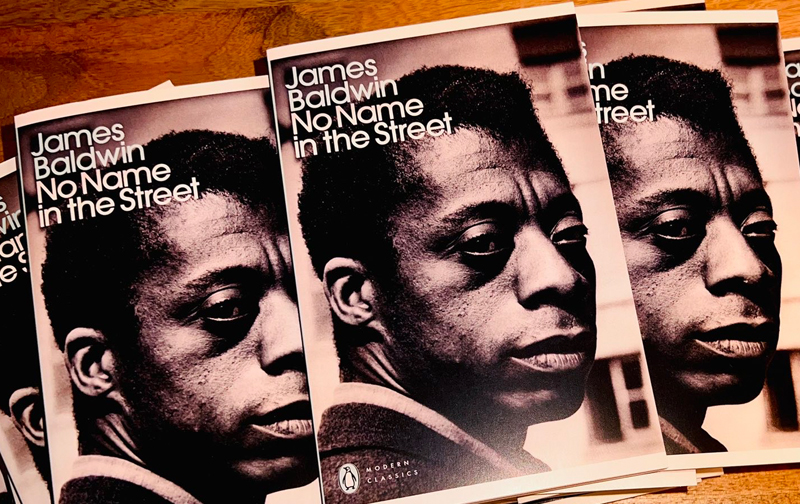
James Baldwin’s No Name in the Street emerges as a work that defies conventional categorization, interweaving personal memoir with socio-political commentary in a style that is as arresting as it is reflective. The narrative unfolds in a manner that is both intimate and expansive, inviting the reader to traverse the depths of Baldwin’s experiences while simultaneously engaging with the broader cultural and historical milieu of America in the mid-twentieth century. In this work, fashion is not simply an external adornment or a superficial aspect of identity—it is a metaphor for the ways in which individuals and communities construct, deconstruct, and reconstruct themselves against a backdrop of persistent injustice and transformation. Baldwin’s stylistic choices are marked by a distinctive blend of eloquence, candor, and raw intensity, which coalesce to form a literary garment that is as intricately tailored as any haute couture ensemble.
Throughout No Name in the Street, Baldwin employs a language that is both lyrical and unyielding. His prose is imbued with the cadence of spoken word, an oral tradition that reverberates with the rhythms of jazz and the fervor of civil rights rhetoric. This fusion of poetic expression and political urgency is a hallmark of his style—a fashion statement in its own right, one that eschews the sterile precision of academic discourse in favor of a living, breathing narrative that pulsates with emotion and conviction. There is a deliberate, almost sartorial precision in Baldwin’s choice of words; each sentence is carefully cut and sewn together, creating a fabric of language that is as aesthetically pleasing as it is intellectually provocative. His sentences often oscillate between lyrical musings and stark declarations, reflecting the duality of his own existence as both an observer and a participant in the turbulent social changes of his time.
In examining the style of No Name in the Street, one is immediately struck by the book’s capacity to convey the weight of historical memory while also maintaining a personal immediacy. Baldwin’s narrative voice is unpretentious yet authoritative, a voice that speaks with the confidence of someone who has borne witness to the shifting tides of racial and political dynamics in America. His language is richly layered, at times playful and ironic, yet always underscored by a profound sadness and a deep sense of responsibility. This is a style that demands engagement; it refuses to be relegated to the margins of intellectual discourse or to be confined by the boundaries of a single genre. Instead, it invites the reader to reconsider the relationship between form and content, suggesting that the very act of writing is a revolutionary endeavor—an act of reclaiming one’s narrative from the forces of oppression and marginalization.
The fashion of Baldwin’s writing is reflected in his ability to blend personal narrative with larger cultural and political concerns, creating a text that is as much about individual experience as it is about collective memory. His reflections on identity, race, and the politics of belonging are interwoven with personal anecdotes, historical observations, and a sharp critique of American society. In doing so, Baldwin transforms his memoir into a tapestry of interconnected stories, each thread contributing to the overall portrait of a man grappling with the complexities of his existence in a divided nation. This stylistic choice challenges the reader to navigate multiple layers of meaning, much like a connoisseur of fashion might appreciate the intricate details of a finely crafted garment—each fold, each seam, each pattern contributing to the overall impact of the piece.
Baldwin’s use of metaphor and symbolism is particularly striking in the way it encapsulates the essence of his experiences. The recurring imagery of masks, for example, serves as a powerful metaphor for the personas that individuals adopt in response to societal pressures. Just as a fashionable outfit can be both an expression of personal style and a social signal, the masks that Baldwin describes in his narrative are a means of both concealing and revealing truth. They are the façades that people wear in order to navigate a world that is often hostile to authenticity, a world where the cost of vulnerability can be measured in personal and political exile. In this context, the act of unmasking becomes a revolutionary gesture—a call to embrace one’s true self despite the risks, and to reject the superficial trappings of a society that values conformity over genuine expression.
The book’s stylistic innovations extend beyond its use of metaphor to encompass a broader reimagining of narrative form. Baldwin’s prose is marked by a refusal to adhere to linearity or neat resolutions; instead, he embraces the complexity of lived experience by allowing the narrative to flow in a manner that mirrors the unpredictable rhythms of memory and emotion. This approach can be seen as a rejection of traditional narrative constraints, a deliberate departure from the expectations of form that have historically governed autobiographical writing. The resulting text is one that is open-ended and expansive, a literary space in which the past, present, and future coexist in a state of perpetual dialogue. In this sense, No Name in the Street is not only a memoir but also a meditation on the nature of history itself—a history that is constantly being rewritten, reshaped, and reinterpreted through the act of storytelling.
Critics of Baldwin’s style have sometimes noted that his approach can be both a strength and a weakness. On one hand, his willingness to blend genres and to experiment with narrative structure has earned him accolades for his originality and his ability to capture the multifaceted nature of the African American experience. His writing is unapologetically raw and unvarnished, a trait that resonates with readers who have long been marginalized by a society that often prefers sanitized versions of reality. On the other hand, some have argued that the very complexity of his style can render the text opaque, challenging readers who are more accustomed to straightforward, linear narratives. There is an inherent tension in Baldwin’s work between accessibility and profundity—a tension that reflects the broader struggle to reconcile the demands of artistic expression with the imperatives of social critique.
This duality is perhaps most evident in the way Baldwin navigates the themes of personal and political transformation. His prose is suffused with a sense of urgency and immediacy, a reflection of the turbulent era in which he lived. Yet, there is also a deliberate, measured quality to his reflections—a recognition that the path to genuine change is fraught with ambiguity and contradiction. In this regard, Baldwin’s writing can be seen as a form of sartorial commentary on the state of American society. Just as fashion trends often oscillate between the avant-garde and the traditional, his narrative shifts between moments of radical innovation and periods of nostalgic introspection. The result is a text that is at once a critique of contemporary social conditions and a testament to the enduring power of art to capture the nuances of the human condition.
Throughout No Name in the Street, the interplay between form and content is handled with an artistry that challenges conventional notions of literary style. Baldwin’s prose is both a mirror and a lens—a mirror reflecting the personal experiences of a man who has borne witness to profound societal change, and a lens through which the reader can examine the intricate interplay between identity, history, and politics. The language he employs is multifaceted and layered, much like the textiles of a finely crafted garment, where each texture, color, and pattern contributes to an overall aesthetic that is as meaningful as it is beautiful. There is a palpable sense of movement in his writing, an energy that propels the narrative forward while simultaneously inviting moments of introspection and quiet reflection.
The fashion of Baldwin’s literary style is further exemplified by his ability to infuse his work with a sense of hope and resilience, even in the face of overwhelming adversity. His writing is marked by a refusal to succumb to despair, a steadfast belief in the possibility of renewal and transformation. This optimism is not naïve; rather, it is a hard-won understanding of the complexities of life—a recognition that true change is as much about acknowledging the scars of the past as it is about forging new paths for the future. In this way, his memoir becomes a kind of sartorial manifesto, a call to shed the restrictive garments of prejudice and self-doubt in favor of a more expansive and inclusive vision of what it means to be human.
At the heart of No Name in the Street is a meditation on the nature of authenticity and the price of freedom. Baldwin’s exploration of these themes is rendered with a clarity and immediacy that leaves a lasting impression on the reader. His style is both a weapon and a balm—a tool for deconstructing the societal constructs that bind individuals to narrow definitions of identity, and a source of solace for those who have long struggled to assert their own truths in a world that is quick to impose its own narratives. The language of his work is unapologetically forthright, unafraid to confront the harsh realities of racism, injustice, and inequality. Yet, it is also imbued with a tenderness and empathy that speak to the transformative power of art—a power that can both expose the wounds of the past and offer the possibility of healing and renewal.
In the final analysis, the fashion and style of James Baldwin’s No Name in the Street stand as a testament to the enduring power of literature to challenge, to inspire, and to transform. His writing is a bold statement of individuality and resistance, a clarion call to embrace the complexities of identity in all its myriad forms. By weaving together the personal and the political, the lyrical and the pragmatic, Baldwin creates a work that transcends the boundaries of genre and defies easy categorization. It is a text that demands to be read not only for its historical significance but also for its aesthetic brilliance—a brilliance that lies in its ability to merge form and content into a single, unforgettable experience.
The critique of Baldwin’s style, then, must acknowledge both its formidable strengths and its inherent challenges. His narrative is a rich tapestry that rewards careful reading and thoughtful engagement, yet its density and the interplay of multiple layers of meaning may leave some readers yearning for a more straightforward account. Nonetheless, it is precisely this complexity that makes No Name in the Street a work of enduring relevance—a work that continues to speak to successive generations about the need for honesty, empathy, and the relentless pursuit of justice. Baldwin’s prose is an invitation to examine not only the external forces that shape society but also the internal landscapes of memory, desire, and the quest for self-actualization.
In reflecting on the fashion of Baldwin’s writing, one cannot help but be reminded of the way in which a finely crafted garment can become a symbol of personal and cultural identity. His work is a kind of literary couture—a deliberate, artful construction of language that both conceals and reveals, that challenges conventions while simultaneously offering comfort and familiarity. The interplay of light and shadow in his narrative, the tension between hope and despair, and the continual reimagining of what it means to belong are all elements that contribute to the distinctive style of No Name in the Street. This is a work that defies easy categorization, much like the ever-evolving world of fashion itself—a world that is constantly in flux, yet always rooted in the timeless quest for self-expression and authenticity.
Ultimately, the style of James Baldwin’s No Name in the Street is a profound exploration of the human condition, rendered with a clarity and emotional intensity that few writers can match. His literary fashion is one of transformation—of taking the raw materials of lived experience and weaving them into a narrative that is as compelling as it is challenging. It is a style that dares to confront the complexities of history and identity, inviting readers to join him on a journey that is as deeply personal as it is universally resonant. In its refusal to offer neat resolutions or simplistic answers, the book mirrors the messy, intricate nature of life itself—a life that is defined by contradictions, struggles, and the enduring hope for a better tomorrow. Through his masterful blend of poetic language, incisive critique, and unwavering honesty, Baldwin leaves an indelible mark on the literary landscape—a mark that continues to inspire, provoke, and empower those who dare to look beyond the surface, to see the beauty in the struggle, and to find meaning in the ever-changing tapestry of existence.