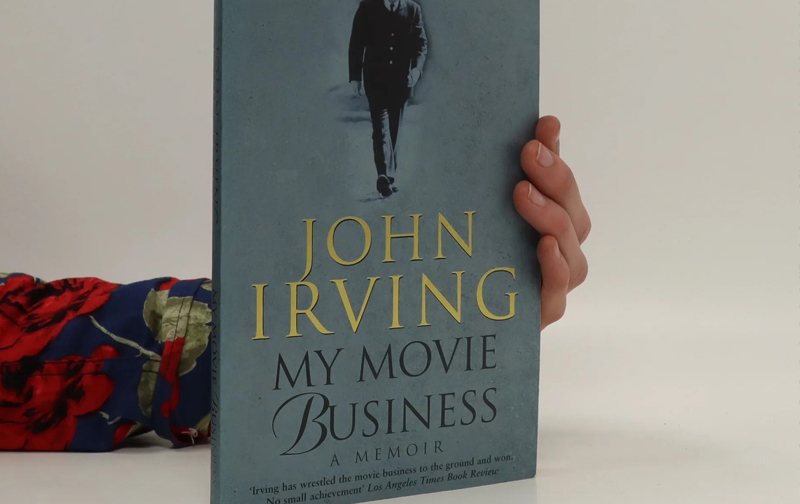
John Irving’s My Movie Business: A Memoir is not merely an account of his long, winding journey through the labyrinth of film adaptation; it is a work that encapsulates the intersection of two very different creative worlds—literature and cinema—while offering a deeply personal commentary on the very nature of storytelling. In this memoir, Irving not only chronicles the trials and tribulations of turning his novels into screenplays and films but also reveals much about his own distinctive fashion of writing, the stylistic choices that have become his hallmark, and the critical reception these choices have inspired. Through a careful dissection of its “fashion and style,” the memoir serves as an illuminating case study of how a celebrated novelist negotiates the demands of two very different artistic languages and the consequences of that negotiation on his narrative identity.
At the heart of My Movie Business lies a narrative that is as anecdotal as it is affectionate, a self-reflexive journey into the chaotic process of adapting literature for the screen. Irving’s memoir is replete with stories about the endless rewrites, the constant adjustments demanded by producers and directors, and the sometimes absurd compromises that must be made when one moves from the written word to the visual medium. His account of the 13-year development process behind the film adaptation of The Cider House Rules is particularly revealing. Rather than offering a sanitized, straightforward history of the project, Irving immerses the reader in a world where creative vision is often subservient to commercial pressures, where the “rules” of the movie business are as mutable and negotiable as the text of his novels.
This insider’s perspective is delivered in a style that is unmistakably Irvingian—wry, self-deprecating, and relentlessly candid. The memoir’s style is conversational in tone; Irving writes as if he is confiding in an old friend. He peppers his narrative with humorous asides and subtle ironies that highlight the inherent absurdity of the film industry. At times, his prose almost seems to wink at the reader, acknowledging its own limitations and the impossibility of capturing the full complexity of the creative process. In doing so, Irving does not just document his experiences—he transforms them into a kind of meta-narrative about the very act of storytelling. His reflections on the differences between writing a novel and writing a screenplay form a recurring motif throughout the book. He explains that while a novel can luxuriate in detail, building characters and setting with painstaking care, a screenplay must be lean, its narrative compressed into a series of visual cues and dialogues. It is this contrast—between the expansive, richly layered world of the novel and the stark, economically driven world of film—that Irving explores with both wit and gravitas.
The “fashion” of Irving’s writing in My Movie Business can be understood on several levels. On one hand, it refers to the way he dresses his narrative—how he layers anecdotes with personal reflections, how he juxtaposes humor and tragedy, and how he ultimately uses his own process as a canvas for broader meditations on art and commerce. His narrative is both episodic and digressive; he does not adhere to a strict linear chronology but allows the reader to wander through a mosaic of memories, insights, and behind-the-scenes revelations. This freewheeling approach is reminiscent of the creative spirit that drives his novels—a willingness to experiment with form and to challenge conventional expectations of what a memoir should be.
At the same time, Irving’s fashion of writing is marked by a deliberate self-awareness. He is constantly aware of his own role as a storyteller and of the compromises he has made along the way. This reflexivity is evident when he discusses the minutiae of the rewriting process—the discarded drafts, the scenes that never made it to the final film, the characters whose voices were softened or silenced entirely by the constraints of cinematic storytelling. Such admissions reveal not only the messy reality behind the polished final product but also a profound respect for the creative process itself. Irving’s prose becomes a kind of homage to the challenges of adaptation, where every change in word or scene carries with it the weight of a creative decision that could alter the entire narrative. In doing so, he turns the memoir into an extended meditation on the art of storytelling—a theme that resonates deeply with readers familiar with the unpredictable and often perilous journey of creative work.
Critically, the fashion of Irving’s writing in My Movie Business has garnered both admiration and reproach. Many readers and critics appreciate his unvarnished honesty and his ability to infuse even the most mundane details of the movie business with humor and insight. His willingness to reveal his own vulnerabilities and insecurities—his struggles to reconcile his literary ambitions with the commercial realities of Hollywood—adds a layer of authenticity that is hard to find in more sanitized accounts of the film industry. Irving’s narrative is imbued with a sort of “anti-glamour” that defies the stereotypical image of Hollywood as a realm of glitter and excess; instead, he portrays it as a messy, chaotic, and often disheartening environment where compromises are not just necessary but inevitable.
Yet not all critics are enamored with this style. Some argue that Irving’s digressions and self-indulgent detours can dilute the narrative’s impact, making it feel episodic and at times overly detailed. The memoir’s sprawling structure, which mirrors the erratic nature of the film adaptation process itself, has been seen by detractors as a lack of focus—a narrative that sometimes loses sight of the central story in its enthusiastic exploration of every minor setback or triumph. There are those who feel that the very quality which makes Irving’s prose so engaging—its conversational tone and willingness to wander—can also render it unfocused and cumbersome, especially for readers who might prefer a more streamlined account of events. Critics have pointed out that the exhaustive recounting of production challenges and behind-the-scenes negotiations, while fascinating to insiders, may seem tedious to those less interested in the minutiae of film production.
However, these criticisms often miss the point of Irving’s memoir. The very nature of My Movie Business is to reflect the unpredictable, chaotic, and multifaceted reality of adapting literature to film. In a medium that demands brevity and clarity, Irving’s indulgence in detail serves as a counterpoint—a reminder that the creative process is rarely neat or linear. His willingness to expose every rough draft and every compromise is, in essence, an act of defiance against the sanitized narratives that often dominate accounts of the movie business. By laying bare the challenges he faced, Irving not only demystifies the process of adaptation but also elevates it to an art form in its own right. The memoir becomes a testament to the resilience of creativity—a chronicle of the ways in which artistic vision must continuously battle against the constraints of commercial imperatives.
In terms of fashion and style, one might also consider the memoir’s structure as a kind of “couture” of narrative form. Irving’s writing is tailored with the precision of a bespoke suit—every anecdote, every reflective pause, every humorous aside is meticulously arranged to create a work that is both personal and universally resonant. The interplay between humor and sorrow, between light-hearted self-mockery and genuine introspection, gives the memoir its unique texture. It is a work that is as much about the process of creation as it is about the product, a narrative garment stitched together with threads of literary wit, autobiographical candor, and a deep-seated passion for the craft of storytelling.
Moreover, the memoir’s fashion of writing is also a commentary on the evolution of the author himself. Irving’s reflections on his early ambitions, his initial forays into writing screenplays, and the eventual realization that his true identity lies in being a novelist who occasionally dabbles in Hollywood, are woven throughout the text with an almost mythic quality. He does not shy away from acknowledging the limitations of his work, nor does he attempt to hide the compromises he had to make along the way. Instead, he embraces them as integral parts of his creative journey, presenting them as the inevitable costs of artistic expression in a commercial world. This self-aware, unflinching honesty is part of what makes his narrative style so compelling—it is both a confession and a celebration of the imperfect, messy reality of the creative process.
The memoir also offers a subtle critique of the film industry’s approach to adaptation. Irving is acutely aware that the process of turning a novel into a film often requires sacrificing the depth and nuance that literature affords. He writes about the tension between maintaining the integrity of his original work and the demands for a marketable, streamlined screenplay that can captivate a broad audience. In many ways, My Movie Business is a meditation on the loss of detail—the moments, the characters, the inner lives that are invariably trimmed in the process of adaptation. Irving’s detailed recollections of the numerous drafts, the endless revisions, and the compromises forced upon him by producers and directors serve as a poignant reminder that the art of the novel is fundamentally different from the art of cinema. Where a novel luxuriates in layers of detail, a film must present its story in swift, digestible segments. This clash of mediums, and the inevitable loss that accompanies it, is a recurring theme in the memoir, one that underscores the inherent tension between literary integrity and commercial viability.
Critics of Irving’s memoir have occasionally suggested that his approach is overly self-indulgent—that the exhaustive detailing of every behind-the-scenes hiccup and creative compromise can bog down the narrative. They argue that the memoir’s extensive digressions sometimes obscure the central storyline, making it difficult for the reader to discern a coherent narrative thread. Yet, these very digressions are what many fans of Irving appreciate most about his writing. They provide a window into the mind of a writer who is not afraid to reveal his vulnerabilities, who is willing to expose the messy reality of the creative process in all its unvarnished glory. In doing so, Irving challenges the conventional expectations of what a memoir should be, inviting readers to appreciate the beauty in imperfection and the value of creative struggle. His narrative is not polished to the point of sterility; it is rough around the edges, bursting with the unpredictable energy of a mind in constant motion.
Furthermore, the fashion of Irving’s writing in My Movie Business is itself a reflection of the changing nature of storytelling in the late twentieth century. As the lines between literature and film continue to blur, Irving’s memoir serves as a historical document—a record of a time when the literary world was grappling with the impact of Hollywood’s commercial machine on the art of narrative. His experiences, as recounted in the memoir, encapsulate the challenges faced by many writers who attempted to bridge the gap between the written word and the visual spectacle of film. In this sense, My Movie Business is not just a personal memoir; it is a commentary on an entire era of creative expression, a time when the sanctity of the novel was being renegotiated in the face of an increasingly image-driven culture.
In conclusion, John Irving’s My Movie Business: A Memoir is a work of considerable complexity, one that uses its distinctive fashion of writing to explore the multifaceted nature of artistic creation. Its style—a blend of witty digression, candid self-reflection, and narrative experimentation—mirrors the very process it describes: the messy, unpredictable, and ultimately human journey of adapting literature to film. While some critics have dismissed its sprawling, self-indulgent nature as a flaw, others have celebrated it as a courageous and honest portrayal of the compromises inherent in the creative process. The memoir’s fashion and style are not mere embellishments; they are essential to its message. They remind us that the process of creation is as important as its product, that every sacrifice and every compromise carries its own kind of beauty, and that the true art of storytelling lies in the willingness to reveal one’s own vulnerabilities.
By delving deep into the behind-the-scenes realities of Hollywood, Irving not only demystifies the world of film adaptation but also pays homage to the power of narrative itself. His reflections on the differences between the expansive world of the novel and the condensed language of the screenplay reveal a profound understanding of the creative impulse—a relentless drive to capture the ineffable essence of human experience. In My Movie Business, the reader is invited not just to witness the transformation of text into image, but to engage with the very soul of the creative process. It is a memoir that stands as both a personal document and a broader commentary on the nature of art in a commercialized world.
Ultimately, Irving’s work—both the memoir and his novels—serves as a reminder that creativity, with all its inherent messiness, remains an indomitable force in the face of modernity’s rigid constraints. His fashion of writing, with its blend of humor, vulnerability, and relentless self-scrutiny, challenges conventional narrative forms and celebrates the unpredictable beauty of artistic endeavor. While My Movie Business may not provide a neatly packaged story, it offers something arguably more valuable: an honest, unfiltered look at the trials and triumphs of bringing art to life. In doing so, it not only enriches our understanding of the interplay between literature and film but also affirms the enduring power of storytelling itself.