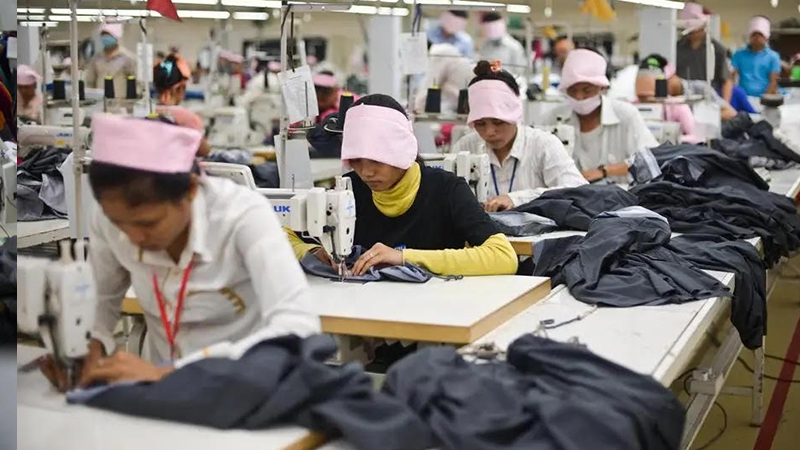
The fashion industry, renowned for its glamour, creativity, and cultural significance, harbors a less visible side marked by the exploitation of workers. Beneath the polished runways and luxurious storefronts lies a global network of production that often subjects laborers to hazardous conditions, insufficient wages, and systemic abuse. This exploitation is deeply rooted in sociological structures and is perpetuated by capitalist motives, global inequalities, and cultural dynamics. Understanding the exploitation of workers in the fashion world requires a sociological lens that unpacks power relations, economic systems, and social norms. Prominent sociological theories and insights from key sociologists offer critical perspectives on the systemic nature of labor exploitation in fashion.
The fashion industry operates within a global capitalist framework, where profit maximization drives production decisions. This system creates a “race to the bottom,” where brands seek the cheapest labor costs to maximize profits. As Karl Marx argued, capitalism inherently leads to the exploitation of labor, with the bourgeoisie (capital owners) extracting surplus value from the proletariat (workers). Marx’s concept of alienation is particularly relevant here. Fashion workers, especially those in garment factories, often perform repetitive, monotonous tasks, separated from the products of their labor. They have no connection to the end-users of these garments and little control over the production process. This alienation not only dehumanizes workers but also obscures the conditions under which fashion commodities are produced. Marx wrote, “The worker becomes all the poorer the more wealth he produces,” illustrating how laborers in the fashion industry remain trapped in cycles of poverty despite contributing to a multi-trillion-dollar industry.
Moreover, the global division of labor in the fashion industry reflects Immanuel Wallerstein’s world-systems theory. The core-periphery relationship explains how wealthier nations (core) exploit poorer nations (periphery) for cheap labor and resources. In the fashion world, production is outsourced to countries like Bangladesh, Vietnam, and Cambodia, where labor is cheap, and regulations are lax. This outsourcing perpetuates dependency and underdevelopment in peripheral nations. Wallerstein’s theory highlights the systemic nature of exploitation, where the economic success of the fashion industry in the Global North relies on the subjugation of labor in the Global South. The Rana Plaza collapse in Bangladesh in 2013, which killed over 1,100 garment workers, exemplifies the deadly consequences of this exploitation. Workers were forced to enter an unsafe building under the threat of losing their wages, demonstrating how power imbalances between corporations and laborers endanger lives.
The feminization of labor in the fashion industry further compounds exploitation. A significant majority of garment workers are women, often young and from marginalized communities. Feminist sociologists such as Sylvia Walby and Maria Mies have discussed how global capitalism intersects with patriarchy to exploit women’s labor. Walby’s theory of patriarchy identifies the workplace as a key site of women’s oppression. In garment factories, women face gender-based violence, harassment, and wage discrimination. They are often preferred because they are perceived as more docile and less likely to unionize. Maria Mies, in her work on housewifization, argues that women’s labor is systematically devalued and rendered invisible, both in domestic and industrial contexts. In the fashion industry, the exploitation of female labor is normalized, with low wages justified by the assumption that women’s incomes are supplementary rather than essential.
Pierre Bourdieu’s concepts of habitus and cultural capital provide further insight into how exploitation is maintained. Fashion, as a field, relies on the production and consumption of symbolic goods. The desire for the latest trends and luxury items creates a relentless demand for fast fashion. Consumers in affluent societies often remain unaware or indifferent to the labor conditions behind their clothing. Bourdieu’s notion of habitus suggests that consumer preferences are shaped by social structures, including class and education. The fashion industry capitalizes on these preferences, perpetuating a cycle of consumption that relies on exploitative labor practices. The cultural capital associated with certain brands masks the exploitation embedded in their production processes, allowing consumers to display social status without confronting the ethical implications.
Additionally, Michel Foucault’s analysis of power and discipline offers a framework for understanding how workers in the fashion industry are controlled. Factories operate as sites of surveillance and discipline, where workers’ bodies are subjected to strict routines and regulations. Foucault’s concept of the panopticon, where power is maintained through the possibility of constant observation, can be applied to garment factories where supervisors monitor workers to ensure productivity. This disciplinary power not only enforces compliance but also internalizes control, making workers self-regulate their behavior. The fear of losing employment in contexts of economic precarity further disciplines workers, compelling them to endure exploitation.
The sociology of globalization is also central to understanding labor exploitation in fashion. Anthony Giddens emphasizes how globalization intensifies interconnectedness while exacerbating inequalities. The global supply chains of fashion brands illustrate this dynamic, where decisions made in corporate offices in the Global North have direct consequences for workers in the Global South. Giddens notes that globalization brings “distanciation,” where social relationships are stretched across time and space. In the fashion industry, this distanciation allows consumers and corporations to remain detached from the labor conditions of production. The opacity of supply chains means that responsibility for labor conditions is diffused, making accountability difficult. Despite occasional media attention following disasters like Rana Plaza, systemic change remains elusive, as the underlying global economic structures favor continued exploitation.
Furthermore, Arlie Hochschild’s concept of the global care chain can be adapted to understand labor dynamics in the fashion industry. Hochschild describes how care work is transferred across global networks, with women from poorer countries providing care for families in wealthier nations. Similarly, in the fashion industry, women from marginalized communities in developing countries labor to produce goods consumed by wealthier populations. This global chain of labor reflects unequal power relations, where the well-being and aspirations of workers are subordinated to the consumption patterns of affluent societies. The emotional and physical toll of this labor remains largely unrecognized, as the focus remains on the end products rather than the processes of production.
The role of neoliberalism in perpetuating labor exploitation in fashion cannot be overlooked. Neoliberal policies prioritize free markets, deregulation, and privatization, creating an environment where corporate interests dominate. David Harvey, a prominent critic of neoliberalism, argues that this economic paradigm intensifies class inequalities and exploits labor. In the fashion industry, neoliberalism manifests in the outsourcing of production to countries with weak labor protections, the suppression of unions, and the promotion of consumer culture that demands fast fashion. Harvey’s concept of “accumulation by dispossession” is evident in how fashion brands accumulate wealth by dispossessing workers of fair wages, safe working conditions, and labor rights. The flexibilization of labor, celebrated under neoliberalism, often means precarious employment for garment workers, with temporary contracts and minimal social protections.
The exploitation of workers in the fashion industry also intersects with issues of race and ethnicity. Stuart Hall’s work on cultural identity and diaspora sheds light on how racialized labor is commodified in global production networks. Fashion brands often rely on labor from racialized communities in the Global South, reinforcing historical patterns of colonial exploitation. Postcolonial sociologists argue that the legacies of colonialism persist in the global economy, with former colonies continuing to serve as sites of resource extraction and cheap labor. The racialization of labor means that workers are not only economically marginalized but also culturally devalued. Their contributions to the global fashion industry are rendered invisible, while the industry profits from cultural appropriation and exoticization of their identities.
The sociological analysis of fashion labor exploitation must also consider the role of consumer culture. Jean Baudrillard’s theory of consumption as a system of signs suggests that in late capitalism, consumption is driven by the symbolic value of goods rather than their utility. Fashion items become markers of identity, status, and desire. The fashion industry fuels this system by promoting rapid consumption cycles through fast fashion. However, this culture of consumption obscures the exploitative conditions of production. Baudrillard’s critique reveals how the spectacle of fashion consumption distracts from the realities of labor exploitation. The endless pursuit of new trends leads to overproduction and overconsumption, which in turn drives brands to cut costs through exploitative labor practices.
Zygmunt Bauman’s concept of liquid modernity further illuminates the precarious nature of labor in the fashion industry. In a world characterized by constant change and uncertainty, traditional forms of employment and social bonds are eroded. Workers in the fashion industry experience this precarity acutely, with temporary contracts, low wages, and minimal job security. Bauman argues that in liquid modernity, individuals are compelled to be flexible and adaptable, but this flexibility often comes at the cost of stability and security. Garment workers, particularly in fast fashion supply chains, embody this condition of precarity. They face unstable working conditions, where shifts in consumer demand can lead to sudden layoffs or wage reductions. The fashion industry’s reliance on just-in-time production methods further exacerbates this precarity, as brands demand rapid turnaround times without providing stable employment.
The role of digital technology and social media in shaping the fashion industry also has implications for labor exploitation. While digital platforms have enabled greater visibility and consumer engagement, they have also intensified the demand for fast fashion. The rise of influencer culture and the pressure to showcase the latest trends have accelerated consumption cycles. Sociologist Manuel Castells argues that in the network society, power is exercised through networks of information and communication. In the fashion industry, digital networks enable brands to respond rapidly to trends, but this agility comes at the expense of workers who must meet intensified production demands. The speed of digital fashion cycles leaves little room for ethical considerations, as brands prioritize quick production over labor rights. Although digital activism has brought attention to labor issues, systemic change remains slow, as the structural forces of global capitalism continue to prioritize profit over people.
The exploitation of workers in the fashion industry is a complex and multifaceted issue rooted in global economic structures, cultural dynamics, and power relations. Sociological theories and insights from key thinkers provide a critical framework for understanding the systemic nature of this exploitation. From Marx’s analysis of capitalist labor relations to Wallerstein’s world-systems theory, from feminist critiques of the feminization of labor to Bourdieu’s concepts of habitus and cultural capital, these perspectives reveal the interconnected forces that sustain labor exploitation. The fashion industry’s reliance on cheap, flexible labor in the Global South, the cultural dynamics of consumerism, and the disciplinary power exercised over workers all contribute to a system that prioritizes profit over human dignity. Addressing this exploitation requires not only greater corporate accountability and stronger labor protections but also a fundamental rethinking of the economic and cultural systems that underpin the fashion industry.
To further understand the sociological reasons behind the persistent exploitation of workers in the fashion industry, it is essential to delve deeper into the intricate relationship between consumption patterns, global economic policies, cultural hegemony, and systemic inequalities. These interconnected elements not only perpetuate exploitation but also normalize it within the framework of global capitalism.
One significant sociological aspect is the commodification of labor and the dehumanization of workers, a process explained by Marxist theory. In the fashion industry, labor is commodified, meaning that the work of producing garments is reduced to a transaction devoid of social or human considerations. Workers are treated as instruments for profit generation rather than as individuals with rights and needs. As Karl Marx famously stated, “Labor produces not only commodities; it produces itself and the worker as a commodity.” This statement encapsulates how workers become part of the commodity chain, their worth measured solely by their productivity and output. In this context, the human element of labor is stripped away, and exploitation becomes an inherent characteristic of the production process.
Moreover, consumer alienation plays a crucial role. In advanced capitalist societies, consumers are often alienated from the processes behind the products they purchase. This alienation leads to a lack of awareness or concern about the labor conditions involved in the production of fashion goods. The fashion industry strategically cultivates a culture of planned obsolescence and fast consumption, where the rapid turnover of styles encourages consumers to buy more frequently. This demand for speed and low cost directly translates into pressure on suppliers to cut costs, often at the expense of workers’ wages, safety, and rights. Sociologist Zygmunt Bauman’s concept of liquid modernity is particularly relevant here, as it explains how consumer desires and identities in modern society are transient, leading to a disposable culture that extends to the treatment of labor itself.
The concept of cultural hegemony, as articulated by Antonio Gramsci, also sheds light on the fashion industry’s labor exploitation. Gramsci argued that the ruling class maintains control not only through economic means but also through cultural institutions that shape ideology and consent. In the context of fashion, cultural hegemony manifests through media, advertising, and celebrity endorsements that glamorize consumption without questioning the conditions of production. This cultural dominance ensures that consumers internalize the values of fast fashion, prioritizing low prices and trendiness over ethical considerations. The consent to such consumption patterns, often uncritically accepted, indirectly perpetuates the exploitation of workers by creating sustained demand for cheaply produced garments.
Additionally, the intersectionality of class, gender, race, and ethnicity plays a pivotal role in sustaining labor exploitation. Kimberlé Crenshaw’s theory of intersectionality highlights how various forms of social stratification do not exist separately but are interconnected. The majority of garment workers are women of color from economically disadvantaged backgrounds, particularly in countries such as Bangladesh, India, Cambodia, and Vietnam. This intersection of gender, race, and class renders these workers more vulnerable to exploitation, as they occupy the lowest rungs of the global labor hierarchy. They often lack access to education, healthcare, and legal protections, making them susceptible to exploitation by multinational corporations that capitalize on these vulnerabilities.
Feminist sociologists have long pointed out that the global labor market is gendered. The fashion industry, while outwardly promoting female empowerment through its products and branding, relies heavily on the disempowerment of female laborers. As sociologist Cynthia Enloe notes, “The international politics of labor exploitation cannot be understood without recognizing how femininity itself is constructed as a source of cheap labor.” Women are often preferred in garment factories because they are stereotypically viewed as more compliant and less likely to unionize. This preference is rooted in patriarchal norms that devalue women’s labor, assuming that women work for supplementary income rather than as primary breadwinners. Such assumptions contribute to the justification of low wages and poor working conditions for female garment workers.
Moreover, the rise of global commodity chains in the fashion industry reflects broader processes of economic globalization. Sociologist Saskia Sassen’s work on globalization shows how economic restructuring has led to the proliferation of low-wage labor in developing countries. These global commodity chains are characterized by fragmented production processes spread across multiple countries, with each segment seeking to minimize costs. This fragmentation allows multinational fashion corporations to evade responsibility for labor abuses by claiming ignorance or lack of control over distant parts of their supply chains. The complexity of these networks makes it difficult to enforce labor standards, and the lack of transparency enables the perpetuation of exploitative practices.
The informalization of labor is another critical factor contributing to exploitation. In many garment-producing countries, a significant portion of fashion production occurs in informal settings, such as home-based work or unregistered factories. Workers in the informal sector lack legal protections, social security, and the ability to unionize, making them particularly vulnerable. As sociologist Guy Standing argues, the rise of the precariat—a social class characterized by insecurity, low wages, and lack of occupational identity—has become a defining feature of the global labor market. Garment workers, especially in informal settings, epitomize this precariat, with their livelihoods subject to the fluctuating demands of global fashion markets.
Furthermore, the geopolitical dimensions of labor exploitation in fashion cannot be ignored. Trade agreements, structural adjustment programs, and foreign direct investments shape the conditions under which fashion production occurs. These geopolitical factors often prioritize economic growth and foreign investment over labor rights and environmental sustainability. For instance, governments in developing countries may suppress labor movements and weaken labor protections to attract investment from multinational fashion brands. This “race to the bottom” strategy benefits corporations but entrenches poverty and exploitation among workers. As sociologist Michael Burawoy notes, the dynamics of global capitalism are sustained by the interplay between state policies and corporate interests, with workers bearing the brunt of this relationship.
Additionally, environmental degradation and labor exploitation are interconnected in the fashion industry. The push for fast fashion not only results in the overconsumption of clothing but also leads to environmentally destructive practices such as excessive water usage, chemical pollution, and textile waste. Workers are often exposed to hazardous substances without adequate protective equipment, leading to severe health issues. The concept of environmental racism is relevant here, as the environmental costs of fashion production are disproportionately borne by marginalized communities in the Global South. Sociologist Ulrich Beck’s concept of the risk society highlights how modern industries produce risks that are unequally distributed, with the most vulnerable populations facing the greatest exposure. In the fashion industry, these risks include both environmental harms and labor exploitation, illustrating how economic, social, and ecological injustices intersect.
The political economy of fashion also reveals how labor exploitation is institutionalized. The deregulation of labor markets, privatization of industries, and weakening of trade unions under neoliberal policies have eroded workers’ bargaining power. As David Harvey argues, neoliberalism prioritizes the interests of capital over labor, resulting in wage suppression, job insecurity, and the erosion of labor rights. The fashion industry exemplifies these trends, as it relies on flexible, low-cost labor to maintain competitiveness in global markets. The suppression of union activities in garment-producing countries is a testament to how political and economic systems collude to undermine workers’ rights. Unionized labor poses a threat to profit margins, leading to systematic efforts to prevent collective bargaining through intimidation, violence, or legal restrictions.
The role of corporate social responsibility (CSR) in addressing labor exploitation in fashion is also worth examining. While many fashion brands have adopted CSR initiatives and ethical sourcing policies, these efforts often fall short of meaningful change. Sociologist Nikolas Rose’s concept of governmentality is relevant here, as CSR can be seen as a form of self-regulation that deflects attention from the structural issues underpinning labor exploitation. By emphasizing individual consumer choices and voluntary corporate initiatives, CSR shifts responsibility away from systemic reforms. While ethical consumption is important, it cannot replace the need for robust labor protections, enforceable regulations, and structural transformations in global supply chains.
Moreover, the phenomenon of greenwashing—where companies market themselves as environmentally or socially responsible without substantive changes—further complicates efforts to address labor exploitation. Fashion brands may promote limited sustainable lines or highlight philanthropic activities, while the majority of their production continues under exploitative conditions. This strategic misrepresentation diverts attention from systemic issues and placates consumer concerns without addressing the root causes of exploitation.
A critical examination of consumer activism and its potential for change is also necessary. While movements such as Fashion Revolution, sparked by the Rana Plaza disaster, have raised awareness about labor conditions, consumer activism alone has limitations. As sociologist Pierre Bourdieu noted, consumer choices are shaped by social structures, including class, education, and cultural capital. Ethical consumption, while commendable, remains accessible primarily to privileged consumers who can afford higher-priced ethical fashion. For systemic change to occur, consumer activism must be complemented by structural reforms, including stronger labor laws, international labor standards, and the redistribution of economic power within global supply chains.
The exploitation of workers in the fashion industry is deeply embedded in the structures of global capitalism, cultural hegemony, gender and racial inequalities, and neoliberal economic policies. Sociological theories and insights provide critical tools for understanding how these interconnected forces sustain exploitation. The fashion industry, while presenting an image of glamour and creativity, relies on a global labor force subjected to poverty wages, unsafe working conditions, and systemic abuse. Addressing this exploitation requires a multifaceted approach that includes holding corporations accountable, strengthening labor protections, empowering workers through unionization, and challenging the cultural norms that sustain consumerist desires. Only through such comprehensive efforts can the fashion industry be transformed into one that values not only aesthetics and profit but also human dignity and social justice.