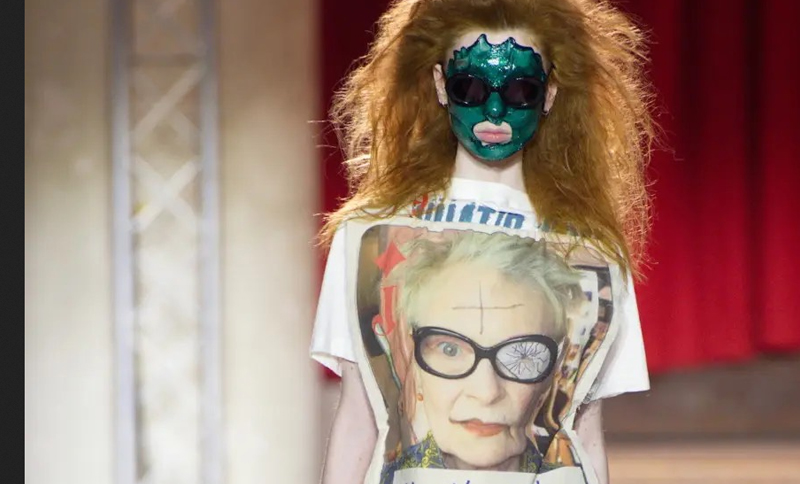
In contemporary society, fashion is not merely an expression of aesthetics but a vibrant medium through which political ideologies, social critiques, and transformative cultural values are articulated. Over the past few decades, a significant number of designers have emerged whose work is deeply intertwined with left-wing politics, challenging established norms and using their creative platforms as instruments of activism and social change. Their designs reflect a commitment to social justice, equality, environmental sustainability, and anti-capitalist sentiments, and they continuously draw upon sociological theories to critique and reimagine the structures that govern our everyday lives. This expansive exploration of left-wing fashion designers reveals an industry where creativity is inseparable from ideology, where every stitch, fabric, and silhouette carries a profound political message.
The journey into politically engaged fashion begins with the recognition that clothing has always been imbued with power. As Pierre Bourdieu famously asserted, “Taste classifies, just as it classifies,” highlighting the way in which style and consumption become markers of social distinction. In the context of left-wing fashion, this notion is inverted; rather than perpetuating established hierarchies, these designers seek to dismantle them. They harness the power of fashion to subvert dominant cultural narratives and to elevate voices that have long been marginalized. Vivienne Westwood, widely regarded as the Queen of Punk, is perhaps one of the most iconic figures in this movement. Her rebellious designs, steeped in the ethos of anti-establishment protest, have consistently challenged the status quo. Westwood’s work draws upon historical motifs of revolution and dissent, her collections often serving as a visual manifesto against consumerism, environmental degradation, and social injustice. She has famously remarked on the importance of political engagement in fashion, and her designs continue to inspire generations of activists and designers alike.
Alongside Westwood, designers such as Kerby Jean-Raymond of Pyer Moss have redefined the intersection of fashion and activism. Jean-Raymond’s work, which is deeply rooted in the struggles against racial injustice, employs provocative imagery and innovative silhouettes to confront systemic racism and the erasure of Black cultural contributions. His runway presentations have transformed the catwalk into a stage for political discourse, where each collection narrates a story of resistance, resilience, and empowerment. Jean-Raymond’s approach reflects sociologist Erving Goffman’s theories on the performance of identity, wherein clothing becomes a tool for managing impressions and expressing the self. In the case of Pyer Moss, fashion is not just about personal style—it is an act of defiance, a public declaration that challenges viewers to question the socio-political structures that underpin everyday life.
Maria Grazia Chiuri, the first female creative director at Dior, has also been a prominent voice in the realm of politically conscious fashion. Her tenure at Dior has been marked by a deliberate effort to infuse the brand’s heritage with contemporary feminist ideals. Chiuri’s designs often incorporate textual and symbolic elements that reference influential feminist texts and movements. By drawing upon the legacy of feminist thinkers like Simone de Beauvoir and bell hooks, she reconfigures high fashion as a space for critical dialogue about gender and power. Her iconic “We Should All Be Feminists” slogan, emblazoned on garments that grace international runways, serves as both a call to action and an invitation for introspection on issues of gender inequality. Sociologist Judith Butler’s work on the performativity of gender finds a natural ally in such designs, as Chiuri’s creations not only challenge traditional gender norms but also encourage wearers to embody a more fluid, inclusive understanding of identity.
Stella McCartney, another luminary in the realm of progressive fashion, has built her brand on principles that resonate deeply with left-wing ideologies. Known for her staunch commitment to sustainability and ethical production practices, McCartney rejects the conventional paradigms of the fashion industry. Her refusal to use leather or fur, for instance, is not only a stance against animal cruelty but also a critique of the environmental impact of traditional luxury production. By embracing innovative, eco-friendly materials and championing transparent supply chains, McCartney positions her brand as a beacon of ethical consumerism. Her approach aligns with the sociological insights of Zygmunt Bauman, who critiqued the culture of consumerism that underlies modern capitalist societies. In rejecting disposability and excess, McCartney’s work calls for a reevaluation of what constitutes true luxury, advocating instead for a model of consumption that is mindful, responsible, and inherently political.
Telfar Clemens and his eponymous brand further expand the narrative of inclusivity and democratization in fashion. With a motto that proclaims “Not for you, for everyone,” Clemens challenges the exclusivity that has long been associated with high fashion. His designs eschew traditional gender norms, offering clothing that is accessible and adaptable to a diverse range of bodies and identities. This commitment to inclusivity reflects broader left-wing values that emphasize equality and the dismantling of oppressive social structures. The work of Clemens resonates with sociological theories on the fluidity of identity and the construction of social categories. By blurring the boundaries between traditionally defined gender roles, Clemens not only redefines fashion but also participates in a broader cultural shift towards greater acceptance and diversity.
A wave of progressive designers has emerged who are committed to ensuring that their creations are produced in safe, fair, and transparent conditions. This shift is informed by a critical understanding of neoliberal globalization, where profit margins are often prioritized over the wellbeing of workers. In the words of sociologist Theodor Adorno, the culture industry under capitalism reduces art and creativity to commodities that serve the interests of the ruling class. Progressive fashion designers, however, are actively resisting this reduction, instead championing a model that values human dignity and social justice above all.
Sociologists have long observed that fashion is a reflection of the broader cultural and political climate. Erving Goffman’s seminal work on the presentation of self in everyday life provides a useful framework for understanding how clothing functions as a medium of social communication. According to Goffman, the way we dress is a performance that signals our identity, aspirations, and social affiliations. In the realm of left-wing fashion, this performance is reimagined as an act of political resistance. Designers such as Vivienne Westwood and Kerby Jean-Raymond leverage this performative aspect of fashion to challenge conventional norms and to articulate a vision of a more equitable society. The garments they create are imbued with symbolic meaning, serving as both personal statements and collective calls for change. As sociologist Pierre Bourdieu argued, fashion is a form of symbolic capital that can either reinforce existing power structures or subvert them. Left-wing designers deliberately harness this power, transforming fashion into a tool for ideological critique and social transformation.
In addition to the aesthetic and ethical dimensions of their work, left-wing fashion designers often incorporate explicit political messaging into their collections. This can take the form of provocative slogans, symbolic motifs, or direct references to historical and contemporary struggles. For instance, Maria Grazia Chiuri’s use of feminist iconography at Dior is a direct challenge to the patriarchal structures that have long dominated the fashion industry. Similarly, Kerby Jean-Raymond’s collections for Pyer Moss are replete with references to the Black Lives Matter movement, historical injustices, and the resilience of marginalized communities. These designs are not merely decorative; they are deliberate interventions in the cultural conversation, forcing audiences to confront uncomfortable truths about racism, inequality, and the legacies of colonialism. In many ways, the work of these designers can be seen as a continuation of the political art movements of the past, which sought to use visual media as a means of inciting social change. The intersection of art, politics, and fashion creates a space where resistance is not only possible but inevitable.
The sociological underpinnings of this phenomenon are manifold. One critical perspective comes from the work of Judith Butler, who has argued that gender is performative—a concept that has profound implications for fashion. Butler’s insights into the fluidity of gender identity challenge the binary norms that have historically dictated the design and marketing of clothing. Left-wing fashion designers have embraced this idea wholeheartedly, creating collections that defy categorization and invite wearers to redefine themselves on their own terms. This subversion of traditional gender roles is not simply a matter of aesthetics but a radical political act that undermines the foundations of heteronormativity. By presenting fashion as a site of ongoing negotiation between identity and expression, these designers encourage a more inclusive, expansive understanding of what it means to be human. As Butler famously stated, “Gender is not something one is, but something one does, an act… a doing rather than a being.” In this light, fashion becomes a dynamic arena where the performance of identity is continuously contested and reconfigured.
Another influential sociological perspective comes from the work of Michel Foucault, whose analyses of power and resistance offer valuable insights into the political dimensions of fashion. Foucault maintained that power is omnipresent and that resistance is an inherent aspect of any power structure. In the realm of fashion, this means that every design choice, every fabric, and every silhouette can be read as a site of struggle. Left-wing designers exploit this dynamic by embedding their work with symbols of defiance and resilience. Their creations are not passive artifacts but active agents in the contestation of dominant ideologies. Foucault’s assertion that “where there is power, there is resistance” finds a compelling embodiment in the designs of Vivienne Westwood, Kerby Jean-Raymond, and others who use fashion as a battleground for ideological confrontation. The very act of choosing to dress in a manner that defies conventional norms becomes a political statement, a refusal to acquiesce to the dictates of a consumerist culture that prioritizes profit over people.
The conversation surrounding left-wing fashion is further enriched by the insights of contemporary sociologists who study the impact of digital media on cultural production. The rise of social media platforms such as Instagram, Twitter, and TikTok has revolutionized the way fashion is disseminated and consumed. Hashtag activism and viral fashion campaigns have enabled designers to bypass traditional gatekeepers, reaching global audiences with messages of resistance and solidarity. This democratization of fashion discourse has been instrumental in amplifying the voices of left-wing designers, who use digital spaces to challenge the hegemony of mainstream fashion. Sociologists have noted that this shift has not only transformed the economics of the fashion industry but also its ideological contours. The viral spread of politically charged images and slogans has created a virtual public sphere where ideas about social justice, equality, and environmental sustainability are debated and refined. In this context, the work of designers becomes part of a larger, networked struggle against the oppressive forces of neoliberal capitalism.
The legacy of left-wing fashion designers is not confined to the present; it is also a continuation of historical movements that have used clothing as a medium for political expression. The countercultural movements of the 1960s and 1970s, for example, were marked by a radical rejection of traditional aesthetics and an embrace of styles that reflected the desire for social liberation. The psychedelic patterns, unorthodox silhouettes, and rebellious slogans of that era served as a precursor to the contemporary wave of politically engaged fashion. Today’s designers build upon that legacy, infusing their work with a contemporary sensibility that speaks to the urgent challenges of our time—be it climate change, racial injustice, or economic inequality. In doing so, they reaffirm the belief that fashion is a living, breathing entity capable of adapting to and reflecting the evolving social landscape.
Integral to this movement is the idea that fashion can be a catalyst for political change, a notion that finds support in the writings of numerous sociologists and cultural theorists. Theodor Adorno, in his critique of the culture industry, argued that mass-produced art forms serve to reinforce existing power structures by reducing creativity to a commodity. Yet, the left-wing designers of today subvert this notion by reclaiming fashion as a form of authentic, politically charged expression. Their work stands in stark contrast to the homogenized outputs of fast fashion, instead offering pieces that are imbued with unique cultural and political significance. By emphasizing artisanal production, ethical labor practices, and sustainable materials, these designers not only challenge the environmental and social costs of contemporary fashion but also advocate for a model of consumption that is rooted in values of equity and justice.
Moreover, the strategies employed by these designers are reflective of a broader political economy in which aesthetics, labor, and environmental sustainability are interconnected. The shift towards ethical and sustainable fashion is informed by a critique of capitalist modes of production that prioritize short-term profit over long-term social and environmental wellbeing. This perspective is echoed in the works of sociologists like Manuel Castells, who have examined the interplay between technology, globalization, and social change. Castells’ insights into the networked nature of contemporary society are particularly relevant in understanding how left-wing fashion designers utilize digital platforms to disseminate their messages and mobilize collective action. In an era defined by rapid technological advancements and unprecedented levels of connectivity, the fashion industry has become a microcosm of the broader struggles against inequality and environmental degradation.
The impact of left-wing fashion extends beyond the confines of the runway and into the realm of everyday life. When individuals choose to wear garments that are laden with political symbolism, they are not only making a statement about their personal identity but are also aligning themselves with a larger movement for social change. This act of wearing politically charged clothing becomes a form of resistance—a daily, visible affirmation of one’s commitment to values that challenge oppressive systems. As sociologist Randall Collins has noted, the rituals and practices of everyday life, including the way we dress, can serve as powerful sites of social solidarity and resistance. In this light, left-wing fashion is not merely an artistic or commercial enterprise but a vital part of the broader struggle for a more equitable society.
The influence of left-wing fashion designers is also evident in the ways in which they collaborate with activists, community organizations, and other cultural producers. These collaborations often blur the boundaries between art, politics, and commerce, creating spaces where creative expression is harnessed for collective empowerment. Designers might partner with grassroots organizations to produce limited-edition collections that raise funds for social causes or work with artists and writers to develop campaigns that highlight issues of racial, gender, or environmental justice. Such interdisciplinary collaborations serve to amplify the political impact of fashion, transforming individual acts of creativity into movements that can challenge and change societal norms.
Quotations from prominent sociologists and theorists often serve as intellectual cornerstones for these endeavors. Judith Butler’s observations on the performative nature of identity remind us that the ways we present ourselves—through clothing, behavior, and expression—are deeply political acts that have the power to either reinforce or dismantle societal norms. Butler’s assertion that “gender is performative” resonates with the work of designers who reject binary classifications and instead embrace fluidity and inclusivity. Similarly, Michel Foucault’s exploration of power dynamics provides a framework for understanding how fashion can operate as a form of resistance. Foucault famously noted that “where there is power, there is resistance,” a sentiment that is embodied in the provocative designs and subversive messages of many left-wing fashion collections.
The intellectual underpinnings of this movement are further enriched by the contributions of contemporary cultural critics who examine the intersections of aesthetics, politics, and social justice. Scholars like bell hooks have argued that art, including fashion, is intrinsically linked to the politics of identity and the struggles against systems of oppression. hooks’ work on intersectionality highlights how race, gender, and class intersect in the realm of cultural production, offering a nuanced understanding of how fashion can both reflect and shape the dynamics of power in society. By integrating these sociological perspectives, left-wing fashion designers are not only creating beautiful objects but are also engaging in a rigorous critique of the cultural and economic forces that shape our world.
In the vibrant tapestry of contemporary fashion, the contributions of left-wing designers form a crucial counterpoint to the mainstream narratives of excess, consumerism, and exclusion. Their work is a testament to the belief that creativity can—and must—be harnessed as a force for social good. Whether through the rebellious energy of Vivienne Westwood’s punk-inspired creations, the impassioned storytelling of Kerby Jean-Raymond’s politically charged collections, or the ethical imperatives that underpin Stella McCartney’s sustainable designs, these visionary creators are reshaping the landscape of fashion. They challenge us to reconsider the very nature of beauty and luxury, urging us to embrace a model of creativity that is as conscious as it is innovative.
The significance of left-wing fashion in today’s socio-political climate cannot be overstated. In an era marked by unprecedented economic disparities, environmental crises, and ongoing struggles for racial and gender justice, the act of dressing becomes a political statement. Every garment that bears a political message, every collection that is rooted in principles of ethical production and social accountability, serves as a reminder that art and activism are inextricably linked. The choices made by designers in selecting materials, crafting silhouettes, and embedding symbolic messages are all reflections of broader ideological commitments. They speak to a desire to create a more just, equitable, and sustainable future—a future in which fashion is not a tool for perpetuating inequality but a medium for challenging it.
Moreover, the influence of left-wing fashion extends into the realms of academia and public discourse. Universities and research institutions have increasingly recognized the importance of studying fashion as a cultural phenomenon that intersects with politics, identity, and social justice. Conferences, symposia, and academic journals now routinely feature discussions on the role of fashion in shaping political ideologies and social movements. These scholarly engagements not only validate the significance of politically charged fashion but also provide a platform for critiquing the very structures that have long governed the industry. In doing so, they create a dialogue between the worlds of art, activism, and academia—a dialogue that is essential for understanding the transformative potential of fashion in contemporary society.
The evolution of left-wing fashion designers over the decades also reflects broader historical trends. The countercultural movements of the mid-20th century laid the groundwork for a reimagining of fashion that was less about conformity and more about individual expression and social critique. The radical styles of the 1960s and 1970s, which rejected the rigid norms of previous generations, can be seen as precursors to the politically engaged fashion of today. These earlier movements, characterized by vibrant colors, unconventional silhouettes, and a spirit of rebellion, provided the foundation upon which modern left-wing designers build. They have inherited a legacy of defiance and transformation—a legacy that continues to inspire new generations of creators to challenge established power structures through the medium of clothing.
At its core, the movement of left-wing fashion is about more than just aesthetics; it is about reimagining the relationship between art and society. It is a call to reexamine the ways in which we define beauty, value, and identity in a world that is increasingly complex and interconnected. The work of these designers, informed by the critical theories of sociologists and cultural critics alike, invites us to see fashion as a mirror that reflects our deepest aspirations and our most pressing challenges. It challenges us to look beyond the surface, to understand that every design is a narrative—a narrative that speaks to issues of power, resistance, and the possibility of a better world.
As we move further into the twenty-first century, the boundaries between fashion, politics, and activism continue to blur. The digital revolution has opened new avenues for expression, enabling left-wing designers to reach audiences across the globe with unprecedented immediacy and impact. Social media platforms have transformed the fashion landscape, turning every post, tweet, or video into a potential rallying cry for progressive change. In this hyper-connected world, the messages embedded in politically charged garments travel far beyond the confines of the runway, resonating with individuals who are united by a shared vision of justice and equality.
The collective impact of these efforts is profound. Left-wing fashion designers are not only redefining the parameters of style but are also contributing to a broader cultural shift—a shift that challenges the commodification of art and the dehumanizing practices of capitalist production. Their work embodies the belief that every individual has the power to influence social change through the act of creation. As they weave together threads of resistance, innovation, and inclusivity, these designers offer us a glimpse of a future where fashion is a force for liberation rather than oppression.
In reflecting on the myriad contributions of left-wing fashion designers, it is important to recognize that their influence is both deep and wide-ranging. Their work is informed by decades of social and political struggle, drawing inspiration from historical movements and contemporary challenges alike. They are united by a common commitment to reimagining the role of fashion in society—transforming it from a tool of exclusion and conformity into a vibrant medium for dialogue, dissent, and democratic engagement. Through their art, they challenge us to reconsider our assumptions about beauty, value, and the power of creativity to effect lasting change.
The intellectual and political heritage of these designers is enriched by the words of sociologists and theorists who have long argued that art is a reflection of the society in which it is produced. As Pierre Bourdieu observed, “Fashion is a social institution that plays a crucial role in the reproduction of social hierarchies, yet it is also a potent site of resistance.” This dual character of fashion—as both a mechanism of social control and a platform for rebellion—is at the heart of the left-wing designers’ ethos. They are acutely aware that every design, every collection, is imbued with the potential to either reinforce or disrupt the established order. In choosing the path of resistance, they align themselves with a tradition of artistic activism that has sought to harness beauty as a means of challenging injustice.
As this movement continues to evolve, the dialogue between fashion and sociology grows ever more intricate. The work of left-wing designers serves as a living laboratory for testing new ideas about identity, community, and power. Their creations prompt us to ask difficult questions about the nature of progress and the responsibilities of art in a rapidly changing world. They compel us to consider how the clothes we wear—often taken for granted as mere objects—can carry profound political weight and become symbols of collective resistance. In doing so, they invite us to reimagine a society in which creativity is not only celebrated but is also mobilized for the greater good.
In sum, the realm of left-wing fashion designers represents a confluence of art, activism, and academic inquiry—a space where the boundaries between the personal and the political are continuously renegotiated. Drawing on the rich insights of sociologists such as Judith Butler, Michel Foucault, Pierre Bourdieu, and Theodor Adorno, these designers have crafted a vision of fashion that is as intellectually rigorous as it is aesthetically daring. Their work is a testament to the enduring power of creativity as a tool for social change, a reminder that even in the face of systemic oppression, art can serve as a beacon of hope, defiance, and transformation.
While it may be impossible to catalog every left-wing fashion designer who has contributed to this vibrant movement, the collective impact of those who have embraced progressive ideals is undeniable. They have redefined the very essence of what it means to be fashionable, infusing every collection with a spirit of inquiry, resistance, and innovation. Their designs challenge us to see fashion not as an isolated domain of frivolity, but as a dynamic, living practice that engages with the most pressing issues of our time. Through their work, we are reminded that the act of dressing is never neutral—it is always, in one way or another, a political act.
As society grapples with the complexities of globalization, technological change, and environmental uncertainty, the role of left-wing fashion designers becomes ever more critical. They are not merely creating garments; they are crafting narratives that encapsulate the hopes, struggles, and aspirations of entire communities. Their work stands as a powerful counterpoint to the homogenizing forces of mass production and consumer culture, offering instead a vision of fashion that is local, inclusive, and intimately connected to the lived experiences of people around the world.
In a world where the lines between art and politics are increasingly blurred, the legacy of these designers is a reminder that every fabric, every pattern, and every carefully tailored seam carries the potential to transform society. The garments they create are imbued with layers of meaning—a tapestry of resistance woven from threads of historical memory, contemporary critique, and a bold vision for the future. As sociologist Randall Collins might suggest, the rituals of everyday life, including the way we dress, are the sites where social solidarity is built and contested. In this sense, left-wing fashion is not simply about challenging norms; it is about constructing new ways of being in the world.
Ultimately, the enduring appeal of left-wing fashion lies in its ability to speak to the deepest parts of our collective consciousness. It resonates with those who yearn for a society that values justice over profit, inclusivity over exclusion, and creativity over conformity. In an era marked by rapid social and political change, the work of these visionary designers offers a glimpse of a world where beauty and politics are not at odds but are mutually reinforcing. Their designs remind us that fashion can be a potent tool for reimagining our futures—a tool that, when wielded with purpose and passion, has the power to reshape the cultural landscape in profound and lasting ways.
As we continue to navigate the complexities of modern life, the insights of left-wing fashion designers and the sociological theories that underpin their work will remain indispensable. They compel us to interrogate the status quo, to question the power structures that define our social reality, and to envision a world where every individual has the freedom to express their identity without fear or prejudice. In the interplay of color, form, and texture, these designers have created a language of resistance—a language that challenges us to rethink the boundaries of art, politics, and human possibility. Their contributions remind us that fashion is not merely about what we wear, but about who we are and who we aspire to become.
In reflecting on this rich tapestry of ideas, it becomes clear that the influence of left-wing fashion is both transformative and enduring. The designers who have embraced progressive ideals are forging new paths, blending artistic innovation with a deep commitment to social justice. They draw inspiration from the storied traditions of political activism and sociological inquiry, crafting works that are as intellectually challenging as they are visually captivating. Their efforts represent a bold reimagining of fashion—a reimagining that holds the promise of a more equitable, sustainable, and inclusive future.
While the landscape of contemporary fashion is vast and varied, the contributions of left-wing designers stand out as a testament to the power of creative expression as a tool for political change. Their work continues to inspire, provoke, and mobilize audiences around the world, demonstrating that the medium of fashion is capable of transcending the boundaries of commerce and entering the realm of profound social commentary. In every garment they create, these designers embody the belief that art can be an agent of liberation—a belief that, in the words of Michel Foucault, “knowledge is not for knowing: knowledge is for cutting.”
It is within this context that the legacy of left-wing fashion designers must be understood—not as an isolated trend, but as an integral part of a broader movement that seeks to redefine the parameters of art, politics, and society. Their work challenges us to confront uncomfortable truths about inequality, environmental degradation, and the commodification of human life, while simultaneously offering a vision of hope and possibility. They remind us that every act of creation, every design decision, is a step toward a more just and compassionate world.
In the final analysis, the vibrant world of left-wing fashion stands as a powerful testament to the enduring interplay between aesthetics and activism. It is a world where creativity is harnessed to interrogate power, where every design is a deliberate act of resistance against the forces of conformity and oppression. As the movement continues to evolve, the insights of sociologists and cultural theorists will remain essential in guiding our understanding of how fashion can serve as a transformative force in society. Through the lens of critical theory, we see that left-wing fashion is not simply about style—it is about reshaping our cultural consciousness and redefining the ways in which we relate to one another in an increasingly interconnected world.
Though it may be impossible to encapsulate every nuance of this rich and multifaceted phenomenon in a single narrative, what is clear is that the contributions of left-wing fashion designers have irrevocably altered the cultural landscape. Their work stands as a beacon for all those who believe that art and activism are inseparable, and that the pursuit of beauty can be a deeply political act. As we look to the future, the legacy of these visionary creators will continue to inspire new generations to question, challenge, and ultimately transform the world in which we live. Their designs, steeped in the language of resistance and imbued with the spirit of rebellion, will forever serve as a reminder that in every fabric, every cut, and every seam lies the potential for revolutionary change.