The interplay between commercialization and authenticity in left-wing fashion presents a multifaceted narrative that spans history, ideology, and cultural evolution. Left-wing fashion has consistently emerged as a vehicle for political expression, using garments and styles as markers of resistance, solidarity, and identity. However, the commodification of these aesthetics often raises questions about the dilution of their ideological significance. Throughout history, this tension has sparked critical debates among philosophers, writers, and designers, revealing the complexities of maintaining authenticity within a capitalist framework.
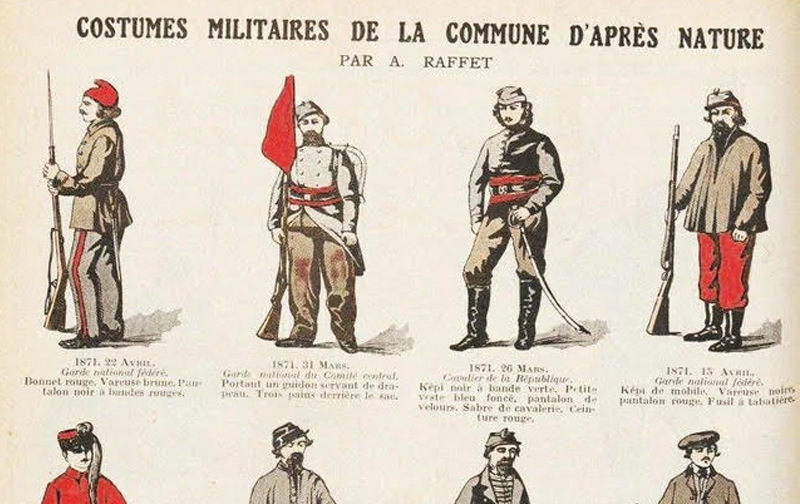
From the revolutionary uniforms of the Paris Commune to the punk rebellion of the 1970s, left-wing fashion has symbolized defiance against established power structures. The beret worn by Che Guevara, for instance, became an emblem of revolutionary struggle, representing anti-imperialism and Marxist ideals. However, as cultural critic Slavoj Žižek noted, “The very act of commodifying revolutionary symbols transforms them into objects of desire stripped of their political edge.” When such symbols are reproduced for mass consumption, their meanings risk becoming superficial, divorced from their radical origins.
Philosopher Theodor Adorno critically analyzed this phenomenon, asserting, “In the culture industry, resistance becomes a style, and the style becomes a commodity.” Adorno’s critique highlights the paradox in which left-wing fashion operates: the integration of countercultural symbols into the capitalist marketplace threatens to neutralize their oppositional power. The incorporation of revolutionary imagery into high fashion collections and fast fashion lines raises the question of whether authenticity can survive commodification.
The 1960s counterculture movement provides a compelling case study. This period witnessed the rise of anti-establishment fashion, with tie-dye shirts, military surplus jackets, and protest slogans becoming synonymous with civil rights and anti-war activism. However, as Naomi Klein observed in No Logo, “The commodification of dissent transforms symbols of resistance into mere trends devoid of their original political power.” The rapid absorption of countercultural styles by mainstream fashion brands underscored the challenges faced by left-wing fashion in preserving its ideological integrity.
The DIY ethic, central to leftist fashion movements, also exemplifies the struggle for authenticity. Punk fashion, spearheaded by designers like Vivienne Westwood, embraced deconstruction, safety pins, and anarchic aesthetics as a rejection of capitalist consumerism. Westwood’s mantra, “Buy less, choose well, make it last,” advocated for mindful consumption as a form of resistance. Yet, as punk fashion gained popularity, it too became subject to commercialization. Cultural theorist Dick Hebdige noted that the incorporation of punk aesthetics into commercial fashion represented “the symbolic surrender of subcultural style.”
Globalization further complicates the authenticity of left-wing fashion. The rise of fast fashion has accelerated the production and consumption of styles once associated with political resistance. Brands that initially represented countercultural values have transitioned into luxury labels, accessible only to elite consumers. Walter Benjamin’s reflections on fashion’s transience resonate here: “Fashion, in its fleeting nature, conceals the persistent structures of power it ostensibly challenges.” The global marketplace’s appropriation of leftist aesthetics often obscures the class dynamics these styles originally sought to critique.
Contemporary left-wing fashion also contends with the digital age’s influence. Social media platforms serve as both a boon and a bane for political fashion. On the one hand, these platforms democratize fashion discourse, enabling marginalized voices to advocate for sustainable and ethical practices. On the other, the rapid turnover of digital trends encourages superficial engagement with political symbols. Cultural theorist Angela McRobbie warned, “The spectacle of resistance risks becoming just another commodity in the digital marketplace.” The performative nature of online activism can reduce meaningful political fashion to aesthetic gestures devoid of substantive engagement.
Critics have also interrogated the role of gender and race in the commercialization of left-wing fashion. bell hooks, in her discussions on cultural appropriation and capitalist co-optation, emphasized how radical aesthetics from marginalized communities are often commodified without acknowledgment of their political origins. hooks argued, “The commodification of culture often entails stripping away its radical possibilities, leaving behind only its aesthetic surface for consumption.” This dynamic perpetuates power imbalances, as dominant cultures profit from the aesthetics of resistance while marginalizing the communities that originated them.
Moreover, the rise of sustainable fashion movements reflects contemporary left-wing concerns about labor rights, environmental justice, and ethical production. Designers such as Stella McCartney advocate for cruelty-free and sustainable fashion, aligning with socialist principles of equity and responsibility. Yet, even these initiatives face criticism for catering to affluent consumers, raising concerns about accessibility and class privilege. The intersection of ethics and economics remains a persistent challenge in maintaining the authenticity of leftist fashion.
Philosopher Jean Baudrillard’s critique of consumer society offers further insight into this debate. Baudrillard argued that in a hyper-consumerist world, symbols lose their referential power and become part of a system of sign exchange. In this context, left-wing fashion risks becoming another signifier in the spectacle of consumption, disconnected from its radical roots. “The system of objects,” Baudrillard wrote, “replaces the system of values,” suggesting that fashion’s political potential may be undermined by its transformation into commodity fetishism.
In addition to these philosophical critiques, contemporary cultural movements have attempted to reclaim authenticity in left-wing fashion. The rise of slow fashion, thrift culture, and local production emphasizes transparency and sustainability, challenging the fast fashion industry’s exploitative practices. These movements draw inspiration from Marxist critiques of labor exploitation, seeking to create fashion systems that reflect equitable relations of production. However, the challenge remains in balancing these ideals with the demands of a global capitalist economy.
The dynamic between commercialization and authenticity in left-wing fashion thus remains a site of contestation. As leftist fashion continues to evolve, it must navigate the delicate balance between meaningful political expression and the forces of market commodification. The writings of philosophers like Adorno, Benjamin, and Baudrillard, alongside contemporary critics such as Klein and hooks, underscore the complexities inherent in this cultural phenomenon.
Ultimately, the question persists: can left-wing fashion maintain its revolutionary spirit in a world where resistance itself is marketable? The history of leftist fashion reveals both the possibilities and limitations of using style as a form of political expression.
While commercialization threatens to dilute the ideological significance of radical aesthetics, ongoing efforts to prioritize sustainability, ethical production, and cultural authenticity suggest that left-wing fashion continues to hold transformative potential. Navigating these challenges requires a critical engagement with the past, a nuanced understanding of contemporary cultural dynamics, and a commitment to the principles that have long defined leftist thought.