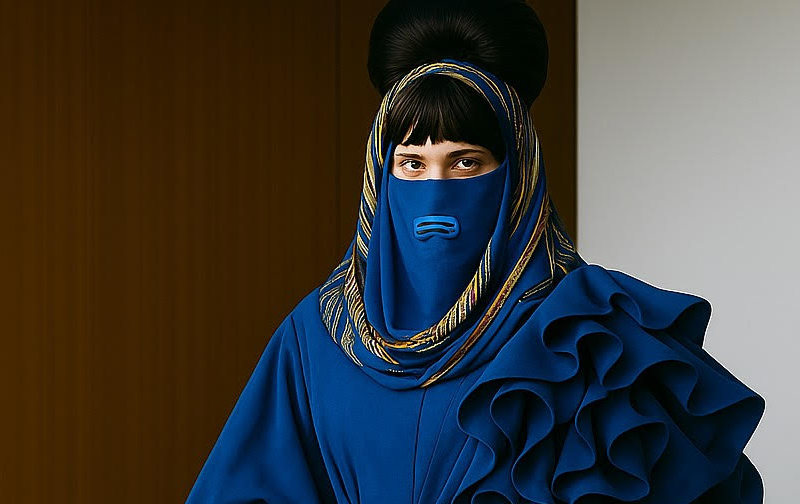
Design is often spoken of as if it were a universal language – visible in the contours of a garment, the lines of a building, or the interface of a device – yet elusive to define. To ask what constitutes “designing” as opposed to mere making is to venture into a labyrinth of intention, originality, authorship, and transformation across disciplines. In the world of fashion, one might recall how Rei Kawakubo, the visionary behind Comme des Garçons, upended notions of beauty with dresses that deformed the silhouette, prompting observers to wonder whether they were witnessing fashion design or an anti-fashion provocation. In architecture, the late Zaha Hadid shattered the “accepted box” of modernism with fluid forms that seemed to defy gravity . Meanwhile, product designers like Charles Eames have insisted that design is fundamentally about purpose: “One could describe Design as a plan for arranging elements to accomplish a particular purpose” . Such disparate perspectives highlight that “designing” is not a monolith but a deliberate act of creation that can take radically different forms.
At its core, to design is to impose intention on materials and ideas – to envision an outcome and give it form. Eames famously resisted calling design art, remarking that “Design is an expression of purpose. It may, if it is good enough, later be judged as art” . This underscores that true design begins with a telos – a goal or problem to be solved – rather than with the aim of self-expression alone. The fashion designer Alexander McQueen, despite the artistic extravagance of his runway shows, likewise saw himself as addressing needs and desires of his time. “As a designer, you’ve always got to push yourself forward; you’ve always got to keep up with the trends or make your own trends. That’s what I do,” he said , indicating that design involves a constant forward motion, an active engagement with the present and future. The notion of intention separates designing from mere happenstance: a pile of bricks may accidentally form a shelter, but an architect’s blueprint encodes a vision of how that shelter should function, feel, and even inspire. Design in this sense is a method of action, as Eames put it, rather than passive existence . It is the conscious injection of purpose into the world.
Originality is another linchpin of what many consider true design. The avant-garde across fields seem to agree that without the new, design stagnates into mere replication. Kawakubo has been explicit: “Creation takes things forward. Without anything new there is no progress. Creation equals new” . In her fashion designs, she has embraced the novel to the point of alienating or confusing observers – a sacrifice she deems necessary to break new ground. “If I do something I think is new, it will be misunderstood,” Kawakubo observed, admitting that if people did immediately like it, “I will be disappointed because I haven’t pushed them enough. The more people hate it, maybe the newer it is” . This radical embrace of the unprecedented illustrates a key difference between designing and mere styling. Styling, as critics like Victor Papanek argued, is content to recycle familiar motifs for superficial appeal, whereas designing strives to transform. Papanek, a design theorist, once lamented that much of what passes for design is in fact pseudo-design – for instance, advertising that persuades people to buy unnecessary, “poorly-designed” goods . True design, in his view, must be “innovative, highly creative… and we must stop defiling the earth itself with poorly-designed objects” . The insistence on originality is not just aesthetic but ethical for Papanek: only through original thinking can design solve real problems rather than peddle more of the same.
Philosopher Gilles Deleuze provides a theoretical backbone to this celebration of difference. “It is not the slavish repetition of the same that is needed, but the exalted repetition of difference,” Deleuze wrote , encapsulating a core principle that resonates strongly in design. To design is to repeat – we continually design chairs, buildings, clothes – but not to repeat identically. It is, as Deleuze might say, to iterate with a difference, to iterate difference itself. Every new chair design offers some variation – however subtle – that differentiates it from all chairs before. In practice, this is seen in how Alexander McQueen would draw inspiration from historical dress or nature yet insist on distortion and drama that made each collection unlike any before it. “There is no better designer than nature,” McQueen quipped , acknowledging that originality often means tapping into the ingenious forms already present in the world and reconfiguring them. His runway spectacles – from a model rotating while being spray-painted by robots to collections evoking highland battles – were exercises in pushing form and concept to extremes, effectively saying that to design is to create as if nature itself were creating anew. Deleuze’s notion that “a creator is someone who creates their own impossibilities, and thereby creates possibilities” rings true here. Designers often set themselves seemingly impossible challenges – Kawakubo trying to “get a new brain each season” to think differently , or Zaha Hadid attempting architecture that looked structurally impossible – in order to force innovation. By embracing constraints that go beyond the known, they open doors to new design possibilities.
Yet design’s pursuit of the new is always in tension with the weight of tradition and reception. This is where authorship and the role of the audience come into play. In architecture and product design, authorship is usually explicit: we speak of “a Frank Gehry building” or “a Dieter Rams radio” as we would a novel by an author. In fashion, the cult of the designer as author is if anything even more pronounced – the name on the label (Kawakubo, McQueen, etc.) is seen as the creative source, the guarantor of a certain vision. However, critical theory reminds us that the designer’s intention does not solely define the work. Roland Barthes’s famous dictum, “the birth of the reader must be at the cost of the death of the Author” , suggests that once a creation is out in the world, it is the audience – the users, wearers, inhabitants – who ultimately complete its meaning. This idea finds echoes in design. Kawakubo herself has noted that fashion’s meaning is generated in dialogue with its wearer: “Fashion is something that you can attach to yourself, put on, and through that interaction, the meaning of it is born” . A garment hanging in a studio carries only the designer’s intent; it comes alive when someone wears it, interprets it, perhaps even alters how it is worn. In architecture, a building’s architect may intend a certain use of space, but how people actually inhabit it can subvert or enrich that intention. Rem Koolhaas – who as a theorist-architect is acutely aware of these dynamics – has often explored the gap between design intent and real experience. He observed that people can be “miserable in anything and ecstatic in anything” built for them, ultimately concluding that architecture’s power has limits . His provocative essay “Junkspace” takes this further, describing a contemporary world of spaces so overstuffed and chaotic that genuine design agency seems to dissolve. “Junkspace thrives on design, but design dies in junkspace. There is no form, but proliferation… Regurgitation is the new creativity; instead of creation, we honour, cherish and embrace manipulation… [It describes] an authorless world beyond anyone’s claim, always unique, utterly unpredictable, yet intensely familiar” . Here Koolhaas paradoxically uses “design” to mean superficial stylistic additions – malls accruing atriums and escalators ad infinitum – and contrasts it with the death of capital-D Design in such spaces. In junkspace, no singular author or cohesive intention guides the experience; it is design-by-accumulation, and thus, in his view, not true design at all, but rather the failure of design.
Koolhaas’s notion of an “authorless world” resonates with Barthes’s dethroning of the Author. If true design requires a guiding intelligence (a conscious creative vision), then the sprawling air-conditioned labyrinths of junkspace represent the negation of design – a cautionary example of what happens when economics and accretion override vision and authorship. Conversely, some creators have experimented with relinquishing authorship in a constructive way. The fashion house Maison Martin Margiela, for example, made the designer’s identity practically invisible, with a team in white coats and an ethos of anonymity, to emphasize the work over the individual. Such gestures question whether design can be a collective, iterative process rather than the output of a solitary genius. Even so, the intent – the design philosophy – remains, simply diffused. The paradox is that even anti-authorial stances become a form of authorship. In the end, the presence of an intentional creative framework (be it by a single author or a group) is part of what marks the difference between design and happenstance.
Intention, then, is indispensable. The very word “design” comes from Latin designare – to mark out, to plan. A true design has a rationale or concept that can be articulated, even if it is esoteric. Zaha Hadid’s buildings, for instance, were often inspired by geological forms, fluid dynamics, or abstract art; behind their striking curves lay an intention to transform how people experience space, perhaps to make them feel as if they are inside a piece of avant-garde sculpture or a cresting wave. She famously said, “There are 360 degrees, so why stick to one?” – a testament to her refusal to follow a single established line of thought. That restless search for alternative solutions defined her design process. Early in her career, when modern architecture was dominated by strict functionalism or by historicist pastiche, Hadid looked for a third way: “Alternatives were historicism, post-modernism, and neo-rationalism. I thought there must be another alternative, and so I started to complete the modernist project, not knowing that in this endeavor I would discover other things,” she recounted of her 1970s explorations . The “other things” she discovered were new spatial strategies (fragmenting forms, floating geometries, radical perspectival play) that came from deliberately breaking the linear design process dictated by dogma. In doing so, Hadid embodied the idea that intention in design can also mean intentional openness to the unknown. Her intent was not a fixed picture of a building, but rather an intent to find a new idiom of form through experimentation.
In product and industrial design, intention is often framed as problem-solving: the designer identifies a problem or need and devises a plan to address it. “Design addresses itself to the need,” asserted Charles Eames , and he believed any design starts by recognizing constraints and requirements. He jokingly answered the question of design’s boundaries with, “What are the boundaries of problems?” – implying design’s scope is as broad as the challenges we face. By this account, if something does not stem from a clear need or doesn’t solve something definable (be it a physical, emotional, or intellectual need), one might argue it isn’t really “designing” but just making. Yet avant-garde designers often redefine what a “need” is – sometimes the need is to challenge perceptions or to give people a new experience rather than a conventional utility. Philippe Starck’s infamous Juicy Salif lemon squeezer, shaped like a sleek alien tripod, is a case in point: it arguably fails at its basic function of efficiently extracting juice, but it succeeded in sparking conversation about design as an object of art and commentary. Starck reportedly said that it was “not meant to squeeze lemons, but to start conversations.” Is that true design or a gimmick? Opinions diverge – to a functionalist like Dieter Rams, who championed the motto “Less, but better” and a set of principles elevating usefulness and clarity, Starck’s piece might seem like indulgent styling. However, from a conceptual standpoint, even the Juicy Salif had a clear intention: to reimagine an ordinary object in a provocative form – and in that sense it was designed, just with a different priority (aesthetic delight and discourse over efficiency).
This brings us to the question of transformation. A successful design, in any field, tends to transform something: a material, a use, an experience, or the cultural context. Walter Benjamin, writing about art in the age of mechanical reproduction, noted that “even the most perfect reproduction of a work of art is lacking in one element: its presence in time and space, its unique existence at the place where it happens to be” . In other words, a mechanically reproduced object lacks the singular aura of the original. What does this mean for design? When an object or building is mass-produced or copied, each instance may lose that unique presence in time and space that a handcrafted or one-of-a-kind creation has. Yet design as a discipline often explicitly engages with reproducibility – product designers design for mass manufacture, architects create blueprints that contractors might follow in multiple locations. Benjamin’s point can be seen as a caution: when design is diluted into endless copies, its aura – the sense of authenticity and intent – can fade, unless we find new ways to instill meaning. The aura he spoke of is tied to authenticity, the trace of the original creative act. In design, we sometimes see a counter-movement to mass production in the form of limited editions or bespoke works: for example, Alexander McQueen would personally cut and shape certain couture pieces by hand, imbuing them with an auteur’s touch that no factory line could replicate. Each such piece was, like a work of art, anchored to the time, place, and hand that birthed it.
However, design can also transform through repetition with variation. Fashion, by its nature cyclical, constantly revisits past styles – corsets, ruffles, neon colors – but each revival comes with a twist that transforms the old into something perceived as new. As Walter Benjamin observed in his Arcades Project, fashion has an uncanny way of making the old appear new again, what he called the “tiger’s leap” into the past. In other words, the process of transformation in design can involve re-contextualizing the familiar. Consider how Roland Barthes described the Citroën DS automobile as “the supreme creation of an era, conceived with passion by unknown artists, and consumed in image if not in usage by a whole population which appropriates it as a purely magical object” . Here, a product of industrial design – a car – transcended its utilitarian role to become a cultural icon, a symbol almost akin to a work of art or a monument. The DS introduced visual and engineering innovations (a futuristic aerodynamic body, hydropneumatic suspension) that fundamentally changed the trajectory of car design. It didn’t only meet a need for transportation; it transformed the public’s imagination of what a car could be. In that moment, the car ceased to be just a machine and became what Barthes saw as a modern myth. This exemplifies how designing in the fullest sense means elevating an object beyond its basic function into the realm of meaning and narrative.
Transformation works on smaller scales too. A dress by Kawakubo might transform the wearer’s silhouette and, more importantly, the wearer’s perception of their own body. Her designs have been likened to Zen koans or “unsolvable puzzles” that free the mind by confounding it – making the wearer and viewer alike reconsider what clothing is for. In doing so, they transform the very definition of garment: from something that flatters or signifies social status into something that challenges and abstracts. Rem Koolhaas’s Seattle Central Library transformed the idea of what a public library could be in the 21st century – from a hushed repository of books to a dynamic, light-filled “information space” with dramatic shifts in floorplates, inviting new patterns of use. These examples show that true design often involves rethinking an archetype and thereby transforming users’ experiences and cultural expectations. When we recognize such a leap, we label it as capital-D Design.
Through all these perspectives, a through-line emerges: true design is marked by a certain depth of thought and audacity of execution that distinguish it from ordinary creation or replication. It is not defined by a particular style or domain – a cutting-edge fashion garment and a brilliantly engineered chair can both embody great design – but by the presence of original intent, creative risk, and an outcome that changes our perception or behavior. The avant-garde figures we have considered – Kawakubo, McQueen, Hadid, Koolhaas – were all initially controversial because their work was so original that it defied easy categorization. When Kawakubo sent models down the runway in garments that obliterated familiar signs of femininity, some in the establishment asked if it was even clothing. But as she insisted, “For something to be beautiful it doesn’t have to be pretty” – she was defining a new kind of beauty, thus expanding fashion’s vocabulary. Similarly, Hadid’s early buildings, with their sharp diagonals and fragmented forms, were dismissed by many as impractical fantasies until engineering innovations caught up to her vision; now those forms have influenced a generation of architects, permanently enlarging the domain of the possible in architecture.
For this reason, design is often described as the meeting ground of the practical and the poetic – required to satisfy material needs like science, yet capable of delighting and inspiring like art. Yet the boundary of what counts as designing can be blurry. An artisan faithfully reproducing a traditional pattern exercises skill and aesthetic judgment, but perhaps not originality. At the other extreme, a generative algorithm might produce a startling new form with no human intention. These grey areas show that designing is also a matter of interpretation. The sociologist Pierre Bourdieu might remind us that our judgments of design quality are shaped by cultural context and habitus – what is hailed as innovative design in one era or milieu could be dismissed in another. What the avant-garde does today may be scorned at first and embraced later. In that sense, the cycle of design innovation and imitation is constant: once a radical design becomes familiar, its transformative aura fades, and new designers must redefine the frontier. Originality, authorship, intention, and transformation remain the key yardsticks, but each generation reinterprets them. The figures we have discussed – from Barthes’s theoretical provocations to Kawakubo’s sartorial revolutions – each in their way challenged prevailing definitions of design, expanding its possibilities.
Ultimately, “designing” is distinguished not by a particular medium but by a mindset of critical creation. It is the mindset that asks: how else could this be? – what hidden needs or meanings could be addressed by reimagining the given? When that mindset is present, design can happen in the most unexpected quarters: in the layout of a modest public park or the interface of a smartphone app, as much as in a couture ensemble or a skyscraper. Conversely, when that mindset is absent – when replication overrides inquiry, when surface substitutes for substance – we sense that we are in the realm of the non-design, no matter how polished the object. In practice, true design lies in a deliberate balance: it must bring something new (originality), carry the stamp of a coherent vision (authorship), spring from conscious intent, and enact a transformation – whether of a material, a usage, or a perspective. Achieving all of this is difficult, which is why exemplary designs stand out as benchmarks. They become, in Barthes’s words, “the supreme creation of an era” , acquiring a “magical” aura beyond their utility.
To design is thus to dare to leave an intentional imprint on the world. It is a dialogue with what exists and a proposal of what could be. The designer – whether an architect like Koolhaas, a fashion alchemist like Kawakubo, or a product visionary like Eames – engages in a speculative act: what if we do this differently? The outcomes of such speculation may delight or disturb, but they invariably make us aware that behind the objects we use and the spaces we inhabit, there was a choice. That human impulse to not only make things, but to make them meaningfully, is the essence of designing. When it is present, even a simple object can speak volumes; when it is absent, even grand edifices say little. True design, ultimately, is the art of meaningful change – change made tangible through form and idea, guided by intent and imagination.