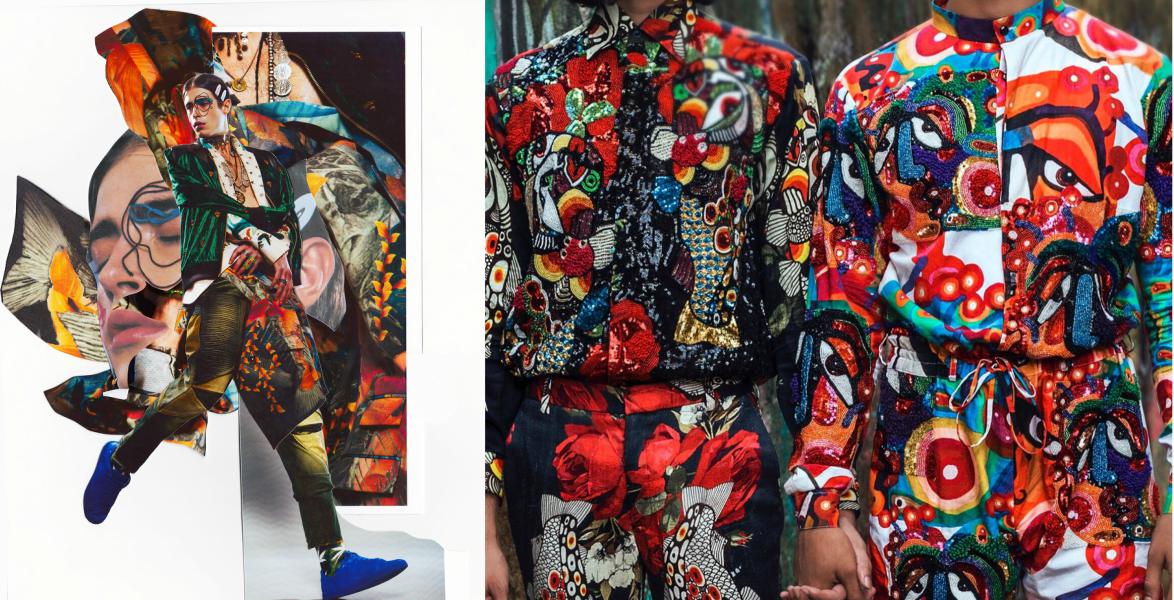
It is perhaps more than a coincidence that the first letters of the word ‘modern’ are ‘mode’. Both words are taken from the Latin modo meaning ‘just now’. Walter Benjamin was extraordinarily attuned to modernity as a process of constant renewal already anticipated, inscribed in what is already there. For the ‘now’ is itself the crossroads between what will be and what has been.
Fashion therefore has an important place in Benjamin’s thought. Yet in a comment on a passage by the nineteenth-century French poet Charles Baudelaire, Benjamin dismisses it swiftly: ‘one cannot say there is anything profound about this’ (Benjamin 1969: 89). This does not avert the fact that the shell of shifting appearance is one of the central issues in Benjamin’s thought.
Born in Berlin in 1892, Benjamin considered himself a ‘man of letters’ rather than a philosopher, which was a more illustrious title for a man of his time. He made a living as a literary critic and translator, writing articles for many journals and magazines. When the Nazis took office in 1933, as a Jew and left-wing intellectual Benjamin fled to Paris where he befriended many other intellectuals in the same situation, including Hannah Arendt, Gershon Scholem and Theodore Adorno.
In Paris he wrote his most influential essays and articles, as well as the ambitious and unfinished ‘Das Passagen-Werk’ (The Arcades Project 1938). In this substantial tome he wrote about fashion’s social, cultural and psychological meanings in the context of nineteenth-century capitalism.
Here we also find Baudelaire’s most explicit influence on Benjamin, not only in his referencing of the poet’s writings on fashion, but in a large section of the project dedicated to Baudelaire himself. Drawing on Georg Simmel, Marcel Proust and Charles Baudelaire, Benjamin critiques fashion in terms of hygiene, social class, gender, political and economic power, biology and so on.
The birth of fashion can be said to occur together with the birth of modernity. This makes fashion more than a consequence or complement of modernity. Rather it is the most specific manifestation of capitalism’s will-to-change. Yet while we may note Benjamin’s aversion to fashion on the grounds of its collusion with the commodity, he also observes that it holds the key to modernity’s relationship to time.
Moreover, Benjamin offers many insights into the way fashion is intertwined with representation, a relationship that is even more poignant today with the growth of digital fashion, which has altered the way in which fashion is disseminated and perceived.
Thus his essay, ‘The Work of Art in the Age of its Technological Reproducibility’, while pertaining to works of art and not items of fashion, has been of considerable profit to fashion studies (Evans 2003; Lehmann 2000). The representation of fashion will be discussed later in this article. We first examine Benjamin’s writings on fashion, the influence of Baudelaire and Proust on his work and the relationship between fashion, history and time.
Walter Benjamin’s concept of fashion is unthinkable without considering the poet Charles Baudelaire. His Berlin Childhood through to the essay ‘Paris, the Capital of the Nineteenth Century’ is heavily tempered by Baudelaire’s influence. Baudelaire was one of the most important and tragic figures of his era, not only one of the most outstanding poets of his time, but also a formidable art critic.
It is indeed in his art criticism, and particularly his much-cited essay ‘Painter of Modern Life’, that we begin to see what is later developed by Benjamin, namely what is today known as cultural studies. In this essay, Baudelaire develops the notion of the flâneur, the city wanderer voyeur who observes the life of the modern city: shop windows, parks, stalls, posters and, in no small measure, what people wear and how they wear it.
Benjamin develops from Baudelaire’s technique of extracting poetic insight from observing the anomalies and juxtapositions that appear in everyday life. In this context it means that fashion is central for Benjamin because it represents a conjunction of past, present and future; it usurps the past, represents the now and anticipates, and is inscribed by, its own overcoming.
As a Marxist thinker of historical materialism, Benjamin develops his idea of the dialectical imagination from the writings of Karl Marx, especially from Capital (1867). Marx devoted a considerable amount of time to recounting victimization of the past and to the importance of its memory in political and economic contexts. It is precisely through this relationship between the memory of the victims of capitalism and the promise of liberation governed by the laws of progress that Benjamin revises the question of history.
Rather than examining progress in historical development, Benjamin focuses on a new construction of the past in the present. His resistance to the idea of the linear progress of time in favour of a non-instrumental relationship to the future contains messianic and Kabbalistic notions of time. In other words, the past is always contained in the present, simultaneously inside and outside history.
The relevance of Benjamin’s idea to the study of fashion is twofold; in the way in which garments contain the past in some form, either in their technological development (for instance, boning, corsetry) or in their aesthetic component which looks to the past for stylistic inspiration. The fashion cycle and the rapid speed by which styles come and go is central to the essence of fashion.
In this way, fashion, which exists in the present, contains a dialectical relationship to the past. As Michael Sheringham eloquently writes, ‘temporality is at the heart of fashion’s unstable – yet strangely permanent – present which is linked existentially both to the past, which it incorporates, and to the future which it anticipates’ (2006: 182).
Fashion’s place in Benjamin’s thinking can be seen to have two phases; the first in his writings on Baudelaire, followed by The Arcades Project (1938), in particular the section enigmatically called ‘Konvolut B’. Drawing from the cup of Marxism, Benjamin is from the first deeply distrustful of fashion since it is the most persistent agent of capitalism’s ‘false consciousness’.
The latter is the notion espoused by Marx and Engels that institutions of capitalism deceive and betray the proletariat, obfuscating means and ends with the overall effect of setting up false realities and thereby impeding the possibility of effective class struggle. Fashion is the semblance of the new, a room of mirrors in which history is played out as a specular game, for which Benjamin used the term ‘phantasmagoria’ (Markus 2001).
With fashion, the bourgeoisie can play out its false consciousness, and seek consolation in novelty, to the exclusion of the real signs of utility, that is, the operations of truth. One could say that for Benjamin, the transformation of clothing to fashion enacts a violence on this kind of aesthetic utility since it debases beauty, attraction, allure and aura to base integers of arbitrary vanity, whose qualities are exploited since fashionable beauty must die to make way for what comes next.
Thus, fashion bears witness to the bad faith in capitalism’s claim to progress, in which advancements are only made for the sake of profit. Fashion is in collusion with capitalism in a way that art is not, because fashion and art occupy different modalities of presentation and reception.
The differences are less in the objects of fashion and art, since both are aesthetic creations for which judgement is always subjective, but the places of exchange – social, economic, linguistic – that they occupy. Benjamin was able to show how fashion was one of the principal means by which modernity manifests itself, but also diagnoses its own forever changing identity, its zeitgeist.
Fashion is a crystal in which aesthetics, consumption, class, industry and personal identity all meet. The changes wrought by the fashion industry are changes that occur solely for the sake of the commodity fetish – Karl Marx’s term for the endless chain of goods that we desire and then relinquish for another object of desire to be purchased.
According to this thesis, the signs within fashion are disingenuous. The signifying value of fashion is subordinated to its ability to be desired and consumed. In this respect its meanings are annulled and made redundant.
The inherent gratuitousness of fashion is thus on one hand made more gratuitous still through the subservience to commodity value. Fashion is the assurance of bourgeois society’s narcissism, complacency and stagnation. On the other hand, there is also the dissimulation of men’s fashion down to the base denominator of the black coat.
Benjamin understands fashion as participating in ceremonies of death: for women the death of meaning and direction for the sake of fleeting gratification, for men to be reduced to an awkward cipher, in which equality, if not authentic, is given a uniform, or livery as Baudelaire calls it, which is one that inveigles the dead (Baudelaire 1954b: 676).
In order to understand Benjamin’s reflections on fashion, it may be wise to take a small detour through Baudelaire’s thoughts on fashion and the dandy. Benjamin was influenced by the poet’s approach to fashion as a conduit that manifested the conditions of the present, apprehended by experiences that blur the subjective and the objective.
The eminent foil to the predicament of fashion is the dandy who in Baudelaire’s words is ‘something modern and keeps to wholly modern causes’ (Baudelaire 1954b: 676). Baudelaire’s dandy is the closest thing approaching the notion of anti-fashion, since the dandy embraces an attitude more than a particular garment or circumscribable look.
Anti-fashion can best be defined as oppositional dress, an umbrella term that is bandied by designers and the fashion industry to describe dress styles that are contrary to the fashion of the present. Punk and the designs of Vivienne Westwood are labelled anti-fashion because they make a statement at a particular historical moment of anti-establishment.
Dandyism is anti-fashion insofar as it tries to step outside the fashions of its time, thereby the dandy announces himself as solipsistic, self-referential and defiantly autonomous. The English dandy, with its originator, Beau Brummell, was highly selfconscious of fashion and style and held several keys to the origins of modern dress.
Although a dandy himself who dressed in black from head to toe and slept on black bed sheets, dandyism for Baudelaire was far less sartorial as he insisted that garments were only symbols of a spiritual aristocracy and far more political. The dandy scorns the bourgeois way of life and its elitism as ‘the last spark of heroism against decadence’ responding to what he considered to be ‘encroachments of bourgeois and even mass vulgarity by reasserting traditional virtues of daring, élan and poise’ (Williams 1982: 111).
These were the politics of perverse indifference and self-absorption of the troubled and transitory epoch of the nineteenth century that was characterized by mass production and consumption. If there were to be a symbol of the dandy’s clothing, it would be the ubiquitous black, so that he may blend in with the crowd, as the flâneur or city ambler.
Benjamin notes how, unlike his contemporaries, Baudelaire ‘found nothing to like about the age he lived in [ . . . ]. Flâneur, apache, dandy and ragpicker were so many roles for him’ (Benjamin 2006: 125). But what Benjamin writes next is intriguing from the point of view of fashion: ‘For the modern hero is no hero; he is the portrayer of heroes’ (2006: 125).
In the carnival that is modernity we all play a particular part, cast for us or chosen. Unlike the bourgeois, the dandy is aware of modernity’s decay in his own claim to decadence. Whether dandy or bourgeois, the charms of fashion are but anodyne symptoms of much deeper malaise.
Such an out-of-the-ordinary statement could be made too much of, although we might assert from this that fashion and elegance are the outer shell of a system that the bourgeois are happy to maintain and to which the dandy is a self-anointed pariah. According to Benjamin, dress is not only an attribution of class, recognition and aspiration but, foremost, a pervasive and persistent statement of temporality.
This temporality runs deep to the measure of the way in which modernity needs to maintain the semblance of change. This is not only economic but narratological, for modernity is always both subverting and improving upon history.
Fashion is as a tissue of historical references that are both avowed and also repressed in the name of the ‘just now’. These are ideas he explores in his The Arcades Project, a title that comes from the proliferation and charm of mercantile galleries, or arcades, in midnineteenth century Paris.
In this unfinished book, Benjamin is essentially concerned with the history of Paris, a prehistory of modernity. He looks back at the nineteenth century as the birthplace of modernity that would influence contemporary historicism and a materialist interpretation of society.
A number of fragments, theoretical reflections, aphorisms and notes constitute his work on the arcades, ‘the matrix from which the image of modernity was cast’, as ‘the mirror in which the century, self-complacently, reflected its very newest past’ (Benjamin cited in Steiner 2010: 147).
He writes: These arcades, a new invention of industrial luxury, are glass roofed, marble panelled corridors extending through whole blocks of buildings whose owners have joined together for such enterprises. Lining both sides of these corridors, which get their light from above, are the most elegant shops, so that the passage is a city, a world in miniature.
The allure results from the ‘ambiguity of space’: the roofed streets change into an interior space and they impart the indeterminacy of the streets of Paris. The streets appear to be the ‘abode of the collective’ and the arcade turns into the salon (Steiner 2010: 148). Benjamin focuses on these structures as the organizing metaphor for his study because they are a historically specific artefact of the period in question and the particular visual character of nineteenth-century commodity capitalism.
The arcades themselves were a site and apparatus for the vast realms of perception for the people of the modern metropolis. The material amassed included the role of the urban crowd for the strolling flâneur; the significance of optical devices such as panoramas, peep shows and magic lanterns in the habitation of city dwellers; and the new conditions of the metropolitan experience, in particular the modern practices of display and advertising that emerged in Paris and would come to shape the representation of the world in such a ubiquitous manner.
One of the prominent topics that manifests in Benjamin’s writings is the role of fashion as a visual signifier of aesthetics and as both an economic and political force. To fathom fashion philosophically defines Benjamin’s efforts as motivated by his interest to find out ‘what this natural and totally irrational measure of the historical process is really all about’ (Benjamin cited in Steiner 2010: 147).
According to Benjamin, certain historical moments and forms become legible only at a later moment. As the prehistory of one’s own present, the past century, which has claimed the concept of modernity for itself, does not move closer to this present time. Rather it retreats into an infinite, prehistoric distance.
The sense of time that characterizes this experience is suggested by the way fashions change. Every generation experiences the fashion that has just elapsed, but fashion is more than merely meretricious; it is a continuous and fickle spectacle that illustrates a dialectic of history, because the latest trend or garment in fashion will set the tone ‘only where it emerges in the medium of the oldest, the longest past, the most ingrained’ (Benjamin 1999: 64).
It is this experience that Benjamin explains further as the attempt ‘to distance itself from all that is antiquated – which means, however, from the most recent past’ (Benjamin 1999: 64). Present time is referred back to the past. In the section Konvolut B, dedicated solely to fashion, we see fashion as a fluid entity within the life of modernity.
Benjamin is particularly interested in the way in which fashion invests in historical references while simultaneously undermining them: ‘This spectacle, the unique self-construction of the newest in the medium of what has been, makes for the true dialectical theatre of fashion’ (Benjamin 1999: 64).
To bring this insight to fashion today: as head designer and creative director of the House of Chanel since 1983, Karl Lagerfeld continuously mines Gabrielle ‘Coco’ Chanel’s archives containing past designs in order to stay true to the brand. His designs incorporate Chanel details, colours, tweed fabrics, quilt stitched leather, gold chains and the ‘CC’ logo.
In later collections, Lagerfeld ‘deconstructed’ elements of Chanel’s looks such as incorporating her signature jersey fabric into men’s T-shirts and briefs. Similarly, in Chanel’s comeback collection in 1953 she updated her classic looks by reworking her tweed designs and making the Chanel suit, with slim skirt and collarless jacket trimmed in braid and gold buttons, a status symbol for a new generation of women.
Fashion is therefore to be seen not only as part of the carnival of commodities but also a complex fold of the past and what will always-soon-be in the present. As opposed to art, which speaks across time, fashion is inscribed with the inevitability of its own overcoming.
Benjamin’s metaphor of the fold, which he employs to explain the way in which fashion contains the ghost of the past in the present via the recycling of past styles, originated in his engagement with the literary method of realization, of bringing something into the present, that the French author Marcel Proust employed when writing the series of novels Remembrance of Things Past (1913–27).
Proust lavished considerable attention on fabrics and gowns to evoke memories and the metaphysical value of an object, that is ‘the significance that fashion and elegance carry for the perception of past and present time’ (Lehmann 2000: 209).
The seductions of fashion in Proust’s world are part of a much deeper web of memory, association and imaginative invention, in which the desires of the moment collude, wittingly or not, with the dense strata of personal experience and cultural history.
For Benjamin the dialectical process caused by the folds of past present on the one hand, and the anticipated future on the other, puts the truth of present action to the test. This material-temporal imbrication is what causes the explosive event that is pregnant within the past – whose symbol is fashion – that ultimately blasts away the smooth continuum of history to reveal a clearer understanding of the relationship to time, matter and self.
Because this explosion is fashion, ‘it becomes apparent’, writes Ulrich Lehmann, ‘that fashion is the indispensable catalyst for both remembrance and a new political – that is, materialist – concept of history’ (Lehmann 2000: 210).
Like a shirt cuff whose fabric folds back on itself embedding memory in its creases as it moves forwards and backwards, folding and unfolding on the precise point on the cloth, so too does the dialectical process of history. Benjamin conjures up the image of the tiger’s leap to explain fashion’s effortless ability to leap from one temporal setting to another.
‘Fashion,’ he writes, ‘has the flair for the topical whenever it stirs in the thickets of long ago, it is the tiger’s leap into the past’ (Benjamin 1968: 263). It is precisely this historical relay, the ‘tiger’s leap in the open air of history’, that renders fashion a dialectical process shifting between the present and the past, for it challenges the linearity of history and becomes a symbol of modernity’s potential for change (Benjamin, s.a.,Vol. 1.2: 701).
The significance of Proust’s fiction for Benjamin’s philosophical inquiry into the Parisian arcades and modernity can thus not be underestimated. The representation of memory in Remembrance of Things Past was for Benjamin the expression of the historical character of memory and experience that we would later find embedded in the theoretical fragments that make up The Arcades Project:
‘What the child (and in a much weaker recollection the man) discovers in the folds of a fabric into which he pressed himself while holding on to the mothers skirt – this has to be part of these pages’ (Benjamin cited by Lehmann 2000: 207). Benjamin’s analysis of nineteenthcentury Paris is an act of remembrance. Benjamin developed a new approach to the philosophy of history by drawing on Proust’s literary model in its epistemological structure and textual appearance.
It is the constant realisation of the past within the present in Proust’s novel, brought on most forcefully in the revelations wrought from involuntary memory, that leads Benjamin to the concept of the dialectical image.
The dialectical image is what Benjamin described as ‘literary montage’, analogous to the cinematic montage. Typified by early filmmakers such as Sergei Eisenstein, montage is the filmic equivalent of collage. A series of short shots are edited into a dynamic array so as to expand the perceptual flow of space, time and information.
It is less symbolic than organizational, deepening the understanding of temporal durée, duration. It is through the alignment of both the arbitrary and the intentional ordering of temporal units, the friction between past and present that a third meaning arises.
This is not truth as such, but rather, as Benjamin conceives it, an archetype, and a standard for judging the significance of historical reality. According to Benjamin, the images created by past generations contain the desires of those generations, whose relevance maintain their pertinence across time.
As a result, the objects of the past are not important for themselves, but for what they represent. The possibility of recognizing the image of the past further depends on being attuned to a peculiar temporality, a movement within the medium of memory in which the meaning of the past is realized in the present.
In its first incarnation, the past appears distorted, an alteration that Benjamin compares to dreams. The recognition of the image must then be understood as the traversal of that space of semblance that brings out its truth, as the awakening from the dream.
The function served by the dialectical image in the understanding of history is expressed by Benjamin himself, when in Theses on the Philosophy of History he affirms that ‘the past can be seized only as an image which flashes up at the instant when it can be recognized and is never seen again’ (Benjamin 1968: 263).
The dialectical image can best be defined as an image of the past that ushers the desires of earlier generations into the present (Karaminas 2012). Benjamin was highly sensitive to the manner in which the art object is always in the cusp of being swallowed by the phantasmagoric machine of the commodity.
He was fascinated by the phantasmagoria, a form of theatre that used a magic lantern that contained a candle and a concave mirror to project frightening images of demons, skeletons and ghosts onto a wall. The phantasmagoria became a popular form of entertainment in the nineteenth century, partly because of the fascination with science at the time.
As well as the increase in productivity enabled by the Industrial Revolution which created new products and lowered the price of existing commodities, technology made possible the material realisation of fantasies which had up until then existed in the realm of the imagination.
The advent of cinematography and electrical power resulted in large-scale city lighting that replaced gas illumination and brightly lit the streets of Paris and London. The speed and motion from which everyday life was altered by technological marvels was frightening for Benjamin, who associated the phantasmagoria with commodity culture and its experience of intellectual and material products.
Expanding on Karl Marx’s notion of the phantasmagoric powers of the commodity, Benjamin used the term in his essays to explain the way in which images of the past and present collide in the unfolding of the present. It is this dialectical process embedded in history and time that we see prevalent throughout his work and especially in The Arcades Project, where Benjamin explains how fashion has a significant place in modernity and the everyday, by its link to the unfolding present.
Fashion is the more visible promise that pervades modernity, since it embodies both past and future, albeit in the most arbitrary and fleeting way. Modernity is not only a project based on industrialisation and rationalisation and oriented towards the future; it is also a collection of dreams – a historical dream, as Benjamin says, which becomes material in objects and architectural constructions.
The modern is internal to the phantasmagoric display form of the market, which can be seen in salons, world exhibitions, collections and arcades. What concerns us here are the different strata of seduction that exist in modernity’s spectacle. In Benjamin’s words, ‘every fashion is to some extent a bitter satire on love’ (Benjamin 1999: 64, 79).
The word ‘satire’ suggests that what fashion traffics is mildly counterfeit.The temporality of fashion is therefore to be distinguished from a far deeper temporality that is less perverse and more detached. This is the ‘real’ history as opposed to the piecemeal and whimsical staging of history within fashion.
Benjamin’s account of the temporal essence of fashion is where past and present are inseparable, and for him the rapid tempo of fashion is essentially erotic. Just as fashion represents modification of historical time, it is also in opposition to the natural world: ‘every fashion couples the living body with the inorganic world.
To the living, fashion defends the rights of the corpse.The fetishism that succumbs to the inorganic world is its vital nerve’ (Benjamin 1999: 79). Apart from being a remarkable observation in itself, this goes to the root of a difference between fashion and clothing.
Clothing is what is worn for the sake of protection and warmth. It also applies to basic ritual modesty of covering one’s naked body; but with fashion such modesty is elevated to a fetish in which the body is sexualized, although wilfully and self-consciously covered.
In Benjamin’s view fashion ‘titillates’ death, since the fetish is a state of renewal immanent with death. Fashion ‘mocks’ death, which it acknowledges, by creating its own rhythm and by taking its cue from everything fetishistically enlivening inorganic materials such as cloth or plastic.
Fashion is a composite of dead references brought to life by the commodity: ‘Fashion prescribes the ritual according to which the commodity fetish is worshipped’, states Benjamin (1999: 8).To use his colourful terminology, it is allied to the corpse.
Fashion’s references are prone to be vapid and grotesque, because these references serve no other purpose than to fill a void temporarily. ‘Not the body but the corpse is the perfect object for [fashion’s] practice’, writes Benjamin: It protects the right of the corpse in the living. Fashion marries off the living to the inorganic. Hair and nails, midway between the inorganic and the organic, always have been subjected most to its action.
Fetishism, succumbing to the sex appeal of the organic, is fashion’s vital nerve. It is employed by the cult of the commodity. Fashion is sworn to the inorganic world. Yet, on the other hand, it is fashion alone that overcomes death.
It incorporates the isolated [das Abgeschiedene] into the present. Fashion is contemporary to each past. (Benjamin cited in Lehmann 2000: 271) Perhaps for Benjamin that temporariness is never hidden. Indeed it is disturbing that the modern consumer, the bourgeoise, is happy to participate in something of a game of deceit and death.
The appearance of fashion in the now is already the register of its demise. Or in Benjamin’s words: ‘Fashions are a collective medicament for the ravages of oblivion.The more short-lived a period, the more susceptible it is to fashion’ (1999: 80).
The metaphor of the dialectical image as a point where the present and the past meet is for Benjamin a method of understanding culture as history. His abiding interest was the manner of photography’s representation and the way in which it afforded us a relationship to time and history that was altogether new.
Its possibilities were to give us a closer, more intimate and challenging grasp of history in which the evidential and the material were intertwined with mendacity and seduction. Photography confronts us with the plenitude of history’s possibilities while also reminding us of what we have lost. What, though, does this mean for fashion?
For Benjamin the present is what is historically present – digital fashion media and print media photography offer the consumer a lifestyle of commodity seduction that immerses the participant in a dream world manifested by the latest styles in dress, artefacts and conspicuous consumption. The promise, or representation, of a life lived and experienced.
Benjamin had a complex philosophical relationship to photography that is not reducible to his essay ‘The Work of Art in the Age of its Technological Reproducibility’, the famous piece that he wrote at the end of the 1930s but which got published by Adorno posthumously after World War II. One of Benjamin’s many preoccupations with photography was the way it is able to preserve the past for the present by means of the image.
This is not as facile as it sounds, for photography allows the past to be captured in an image and that image also belongs to the moment of the time captured. The captured image no longer belongs to the domain of art, but now makes a historical claim. He was interested in how photography brings a new dimension to history and historicity. For him, the photograph has the potential to open up history, allowing us to see the past.
Many of these ideas are further developed in his artwork essay. It is most commonly cited for the observation that photographic reproduction denudes the work of art of its ‘aura’. But we want to draw attention to the latter part of the essay, in which Benjamin turns the argument on its head.
He suggests that it is also through reproduction that the object is reinvested with auratic power, by endowing it with importance; mass reproduction asserts the need for this to take place and therefore the worth of the object. Benjamin defines the aura by the same movement of sight towards a representation of the unrepresentable: ‘To perceive the aura of an object we look at means to invest it with the ability to look at us in return’ (Benjamin cited in Buci-Glucksmann 1994: 111).
Whilst Benjamin’s essay referred to photography and film, rather than fashion, his use of the manner in which the creative object shifts from tradition to mass can be applied to the production of the garment in the contemporary fashion system.
Prior to the establishment of the couture industry in Paris in the second half of the nineteenth century, fashion was regulated by strict sumptuary laws and craft guilds comprising of tailors and dressmakers with core artisan skills such as sewing, drapery, pattern making and illustration. Fashion was the domain of the aristocratic elite who set styles and trends and could afford to attend salons and purchase made-to-measure couture garments.
The designer Charles Frederick Worth (1825–1895) prised the industry away from the guilds and located it in the couturier, as a matter of unsurpassable talent and creation. In this case, the couture garment functions as an ‘original’.
Pushing the envelope of what constituted authorship in an activity for hundreds of years relegated to guild-bound craftspeople,Worth suggested that a couturier was an artist. He asserted tendentiously that the difference between his ‘creations’ and art was but a mere technicality.
Can fashion then claim an auratic status and what did Benjamin mean by the ‘aura’? According to Benjamin, a work of art may be said to have an aura if it claims a unique status based on quality and value rather than its distance from the beholder.
This distance is not primarily a space between object and viewer, but the creation of a psychological inapproachability and authority based on its position within a tradition and canon. For Benjamin, integration into a canon is synonymous with integration into cultic practices and rituals.
‘Originally, the embeddedness of an artwork in the context of tradition found expression in a cult’, he writes, ‘the earliest artworks originated in the service of rituals [ . . . ] in other words, the unique value of the “authentic” work of art always has its basis in ritual’ (Benjamin 2008: 24).
Benjamin’s description of the fetishization of a work of art via the process of transmission rather than creation brings to mind Elizabeth Wilson’s seminal article ‘Magic Fashion’ (2004). Wilson traces the connections between art and fashion through the metaphor of dress as having magical qualities and draws on the work of Benjamin and Karl Marx on commodity fetishism to argue that in secular societies, couture garments are more than a status symbol; they take on imagined symbolic qualities.
‘It is because we live in a society dominated by capital and consumption,’ writes Wilson, ‘that we commandeer material goods for the symbolic expression of values remote from materialism. This includes ideas of superstition, magical and spiritual nature.
The objects [garments] expressing or embodying them become something like secular fetishes’ (Wilson 2004: 378). If the work of art remains a fetish, a distanced and distancing object that exerts an irrational power, it attains a sacred cultural position that remains in the hands of the privileged few.
In this sense the made-tomeasure garment, as a unique and authentic material object, is elevated to the status of haute couture and becomes a symbol of value and status, attaining traits of cultic veneration. When fashion, like Benjamin’s artwork, loses its uniqueness in the age of mass reproduction due to industrialisation and the possibilities of technology, fashion emancipates itself from its inception. Fashion becomes democratized.
Benjamin’s artwork essay has been seminal for art history and media studies, but it has not, as yet, penetrated too deeply into fashion studies. What is for sure is that the same question that haunts media theorists holds as much for fashion theory, namely, had Benjamin been alive today, what would he have made of the dense hyper-real worlds of representations?
This is a particularly pertinent question for fashion studies, given the slippages that have occurred in recent decades between art, fashion and popular culture. His unfinished Arcades Project emphasises the importance of fashion as a project of modernity whose essence is transitory and contingent and is closely linked to the ephemeral and the present.
We know this because the majority of Konvolut B is dedicated to the topic. A closer reading of the manuscript reveals the importance that Benjamin placed on fashion as a philosophical tradition and as an expression and interpretation of the lived experience of everyday city life.
In the last two decades or so, we have been faced with the paradoxical situation where the popular image also has the capacity to be ‘critical’ and where some fashions convey as much as art objects. This is surely a symptom of a new relation we have to time.
We now inhabit a present that we ambiguously, unimaginatively, call ‘the contemporary’. Yet this permanent present is saturated with the histories whose dialectical relations are the image. The most artful of contemporary fashion reminds us that the historical relations within stylistic inspiration serve to offer us a space where images exist for the sake of what is yet to come.