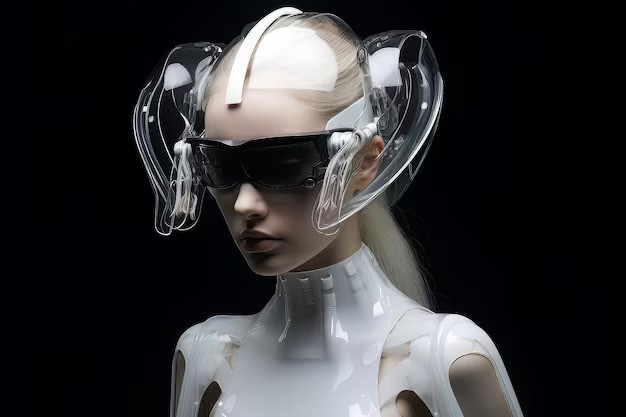
When we consider the problem of the relationship between humans and technology,we often tacitly assume that humans and technology are distinct andseparate entities. Moreover, we assume that technology evolves very rapidly, whereas human evolution is veryslow or evenstatic.
My premises here are quite different: On the one hand, the distinction between humans and technology is not sharp, because technology has always had a big role in shaping the intimate nature of humans, and, on the other hand, technology’s evolution has gradually taken the place of humans’ evolution and has become a sort of continuation of it.
These two evolutions have become closely intertwined and have formed a “bio-cultural” or “bio-technological” evolution that has set the stage for the appearance of a new species, homo technologicus, a symbiotic creature in which biology and technology intimately interact. The bio-technological evolution is ruled by a mixture of Darwinian and Lamarckian mechanisms and forms a composite tangle, which becomes even more complicated as the human–machine symbionts connect to each other to form a sort of global (cognitive) organism heralded by the Internet.
As the Internet develops a sort of connective intelligence of its own, some scientists maintain that we are approaching a posthuman era in which intelligent machines will usurp the role of humans as stewards of the planet—and that with the cooperation of humans themselves!
Homo technologicus is not simply “homo sapiens plus technology,” but rather “homo sapiens transformed by technology”; it is a new evolutionary unit, undergoing a new kind of evolution in a new environment. The novel symbiont is immersed in the natural world, hence obeys its laws, but also lives in an artificial environment, characterized by information, symbols, communication, and virtuality.
We know that the mechanism of inheritance of acquired characters proposed by Jean-Baptiste Lamarck to explain biological evolution does not work, because it would soon lead a species into an evolutionary dead end. But it does work in cultural evolution, where imitation is a powerful and quick mechanism that shortcuts the long and slow selection process proposed by Charles Darwin to explain biological evolution.
Owing to Lamarckian mechanisms, technological (or cultural) evolution is rapid, because it lacks negative feedbacks to slow it down: Immediate adaptations to novelties tend to root immediately into the deep structure of society. The rapidity of this evolution, however, also causes it to be fragile. In the 20th century, technology underwent important changes.
First of all, the new “information technology” appeared alongside the old technologies dealing with matter and energy, and mind-machines were built (i.e. systems for processing, storing, and transmitting data). Second, after exploding into the world to modify it, technology, especially information technology, has begun to implode, invading the body and spreading throughout it with a variety of micrometric and nanometric devices able to modify cells and even molecules, with consequences that are difficult to assess.
True, this is to some extent a scenario, but today we tend to resort to this semifictional method to investigate the present situation and future developments, because the classical instruments of rational prediction are not very efficient in a highly complex world that is evolving ever more rapidly. It is as if our future were the subject of a narrative in which science and fiction unite to yield plausible predictions.
If the scenario I am sketching here is correct, and if homo technologicus does emerge from history and evolution, what are the consequences likely to be? I am interested in the discontinuities and in the mismatch between the organic and the artificial components of the symbiont, rather than in the continuity aspects of the shift from biological evolution to bio-technological evolution.
No doubt, the two evolutions are somewhat heterogeneous and, consequently, the two components of the human–machine hybrid are heterogeneous. This mismatch could cause certain kinds of suffering that would add to those resulting from our organic nature, although technology has contributed to relieving some “conventional” forms of pain.
The deepest human characteristics, those associated with the emotions, communication, expression, the atavic inheritance linked to the body and rooted in the most ancient layers of evolution, which played a fundamental role in the survival and development of our species, would not immediately disappear just because technology had inserted its nanometric prosthetic devices in our bodies and brains.
And in the area of contact, in the infinitesimal interface between “us” and “our” prostheses, serious rejection processes could appear. Even today, when homo technologicus is still at an early stage of development, we can observe problems and difficulties arising from the mismatch and incompatibility between human and machine.
As evidence of this, note that a great deal of research effort is being devoted to the construction of user-friendly machines, which should create an anesthetized zone into which the artificial components are allowed to sneak. In other words, we purposefully try to weaken the resistance of the ancient body components to the encroachment of the newer mind constructions.
The consequences of this course of action are difficult to predict, but it could be a source of problems. In the technology cage that we are building around ourselves like a tight suit, some of our skills will be as useless as prehistoric relics, but will nevertheless continue to demand to be put to use or will ache like phantom limbs.
Other skills will obviously be enhanced: Technology will operate a sort of selective filtering on our person (the complex unit of mind and body). All these considerations concern in particular our bodies. The body is spotlighted by the informational revolution: Electronics, robotics, and spintronics invade and transform the body and, as a consequence of this, the body becomes an object and loses its remaining personal characteristics, those characteristics that might make us consider it as the sacred guardian of our identity.
The body has varied in popularity throughout the ages, but overall it has been viewed rather negatively. Many Greek philosophers disparaged and despised it, considering mind and soul much nobler than the body; Christianity mistrusted the body because of its strong leaning toward sin; Descartes and all his followers considered it as a mere support for the nobler mind.
Today, finally, the body is on display on the stalls of the global market, where its parts are bargained for and sold. And all these transformations occur under the strong thrust and impetus of the economy. The current status of the body is rather confused and contradictory: On the one hand, it is now recognized that the body is the robust container of intelligence and of implicit and primary knowledge, as opposed to the fragile and abstract mind postulated by symbolic artificial intelligence; on the other hand, the body is still considered inferior and bodily reproduction is considered, as always and everywhere, cost-free and obvious.
Doctors and biologists, engineers and technicians, use the body to perform transgressive and amoral experiments that for some will take us toward a wonderful demigod-like future and for others are simply a profanation and debasement of what is most intimate and individual to each of us.
Preserving the body, defending its integrity, and seeking its well-being within a finite and harmonious temporal horizon are countered today by eugenic attempts to defeat diseases and even death through systematic recourse to technology.
At the same time, the body is the object of a morbid and almost pathological interest centered on an obsession with exercise, massage, plastic surgery, piercing, warping, twisting, crippling, maiming. The manic, often even abnormal, attention to the body, from makeup to depilation to cosmetic surgery, is a conspicuous aspect of the artificial and has spawned a vast business. All this goes with an irreparable devaluation of the “natural,” or rather with a progressive confusion between the natural and the technological, so that the body is integrated with, and replaced by, mechanical parts.