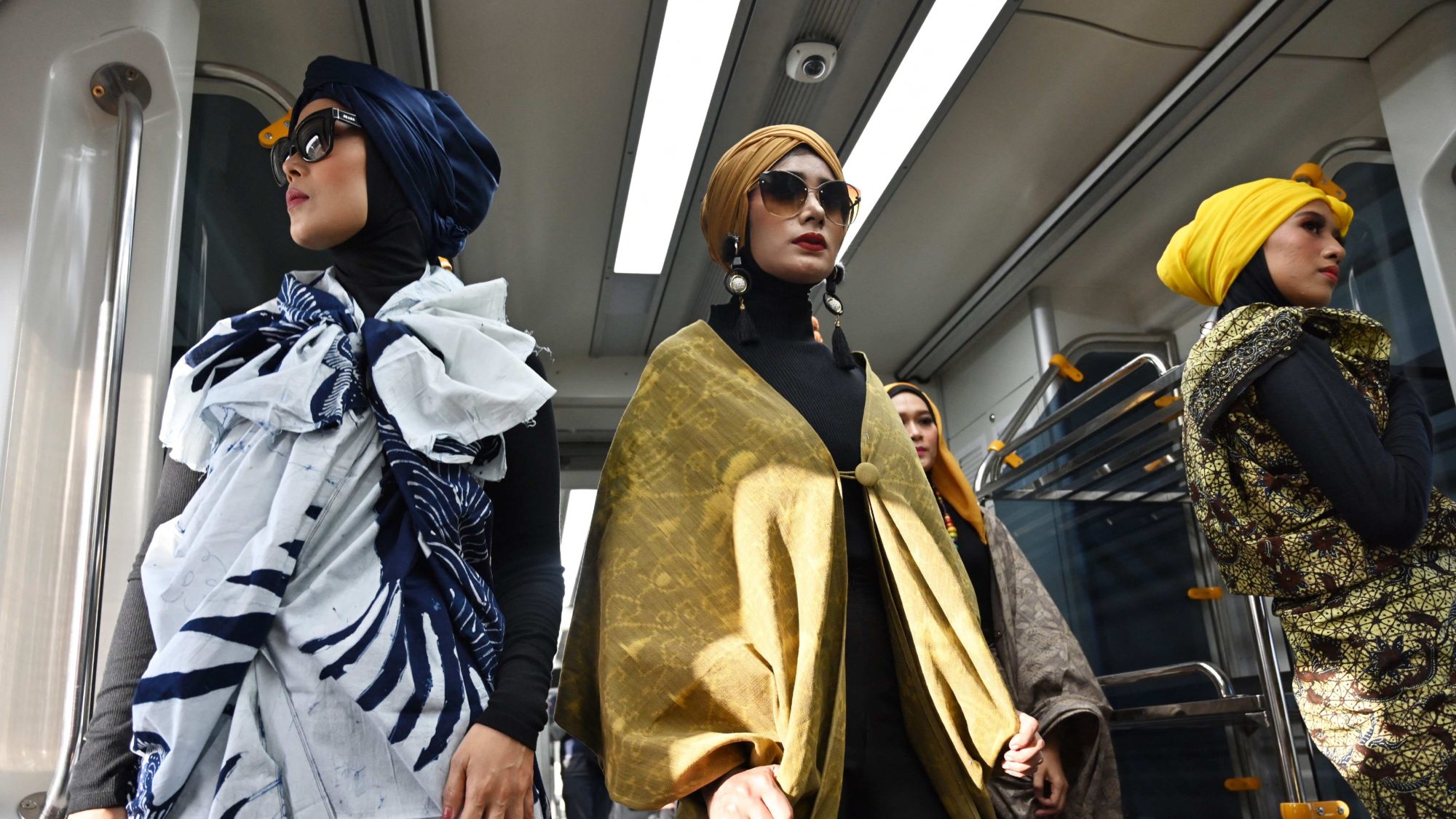
The role of the veil in the definition of contemporary Muslim identities; the representation of women in fashion magazines; the cultural history of men’s underwear; the rise of fashion blogs; the origins of catwalk shows and their participation in the definition of modernity; the creative economy and globalized circulation of African fashion: these are a few only of the topics the growing academic literature on fashion has covered (see, for instance, respectively, Lewis, 2013; Jobling, 1999; Cole, 2009; Rocamora, 2012; Evans, 2013; Rabine, 2002).
Common to all the texts is the desire to make sense of fashion, to unpack, comprehend and analyse the social and cultural dynamics of fashion, dress and appearance. Indeed, the field of fashion has now become a major topic of enquiry in social and cultural theory, with many analyses devoted to an understanding of this complex arena.
Numerous enlightening interrogations of its many layers have shown that fashion offers a rich platform from which to reflect on key social and cultural issues, from practices of consumption and production through to identity politics.
Thinking through fashion, like thinking through any cultural processes and experiences, is an exciting and challenging exercise. It is dependent on one’s ability to critically engage with a vast array of theories and concepts, often from thinkers who, unlike in some other fields of cultural criticism, have not themselves written about fashion.
The aim of the present article is to accompany readers through the process of thinking through fashion. It seeks to help them grasp both the relevance of social and cultural theory to the fields of fashion, dress and material culture, and, conversely, the relevance of those fields to social and cultural theory. It does so by guiding them through the work of selected major thinkers, introducing key concepts and ideas, discussing, when relevant, how they have been appropriated by other authors to engage with the topic of fashion, and looking at other ways they can be appropriated to reflect on this topic.
Thinking through Fashion uses the word fashion in the broad sense of the term, that is, as also referring to dress, appearance and style. We understand fashion as both material culture and as symbolic system (Kawamura, 2005). It is a commercial industry producing and selling material commodities; a socio-cultural force bound up with the dynamics of modernity and post-modernity; and an intangible system of signification.
It is thus made of things and signs, as well as individual and collective agents, which all coalesce through practices of production, consumption, distribution and representation. The study of fashion necessarily covers a wide terrain, ranging from production to consumption and systems of meaning and signification, and scholars need an equally wide array of methodologies and theories from many disciplines.
Thus whilst the study of dress, appearance and style was dominated by costume historians, art historians and museum curators until the early 1980s, it was also receiving the attention of anthropology, linguistics and cultural studies (Burman and Turbin, 2003; Mora et al., 2014). Cultural studies, in particular, was instrumental in the broadening of the field of fashion studies to wider social, cultural and economic concerns (Breward, 2003).
Cultural studies is inherently interdisciplinary and influenced by most of the theorists. Gradually the term ‘fashion studies’ has come to refer to the study of fashion in its broad meaning, covering many areas of research across many disciplines, from history (including costume history), philosophy, sociology, anthropology through to cultural studies, women’s studies and media studies (Mora et al., 2014).
It has brought together a range of approaches, from an object-based approach focused on the materiality of fashion, to a concern with fashion’s more intangible dynamics and underpinnings such as globalization, post-colonialism or its key role as a creative industry (see, for instance, on globalization, Maynard, 2004; Rabine, 2002, on post-colonialism, Hendrickson, 1996; Root, 2013 on fashion and the creative industries, Rantisi, 2004; Santagata, 2004).
Fashion studies, then, is by definition an interdisciplinary field. Even if scholars work in a particular discipline, say art history or material anthropology, they will always need to know or at least be aware of adjacent disciplines. When researchers choose to focus on a particular dimension of fashion, for example production rather than consumption, or representation in the media rather than the wear and tear of material clothes, they will need to choose the appropriate methodologies and theories to carry out the research effectively and analyse the results.
The underlying premise of Thinking through Fashion is that theorists provide invaluable tools to ‘think through fashion’, and that engaging with theory is essential in order to understand and analyse fashion. In the Collins Dictionary of Sociology, David Jary and Julia Jary define theory as: ‘any set of hypotheses or propositions, linked by logical or mathematical arguments, which is advanced to explain an area of empirical reality or type of phenomenon’ (1995: 686).
To theorize fashion means to develop propositions and arguments that advance the understanding of its logic and manifestations. Theory aims to explain the many practices (Williams, 1983) involved in the making of fashion: practices of representation, of production and of consumption.
The conceptual dimension of theory has left it open to the accusation of being abstract, removed from the real world. However, ‘The true difficulty of theory’, as Eagleton notes, ‘springs not from this sophistication, but from exactly the opposite – from its demand that we return to childhood by rejecting what seems natural and refusing to be fobbed off with shifty answers from well-meaning elders’ (1990: 34–35).
In other words, the student or scholar of fashion needs to look at the field of fashion with fresh eyes, clearing her or his mind of preconceived ideas and prejudices. This is why theory can help us better understand the dynamics of fashion. It allows us not to take for granted its many manifestations, but to instead question its obviousness or naturalness and give us the means to achieve the critical distance necessary to a full understanding of its layered complexity.
Theory also involves the careful attention to and command of concepts in one’s analysis and interpretation of a topic. As Stuart Mills observes, ‘ “Theory” has to do, above all, with paying close attention to the words one is using, especially their degree of generality and their logical relations’ (2000 [1959]: 120).
Indeed, ‘specialized terminologies’ (Hills, 2005: 40) are involved in one’s practice of theory. These are the terminologies of the disciplines that a theoretical framework belongs to and engages with. The boundaries between disciplines are not always clear cut, and the work of many thinkers straddles one or two disciplines.
Michel Foucault, for example, is often referred to as a historian, but also as a philosopher. Pierre Bourdieu’s early career is informed by ethnography, but he later established himself in the field of sociology, and both disciplines underpin his thinking. The practice of theory then often involves engagement with a variety of ‘sister’ disciplines and attendant concepts.
The work of all of the thinkers discussed in Thinking through Fashion can be related to, brought into dialogue with, other theories and ideas, concepts and arguments, which they appropriate to support their point and further the understanding of a particular phenomenon. Theorizing does not happen in a vacuum.
It does not consist in one’s formulation of arguments out of the blue, but in critical dialogue with existing works and theories; and ‘with the objective of offering new tools by which to think about our world’ (Barker, 2011: 37–38). As Michel de Certeau puts it: ‘in spite of a persistent fiction, we never write on a blank page, but always on one that that has already been written on’ (1988: 43). This is also why, as Hills observes, theory ‘always refers the reader to a set of texts beyond what is currently being read, gesturing towards a vast intertextual web of material’ (2005: 39). This web spreads across space – as in the many journals and books where theories can be found – but also across time.
The work of Karl Marx for instance, although developed in the nineteenth century, informs the work of later authors, such as Pierre Bourdieu and Jean Baudrillard, who in his early work also cited that of Michel Foucault but later moved away from it (Best and Kellner, 1991); the work of Mikhail Bakhtin has influenced that of Gilles Deleuze; Judith Butler’s thought is indebted to psychoanalysis and Foucault’s theory of discourse and truth. The theories and concepts of past authors continue to live in the work of their contemporaries.
Because Thinking through Fashion is organized around the idea of individual thinkers as historical subjects, we have followed a simple chronological order of date of birth. Although the idea of a linear unfolding of time can allow one to grasp the past and the context and origins of some theories and concepts, it fails to capture the idea that the past and the present always intersect in the practice of theory.
Authors alive at the same time might follow a different timeline to fame and recognition. One has to keep in mind that some authors became known or acknowledged earlier than older authors. Also, there can be a discrepancy between the moment when a piece of work was written by its author and the moment it receives attention by other scholars, and in other languages.
For example, the work of Mikhail Bakhtin was written in Russia in the 1930s and 1940s, but only received wider attention in Western Europe in the 1960s. Another example is the work of many French post-structuralist authors – such as Foucault and Derrida – who rose to prominence through the translations of American scholars. This phenomenon has been called the ‘transatlantic connection’ or rather ‘disconnection’ (Stanton, 1980) and has also been addressed as ‘travelling theories’ (Said, 1982).
Theoretical work can be produced and received at different times in different countries, depending on trends in thinking, the availability of translations or social and cultural influences. These are the sorts of a-synchronicities that run alongside the linear organization by date of birth. Although authors may be separate in time, their theories and ideas and the uses that are made of them can bring them close to each other.
Historical time, as Caroline Evans (2000: 104) notes, drawing on Walter Benjamin, is not ‘something that flows smoothly from past to present but [is …] a more complex relay of turns and returns, in which the past is activated by injecting the present into it’. This is equally true of theory; there, as in historical time, ‘the old and new interpenetrate’ (Benjamin, cited in Evans, 2000: 102).
From the seventeenth and eighteenth centuries, but especially with the consolidation of the Industrial Revolution in the nineteenth century, new social, cultural and economic developments brought about new theories of the world. Thinkers such as Marx and Simmel attempted to make sense of the changes affecting society and developed theories that could help us comprehend shifting ways of being. Fashion was one of the topics some thinkers engaged with – Simmel (1971 [1904]) for instance devoted a whole paper to it – for in the west fashion was itself seen as a paradigm of modernity.
The French poet Baudelaire famously described modernity as ‘the transitory, the fugitive, the contingent’ (1999: 518). This definition is equally applicable to fashion, and indeed he did see in fashion the perfect expression of modernity (Evans, 2003; Lehmann, 2000; Rocamora, 2009; Vinken, 2000). Although fashion has been seen as paradigmatic of Western modernity, it does not mean that it is the preserve of the Western world (Mora et al., 2014; Niessen et al., 2003; Rabine, 2002).
There are indeed multiple co-existing modernities (Eisenstadt, 2000), and the presumed temporal sequence and geographical inscription of pre- or non-modernity, modernity, post-modernity has been problematized by various scholars (Chakrabarty, 2000; Gaonkar, 2001; Gilroy, 1993) to point to the co-existence of different modes of modernization not only across the globe but also within the imperial and metropolitan centre. Elizabeth Wilson (2003), for example, has demonstrated the uneven take-up of fashion in Europe.
To think – to develop, test and evaluate theories – is an act that occurs within a certain context; theorizing does not happen in a vacuum. In social and cultural theory it is common to speak of strands, movements or schools of thought that unite different thinkers across historical periods and academic disciplines, for example Marxism, feminism or structuralism.
As cultural studies can be seen as the defining framework for the emerging field of fashion studies (Breward, 1995, 2003), we trace the development of theory from this particular vantage point. Incorporating a wide range of disciplines, cultural studies was formed by critical and cultural theory and mostly by theories of language (Cavallaro, 2001; Barker, 2011).
The Linguistic Turn The starting point for our mapping exercise is Roland Barthes. He was the first theorist to bring structural linguistics to the study of popular culture, that is to say he further developed the structuralist ideas of Ferdinand De Saussure (1996 [1916]) on semiotics, the science of signs (from the Greek semeion; sign).
A sign is the smallest element that carries a meaning, consisting of a signifier (in French, signifi ant), the material carrier of meaning, and a signified (in French, signifi é), the content to which the reference is made. Saussurian semiotics upholds a binary opposition between signifier and signified, but also emphasizes the arbitrary relation between them: there is no intrinsic relation of the sounds and letters of a word and the object they signify (for a fuller explanation see the chapters on Barthes and Baudrillard).
This focus on arbitrariness has been useful for an understanding of a text – or image, music or piece of clothing – as a convention, a construction that is made by humans without a natural or essential meaning tied to it. This development is intimately bound up with the so-called ‘linguistic turn’; a term that was invented by the American philosopher Richard Rorty (1967).
Rorty claims that the linguistic turn marks a paradigm shift in the Western system of thought in which linguistics, semiotics, rhetoric and other models of textuality came to form the most important framework for critical reflections on contemporary art and culture.
Saussure’s writings on semiotics helped develop a structuralist analysis of the ‘grammar’ of any system, and Barthes was the first to apply it to fashion in The Fashion System in the early 1950s (published in English in 1967), and, more successfully, to all kinds of expressions of popular culture in Mythologies (1973 [1957]).
The linguistic turn heralds the beginning of the success of a semiotic reading of any kind of sign system, be it food, a commercial, dress, film or a literary novel, for example in the work of anthropologist Lévi-Strauss on myth, the early Barthes on fashion, or Metz on cinema (Sim, 1998).
The idea that language is paradigmatic for meaning is then central to structuralism and post-structuralism as it was mostly developed by French thinkers in the 1960s and 1970s, of whom Roland Barthes, Jean Baudrillard, Jacques Derrida and Michel Foucault are discussed in Thinking through Fashion.
Mikhail Bakhtin is sometimes hailed as one of the predecessors, while Judith Butler’s work can also be situated in that tradition; while on the contrary, a post-structuralist French thinker such as Gilles Deleuze was rather opposed to the idea of the centrality of language.
Thinkers within the linguistic turn argued that systems of signs are structured in the same way as the grammar of language is a structure. Where Barthes (1967) looked for a ‘grammar’ of dress and Metz (1982) for a ‘grammar’ of film, Michel Foucault (1990 [1976], 2004 [1969]) developed the notion of ‘discourse’ as a way to analyse relations of power and truth. According to the psychoanalytic theories of Jacques Lacan (1977), even the unconscious is structured like a language.
The linguistic turn strongly puts the central focus on textuality, stretching, however, beyond the written text out towards images, music, architecture or, indeed, fashion. This approach opened up a whole new field of studying popular culture, as semiotics was now applied to all signifying practices, to ‘culture as a whole way of life’, in the famous words of Raymond Williams (1958).
As Barthes showed in Mythologies (1973), an advertisement for Italian pasta, a glamorous photo of Greta Garbo or the new Citroën are all sites where meaning is encoded and can therefore be decoded. Popular culture was accorded a complexity previously little discussed. Barthes’s project was new in its endeavour to analyse not only high culture but also mass culture, thus shaking the strict boundaries between the two. This is indeed one of the major characteristics of cultural studies (see for historical overviews Grossberg et al., 1992; During, 1993; Storey, 1996).
Structuralism flowed into post-structuralism, although it is difficult to date or even point to a clear demarcation between the two bodies of thought. Roland Barthes straddles both ways of thinking, more structuralist in The Fashion System (1967), but definitely post-structuralist in The Pleasure of the Text (1973) and A Lover’s Discourse (1977).
Post-structuralist thinkers accept the centrality of language, but reject the idea of a stable subject position, the structure of binary pairs and the idea of universal truths (Barker, 2011: 84). Jacques Derrida’s (1976) deconstructionism, for example, argues that language and meaning are fundamentally unstable and forever deferred and shifting.
François Lyotard (1984) heralds the ending of ‘Grand Narratives’, proposing that ideologies can no longer authoritatively proclaim a truth nor promise a future of emancipation. Narratives can still present totalizing and unifying ‘grand’ stories, but we no longer accept their truth. Both Barthes (1967) and Foucault (1969) proclaimed ‘the death of the author’, marking the end of the author as the authoritative centre of meaning, to make room for multiple pleasures of the reader.
The end of the belief in grand narratives and the death of the author coincide with the blossoming of many formerly oppressed or marginalized groups legitimating their particular stories from the 1960s onwards: youth, blacks, women, gays and lesbians, post-colonial groups and the many cross-overs between them (Woods, 1999).
As a consequence, people got interested in ‘small’, fragmented stories of ‘partial truths’ and ‘situated knowledges’, as Donna Haraway (1988) would call it. The opportunity – or difficulty, depending on one’s viewpoint – of finding modes for the distinct voice of minority groups can be related to the emerging markets in fashion today when ‘non-Western’ designers find themselves commodified in relation to certain notions of cultural authenticity (Eicher, 1999; Kondo, 1997; Niessen et al., 2003).
Post-structuralism was informed by the left-wing revolution of May 1968 that spread from Paris all over the world. Language-inspired theories like semiotics were developed through radical re-readings of Marx and Freud. The combination of Marxism and psychoanalysis had already inspired thinkers from the Frankfurt School in the 1940s and 1950s like Benjamin, Horkheimer and Adorno, and this happened again after 1968.
It is important to realize that many French thinkers were inspired by Marxism, although they – all be it much later – distanced themselves from the dictatorial regimes of communism. The British Birmingham School of Cultural Studies was equally left-wing inspired, which made for a strong focus on the issue of class in the analysis of popular culture (Williams, 1958; Hall, 1997).
The post-structuralist project was led by politics to understand ‘the cultural logic of capitalism’ (to quote the famous subtitle by Jameson, 1991), as well as liberate sexuality from its bourgeois grip. The particular combination of semiotics, Marxism and psychoanalysis also helped to address the dominant meanings and ideologies of popular culture.
The renewed focus on psychoanalysis, mostly inspired by Lacan’s (1977) radical rereading of Freud, was applied to the project of putting an end to the idea of the individual as an autonomous, self-knowing subject. A century earlier, Marx had critiqued the idea that human beings are self-determining individuals, asserting instead that they are produced by the forces of labour and capital (Marx, 1990 [1867]; Sturken and Cartwright, 2009: 100).
Freud (1964 [1900]) had explained that the subject is more ruled by unconscious desires than rational will. Lacan pushed this even further and claimed that the subject is always already radically split from the moment it comes into being (Lacan, 1977).
While this may sound a rather negative formulation, Marxist and psychoanalytic bodies of thought opened up a new concept of identity as flexible and dynamic, rather than a fixed and unchanging essence that is given at birth by God, nature or chance. If identity is a social construct, that is to say something ‘made’ in a complex process of negotiation between the individual and society, between nature and culture, then it is also possible to change and transform it.
This allowed for politically informed approaches calling for radical change, most notably feminism and black and post-colonial studies (Irigaray, 1985; Trinh, 1989; Gilroy, 1993).
Moreover, it produced an intense focus on the vicissitudes of desire in popular culture (Berger, 1995) and a critique of the normativity of bourgeois and heterosexual sexuality (Butler, 1990; Braidotti, 1991). The notion of ideology thus soon encompassed much more than class consciousness, and came to include ‘race’, ethnicity, gender and sexuality (Hutcheon, 1989; hooks, 1990, 1992).
Identity has increasingly come to be considered fluid and flexible without an essential core (Sim, 1998: 367). Post-structuralist theory had a significant impact on the social sciences and humanities, with an enthusiastic response in many new fields of study: gender studies, post-colonial studies, cultural studies, media studies and a bit more hesitantly, fashion studies. The idea that identity is now a question of ‘fluctuating personality and tastes’, as Gilles Lipovetsky writes (1994: 148–49), opens up the importance of dressing and clothing the body as a means of constructing one’s identity.
As a result of the fragmentation and changing structures of modernity, Lipovetsky argues that in contemporary society the grand narratives of modernity have been replaced by the logic of fashion and consumption (2005: 11–12), an idea that Baudrillard had also engaged with. The post-structuralist concept of identity as characterized by fluidity and flexibility is enhanced by a dynamics of fashion that enables individuals to continuously define their identities anew (2005: 84).
As Fred Davis also argues, the meaning of contemporary fashion is characterized by ‘awesome, if not overwhelming, ambiguity’ (1992: 7). While many fashion theorists, like Davis and Lipovetsky, celebrate fashion’s ambiguity and fluidity, sociologist Zygmunt Bauman is more critical of the ‘liquidity’ of post-modern culture. He deplores the ‘intrinsic volatility and unfixity of all or most identities’ (2000: 83).
Bauman is especially suspicious of the pivotal role that consumption plays in shaping identities within the socio-cultural power structures of fashion, not unlike Barbara Kruger’s famous art work I shop, therefore I am. The post-modern condition has thus been celebrated as well as criticized for its flexible identities and free floating signifiers; a game that fashion is particularly adept at playing (Baudrillard, 1993 [1976]).
Old and New Materialisms For Richard Rorty, the linguistic turn signified a paradigmatic shift in Western philosophy. Such a dramatic turn of paradigm does not happen so very often, and Rorty (1967) only signals three in the history of Western philosophy: from things in antique and medieval philosophy to ideas from the seventeenth till nineteenth century to words in the twentieth century.
However, we now live in a time where one turn follows the other more quickly than we can keep up reading about them: the visual turn, the experiential turn, the spatial turn, the cultural turn, the performative turn, the affective turn, the material turn, and so on. This not only signifies that the term ‘turn’ suffers a huge inflation, but also that we live and think in a time of fast change, a period after post-modernism that is not yet clearly defined (Vermeulen and Van den Akker, 2010).
The problem of the linguistic turn was that it put too much emphasis on language. This point has been addressed in fashion studies. Joanne Entwistle, for example, argues that structuralism and post-structuralism have ‘effectively displace[d] the idea of embodiment and the individual and can give us no account of experience or agency’ (2000: 70).
In shaking off the dominant framework of textuality and semiotics, Entwistle and other scholars of fashion enlist different schools of thought, most notably the more sociological approach of Simmel, Goffman, Bourdieu and Latour, who are discussed in Thinking through Fashion. In all their differences, such a sociological approach allows us to understand fashion not only as a signifying system, but also as an embodied practice that takes place in a collectively shared social space.
This is where we touch upon the new, or rather revived, concept of materiality, introduced as ‘new materialism’ or ‘the material turn’ (Bennett and Joyce, 2010; Coole and Frost, 2010; Dolphijn and Van der Tuin, 2012; Barrett and Bolt, 2013). These authors argue that the post-structuralist focus on language neglected the very matter and materiality of objects and the world.
Barbara Bolt emphasizes the relevance of the material turn for the creative arts, including fashion, since its ‘very materiality has disappeared into the textual, the linguistic and the discursive’ (2013: 4). As Bill Brown argues, this not only holds for art or fashion, but also for our bodies and identities, which are constructed and mediated not only through signs but also materially (2010: 60). Identity ‘matters’.
The material turn reopens highly relevant issues for fashion studies, such as practice, embodiment and experience. Our agency takes place through material things and objects – such as clothes. As Appadurai argued (2013 [1986]), people’s relationship to objects is socially and culturally dependent, which in turn implies that things themselves have a social life. We mediate the social relations to objects, and social systems through which objects become meaningful (or not).
Our identities function within a material culture, as we know all too well from our emotional relations to objects, whether it is a chocolate bar that soothes our anxiety, a song that reminds us of a lost love, or a particular dress that makes us feel sexy. Food, music or clothes have a value. Of course, in high capitalism the value is always financial, but, as Karl Marx demonstrated in Das Kapital (1990 [1867]), the value is mostly a surplus value because of our affective relations to material things.
Matter, objects, have an intrinsic social quality. ‘Stuff’ – as the title of Daniel Miller’s (2010) book runs – does not merely exist, but is always transformed by social interaction into a certain value: ‘I shop, therefore I am’. Putting the emphasis on materiality therefore does not preclude an understanding of matter as symbolic; rather, it shows that there is a constant negotiation between the material and the symbolic.
New materialism claims to be ‘new’, which it is in the sense of refocusing on matter and materiality after decades of a dominant focus on text and textuality. Yet, materialism has a long and prestigious genealogy and is in fact influenced by several sources and disciplines (Bennett and Joyce, 2010). These theories should not be understood as being completely separated, because many of these theorists have been inspired or even set off by each other.
The first is the historical materialism of Karl Marx with its emphasis on the praxis of production and labour. Second, Marxism has inspired a sociological approach to the culture of things as in the work of Thorstein Veblen and Georg Simmel (Brown, 2010: 62). Marxist Walter Benjamin has understood how the history of production and labour is intimately connected to circulation and consumption, and thus to ‘a history of fascination, apprehension, aspiration’ (Brown, 2010: 63).
Third, the sociological approach is closely related to cultural anthropology as the discipline that has put the ‘very being of objects’ as its central topic (Brown, 2001: 9). Fourth, the Actor-Network-Theory (ANT) of Bruno Latour (2005) attributes some sort of agency to non-human actors, which helps to think about the agency of things and assemblages of human and non-human actors.
Fifth, the phenomenology of Maurice Merleau-Ponty has put the focus on the materiality of the human body, exploring the experience of what he calls ‘my-body-inthe-world’ (2002: 167). Sixth, the materialist branch of feminism rethinks the materiality of the human body and its gendered nature (Braidotti, 2002).
And finally, Gilles Deleuze and Félix Guattari (1987 [1980]) evoke on the one hand a materialism of the flesh that considers the body as intelligent matter, and on the other hand add a form of empiricism that rejects the transcendental idea of reason. The convergence of those two strands produces a vital materialism combining critique with creativity.
The fact that many of these theorists are discussed in Thinking through Fashion signals the importance of materialism for fashion studies. Fashion is not only a system of signification but also a commercial industry producing and selling material commodities. Fashion, perhaps more conspicuously than other cultural realms, consists of material objects and involves a bodily practice of dressing. This fact has not escaped scholars of fashion.
The anthropological perspective has regarded clothes as objects in their own right or as meaningful within practices of dressing (Küchler and Miller, 2005). Daniel Miller (1998) argued for balancing theories to take on the specificity of material cultures. Ethnographic approaches are important methodologies for understanding what people wear and why (Woodward, 2007). Entwistle (2000) has argued for an empirically grounded sociology that takes the embodied practice of dress seriously.
Because these diverse approaches have always been vital methodologies for fashion studies, the claim of novelty of ‘new materialism’ seems a bit singular. In that sense it may be better to speak of ‘renewed materialism’. Fashion studies is then unique in combining many different strands of theory, where the extremes of the linguistic turn have been kept in check by the necessary focus on the very materiality of fashion: its mode of production, but also the textiles, and the clothes in our wardrobe or on our body.
As Bill Brown wittily writes, ‘culture itself is now appearing not as text but as textile’ (2010: 64). Thinking through Fashion presents a range of theorists who are carefully chosen and discussed by expert and emergent scholars in the field of fashion studies. If anything, the book should disclose the particular dynamism of the field of fashion studies and its contribution to thinking through social and cultural theory.
It should therefore be invaluable not only to fashion studies students and scholars, but also to those social and cultural theorists less familiar with the field of fashion, introducing a novel field through which to reflect on the strengths and weakness of the thinkers they and their students engage with. Perhaps we can finish our necessarily brief mapping of theory and theorists by evoking the pleasure of studying fashion.
Theory has all too often connotations of dry abstraction or high degrees of difficulty. But it can be exciting and exhilarating to think through fashion. As Daniel Miller writes, to study the things and objects of fashion means to enjoy ‘luxuriating in the detail: the sensuality of touch, colour and flow. A study of clothing should not be cold; it has to invoke the tactile, emotional, intimate world of feelings’ (2010: 41).