Throughout history, clothing has served as a powerful visual language for signaling and enforcing gender norms. The divide between “men’s” and “women’s” attire was often treated as natural and immutable, buttressed by social sanctions and even the law. In many societies it was literally a crime to cross these sartorial lines: Deuteronomy 22:5 in the Bible forbade women from wearing men’s garments and vice versa, and secular authorities followed suit. By the 19th century, numerous Western jurisdictions had enacted ordinances against “wearing the apparel of the other sex” . In the United States, at least 40 cities adopted such anti-cross-dressing laws in the 1800s, typically phrased to ban appearing in “a dress not belonging to his or her sex” . These vague statutes became sweeping tools to police gender expression. Nineteenth-century police and courts applied them to thousands of people, ranging from female dress reformers in trousers to male impersonators on stage, from women who donned men’s clothes for work or travel to individuals assigned male at birth who lived as women . Punishments could include fines, jail terms (up to six months), public shaming in newspapers, and even psychiatric commitment on grounds of “insanity” for those who persistently defied gendered dress codes . The very visibility of clothing made gender nonconformity an easy target: police during mid-20th century bar raids famously invoked a “three articles of clothing” rule – requiring at least three pieces of attire deemed appropriate to one’s birth sex – to justify arresting butch women, drag queens, and trans people in queer spaces . The message was stark: to deviate from one’s prescribed costume was to transgress social order.
Yet what constitutes “men’s” versus “women’s” fashion has always been culturally contingent and subject to change. Anthropologists note that many societies historically recognized more fluid or third-gender categories where dress norms were different. Over 150 pre-colonial Native American tribes, for example, acknowledged third-gender or Two-Spirit individuals who often mixed elements of male and female attire . In South Asia, the Hijra community (comprised of males who adopt feminine gender expression) has a long history; hijras wear women’s clothing and fulfill ritual roles outside the binary gender framework . Even within the Euro-American context, a look back in time shows surprising reversals. In antiquity and the Middle Ages, robe-like garments were unisex; it “wasn’t until the 14th century” in Europe that tailoring introduced clear gender distinctions in dress . Early modern men of elite classes wore silk stockings, frilled shirts, heels, wigs, and jewelry – items later relegated to women’s fashion. The high heel itself began as a male riding accessory before evolving into a symbol of feminine style. Such examples illustrate that the gendering of clothing is neither inherent nor universal, but rather “attached to it by the society it is worn in” . Cultural context determines whether a skirt is seen as an obvious marker of womanhood (as on a Western bathroom sign) or just normal male attire (as with the Scottish kilt or the lungi in South Asia) . Indeed, as a modern Australian fashion essay observes, “the skirts men wore in the past were not just considered womenswear…they were men’s items” designed for male bodies . Such observations remind us that clothes themselves have no fixed gender – only the meanings society inscribes on them.
Those inscriptions, however, have carried heavy weight. In Western history, especially from the 19th into the 20th century, the gender binary in dress hardened into a strict dichotomy aligned with broader power relations. Men’s clothing became a uniform of sobriety and authority, while women’s fashion was characterized as frivolous or decorative – a reflection of women’s secondary status. Historians of dress often refer to this 19th-century shift as the “Great Masculine Renunciation.” As psychologist John Flügel noted in 1930, during this period “Man abandoned his claim to be considered beautiful… [and] henceforth aimed at being only useful,” relinquishing bright colors, lace, silk and other adornments to women . From then on, Flügel observed, “trousers became the ultimate clothing for men to wear, while women had their essential frivolity forced on them by the dresses and skirts they were expected to wear” . In this dichotomy, masculine dress embodied rationality, activity, and power (a business suit or military uniform), whereas feminine dress – corseted waists, voluminous skirts, delicate shoes – enforced limitations on women’s movement and symbolized their perceived ornamental role . Feminist scholars drawing on Michel Foucault have argued that such fashion norms were one way patriarchal power literally inscribed gender hierarchy onto the body. Foucault’s concept of disciplined “docile bodies” finds a clear echo in how women’s bodies were molded by fashion: the constricting corset of the Victorian era, for example, shaped women’s figures to fit an ideal of femininity (a cinched waist and pronounced hips) while also restricting breathing and movement. As philosopher Sandra Bartky and others have pointed out, the myriad beauty practices imposed on women – dieting, cosmetics, depilating, and indeed corsetry and high heels – produce a body that “bears the signs of its subjection” to social norms of femininity . In the words of scholar Angela King, “gender, specifically femininity, is a discipline that produces bodies and identities and operates as an effective form of social control” . By this analysis, gendered clothing norms were not trivial fashion quirks but part of a broader system of power that made the differences between men and women’s social roles appear natural and inevitable.
The legal policing of cross-dressing can be seen as an extension of that disciplinary regime. Women who dared to appropriate men’s attire historically faced harsh backlash precisely because clothing was a proxy for broader freedoms. A woman in pants threatened to “masquerade” as a man and thus usurp male privileges, whether the freedom to move unencumbered, to work certain jobs, or simply to be taken seriously in public. It is telling that in 1800, soon after the French Revolution, the police chief of Paris issued an ordinance banning women from wearing trousers without a permit . This law (astonishingly) stayed on the books in Paris for over 200 years, until officially declared null in 2013 . The original rationale was explicitly political: revolutionary women had begun donning pants and uniforms to claim equality with men, an alarming transgression for authorities at the time . The trouser ban aimed to reassert the “natural” separation of spheres by literally keeping women in skirts. Even though the law became a dead letter in the 20th century as social attitudes changed, its long nominal existence was a symbolic reminder of how profoundly clothing could threaten the established gender order. Likewise, in places like the United States, early prosecutions of women for cross-dressing often targeted those who dressed as men to gain opportunities or independence. In the 1850s, for instance, unfeminine dress was associated with the women’s rights movement (the “Bloomer” costume of a short dress over trousers scandalized society), and some feminist dress reformers were arrested under cross-dressing laws . For men, too, the legal penalties for wearing women’s clothes were harsh, but the motivations were somewhat different: male cross-dressers were often assumed to be engaging in deceit or immoral behavior (e.g. male sex workers in drag, or homosexual men seeking same-sex partners in an era when homosexuality was criminalized). As one historian notes, 19th-century anti-cross-dressing laws in America were typically folded into “anti-vice” campaigns alongside bans on prostitution and public indecency . Simply put, a man in a dress was treated as inherently lewd or fraudulent, his attire a concealment of “true” sex and thus a threat to public order or an affront to decency. Cross-dressing men were frequently arrested on charges of indecency, and by the mid-20th century these laws were wielded primarily against queer communities – for example, police raiding a gay bar would arrest trans women or drag performers on the spot for wearing women’s clothing . This criminalization further reinforced the notion that deviation from one’s birth-assigned dress was deviant, pathological, or perverse.
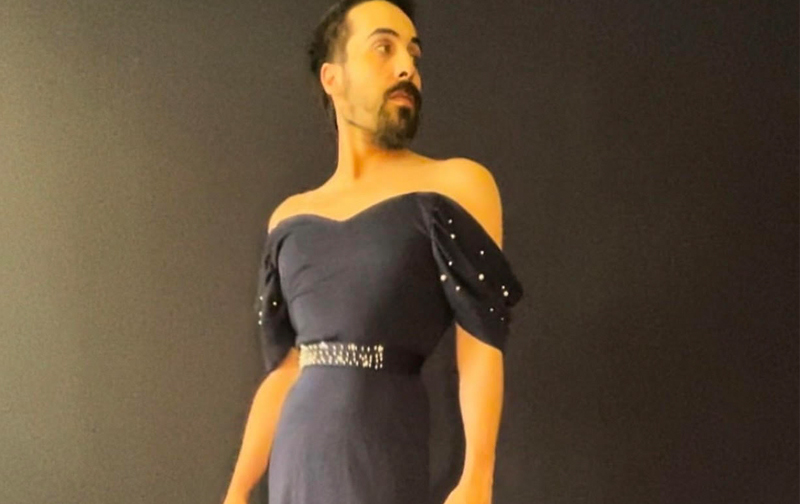
Given this fraught history, the contemporary phenomenon of men openly wearing skirts, dresses, and other traditionally “feminine” garments represents a remarkable cultural transformation – one that invites analysis through sociological, philosophical, and anthropological lenses. High-profile examples abound in recent years: pop star Harry Styles, appearing on the cover of Vogue in 2020, posed in a lacy Gucci ballgown and ignited heated public debate about masculinity. Styles’ fashion statement (and his playful assertion that “there’s so much joy to be had in playing with clothes”) received both celebration and backlash . Conservative commentator Candace Owens tweeted denunciations of Styles’ look, urging society to “Bring back manly men” , while others praised the singer for subverting gender expectations. A year earlier, at the 2019 Oscars, actor Billy Porter made headlines in a dramatic tuxedo-gown hybrid – a tailored men’s tuxedo on top seamlessly flowing into a full skirted evening gown. Porter described his ensemble as “a piece of political art” aimed at challenging assumptions about what men can or cannot wear . He was very intentional: “I’m not a drag queen, I’m a man in a dress,” Porter explained, highlighting that his identity remained male even as he donned an unapologetically feminine silhouette . The public reaction to Porter’s outfit ranged from adulation (fashion critics and fans lauding its elegance and boldness) to scorn from some conservatives who called it an “assault on masculinity” . Porter himself responded to critics with incredulity: “I don’t understand why my putting on a dress causes this much strife in your life” . That retort encapsulates the heart of the issue – why should a man in a gown provoke such strong reactions? What does it reveal about the “rules” of gender and how clothing enforces or breaks those rules?
Gender theorists like Judith Butler would answer that such reactions stem from the precarious performativity of gender. Butler, whose seminal work Gender Trouble (1990) revolutionized gender studies, argues that gender identity is not a fixed inner truth but an ongoing performance – a “repeated stylization of the body” through acts, gestures, and dress that congeal over time to create the illusion of a natural gender . In Butler’s view, the daily donning of gender-appropriate clothing is one such ritual act that produces the sense of “manhood” or “womanhood.” We take for granted that a person in a flannel suit and necktie is a man, and a person in a skirt and lipstick is a woman, because we have learned to interpret these stylized cues as “natural.” Butler builds on philosopher Simone de Beauvoir’s famous insight that “one is not born, but becomes, a woman” – meaning that female social identity is laboriously made, not innate. The process of “becoming” a woman, as Beauvoir and Butler both explain, involves learning to perform femininity according to cultural scripts (from the way one walks and speaks to the clothes one wears) . And crucially, Butler notes, this performative process is citational: there is no original or “real” gender behind the performance. Every woman’s attempt to embody “womanhood” is essentially an imitation of an imitation, a role for which there is no true archetype.
This is where clothing as parody enters the discussion. Butler provocatively suggests that all gender is a kind of drag show, a stylized imitation that pretends to an impossible essence. She points to drag queens – men costumed in exaggerated feminine attire – as revealing the imitative structure of gender. “In imitating gender, drag implicitly reveals the imitative structure of gender itself – as well as its contingency,” Butler writes . In other words, when a drag performer parodies womanhood by hyperbolic makeup, wigs, high heels, and so on, he is not just making fun of women – he is exposing that what we call “woman” in everyday life is also a sustained act, just usually one so normalized we don’t see it as theatrical. Butler calls gender “a kind of imitation for which there is no original” . The result is deeply subversive: if all gendered selves are fabrications, then the man who puts on a dress might actually destabilize the very category of “man” and “woman” by showing how fragile those boundaries are. Little wonder, then, that society policed cross-dressing so fiercely in the past – it threatened to unveil the man behind the curtain, so to speak, of the gender binary. A century ago, wearing the “wrong” clothes could land you in jail not because clothes themselves matter, but because of what they symbolized: a challenge to the “naturalness” of the male-female divide, and by extension to the social order built upon that divide. As Foucault would put it, every society produces certain truths and norms (like the idea that men and women are essentially different and should dress accordingly) and then conceals the arbitrariness of those productions by insisting they are eternal and necessary . Power, in this sense, operates not just by punishing transgressions, but by shaping our very sense of reality – making it seem “obvious” that, say, men have short hair and women wear long gowns, and that any deviation is laughable or perverse. The furor over Harry Styles’s Vogue cover or Billy Porter’s tuxedo gown shows this dynamic in action: those who cry out that a man in a dress is an “abomination” are essentially defending what they perceive as a natural law, when in fact it is a socially constructed norm that feels natural after long repetition.
Sociologically, the gradual shift in these norms reflects broader cultural changes, especially in the late 20th and early 21st centuries. Several interwoven trends can be identified. First, the women’s movement and changing legal status of women eroded the taboos around women wearing traditionally male attire. By the mid-20th century, women in Western societies had won the right (socially and legally) to wear pants, suits, and other “masculine” styles – initially in specific contexts (factory work in WWII, for example), and eventually in everyday fashion. Icons like Marlene Dietrich in the 1930s, who wore a tuxedo and top hat in the film Morocco, or Katharine Hepburn with her famous love of slacks, helped popularize the idea that a woman in trousers could be chic and respectable. In the Oscars context, fashion historians note a long history of female stars donning men’s tailoring as a statement – from Dietrich’s tuxedo to Barbra Streisand’s sequined pantsuit in 1969, to Céline Sciamma’s sharply cut tux on the red carpet. By the 1990s, it was no longer shocking for a woman to show up at a formal event in a tuxedo or pants; it had become one sartorial option among many, and often interpreted as a feminist note of empowerment. As scholar Elizabeth Castaldo Lundén observes, a woman in a suit at the Oscars came to be seen as a “power pose,” referencing a history of women appropriating men’s attire to claim equality . This evolution is implicitly acknowledged in how we talk about women’s fashion today – terms like “power dressing” and “androgynous chic” celebrate the blending of styles that was once verboten. Anthropologist Ruth Rubinstein, writing on the sociology of fashion, argued that clothing is a system of symbols for negotiating identity; as women gained social power, the symbolic appropriation of men’s dress became acceptable and even fashionable, signaling that women could inhabit traditionally masculine roles.
The reverse journey – men adopting feminine-coded clothing – has been slower and more contentious, largely because of the power asymmetry attached to masculinity vs. femininity. Sociologists note that in a gender-stratified system, traits coded masculine are valorized, while feminine-coded traits are often devalued. Thus, it was easier for society to accept women “dressing up” into the higher-status masculine attire than to accept men “dressing down” into feminine attire (which could be seen as forfeiting male privilege). To put it plainly, a girl wearing boys’ sneakers or jeans might be called a tomboy and even admired for her pluck, but a boy wearing a princess dress was more likely to be ridiculed or punished for degrading himself. This stigma is rooted in misogyny – the notion that to be feminine is to be inferior, so why would a man ever choose to give up his male prerogative and appear feminine? However, late-20th-century cultural shifts have gradually begun to erode this double standard. The gay liberation movement and later queer activism challenged traditional masculinity and championed gender-bending styles. In the 1970s, glam rock stars like David Bowie, Prince, or Freddie Mercury performed a kind of androgyny, sporting makeup, frilled blouses or spandex jumpsuits – not exactly dresses, but flamboyantly blurring gender expectations in popular culture. In various music and youth subcultures, experimenting with gendered clothing became a form of rebellion: think of punk fashion’s eyeliner and mesh shirts on men, or the New Romantic scene’s frilled “fop” styles in the 1980s. These subcultural fashions were often understood as ironic or theatrical, but they paved the way for broader acceptance of men aestheticizing femininity. By the 1990s and 2000s, high fashion designers explicitly toyed with “cross-gender” styles. Jean-Paul Gaultier, for example, introduced men’s skirts on the runway in 1985 and continued to feature them in collections thereafter . Other notable designers like Giorgio Armani, Kenzo, Thom Browne, and Rick Owens likewise sent male models down the catwalk in skirts or dress-like garments in the 1990s and early 2000s . What was once avant-garde on the runway has trickled into mainstream celebrity fashion today. It is no longer shocking to see, say, rapper Lil Nas X in a sequined gown on a magazine cover, or actor Ezra Miller in a silky blouse and heels on the red carpet. Such images still grab attention, but they are increasingly framed as bold fashion rather than deviance.
One striking case study in this evolving landscape was Jaden Smith’s role in Louis Vuitton’s Spring 2016 womenswear campaign. At just 17, Jaden Smith (son of Will Smith) appeared in Vuitton’s ads wearing a pleated skirt alongside female models. Far from treating it as a gimmick, Louis Vuitton’s creative director Nicolas Ghesquière explained that he chose Jaden to represent “a generation that has assimilated the codes of true freedom, one that is free of manifestos and questions about gender” . “Wearing a skirt comes as naturally to him as it would to a woman who, long ago, granted herself permission to wear a man’s trench or a tuxedo,” Ghesquière observed . In his view, Jaden Smith’s comfort in traditionally female attire symbolized a new norm, an “integration of a global wardrobe” where garments are chosen for expression and style, not restricted by gender rules . This remark explicitly draws the historical parallel: just as women normalized wearing trousers, a younger generation of men may normalize wearing skirts. From a sociological perspective, this suggests a movement toward ungendering fashion – treating clothing as simply clothing, available for all to use in personal style. Indeed, some fashion analysts use terms like “gender-neutral” or “gender-fluid” fashion to describe the industry’s direction, though others prefer “gender-full,” meaning embracing a mix of gendered signals rather than neutering them. We see retailers launching unisex clothing lines, and celebrities explicitly playing with feminine tropes (e.g. singer Kid Cudi performing on SNL in a floral sundress as a tribute to Kurt Cobain). Meanwhile, on social media platforms, young influencers of all genders experiment with makeup, skirts, and conventionally feminine aesthetics, often hashtagging posts #genderfluid or #boysinskirts to signal the breaking of taboos.
From an anthropological and cross-cultural perspective, this phenomenon can also be understood by examining how different societies assign meaning to dress. Clothing always carries symbolic messages about the wearer’s social identity – not only gender, but also age, status, profession, or ceremonial role . Anthropologist Ted Polhemus famously described fashion as a “social skin,” an extension of the body that communicates who we are to others. In many cultures, ritual cross-dressing or gender-mixing in attire is used to convey special social statuses. For example, among certain Indigenous North American groups, Two-Spirit individuals often wore a mixture of male and female garments to signify a distinct identity that combined roles . In spiritual traditions (such as some shamanistic rituals), donning women’s attire could symbolize a male shaman taking on a receptive, mediating role with spirits. In the West, the theater and carnival traditions historically allowed men in women’s costumes (and vice versa) as licensed transgressions of everyday norms – think of Shakespeare’s actors, all male, playing female roles in dresses, or the medieval carnival where the world turned upside-down for a day and cross-dressing was part of the revelry. These anthropological examples suggest that when men today wear “women’s” clothes, it can serve various functions: it might be playful or performative (as in drag and entertainment), or it might be a sincere expression of identity (as with some nonbinary or genderqueer individuals), or it could simply be a fashion statement decoupled from gender identity (as Billy Porter insists – he’s a man who finds dresses aesthetically powerful). In each case, the symbolic function of the clothing is crucial. A dress can signify subversion, freedom, irony, or authenticity, depending on context.
What we are witnessing in contemporary fashion and culture is a gradual denaturalization of the gender-clothing link. To use Butler’s terms, people are “troubling” gender categories by performing them in new and unexpected ways. When a famous young man appears in a ball gown and the public conversation seriously entertains it (beyond mere mockery), it indicates that the “invisible assumptions” about gender identity are being made visible and open to contestation . The symbolic and material functions of clothing in constructing gender are being critically interrogated. Materially, clothes have functional origins (protection, utility) but have been imbued with gendered designs – e.g. pants with pockets for the active male vs. pocketless decorative dresses for the ornamental female. Challenging those divisions also has material implications: for instance, more brands now produce clothing cut to fit different body shapes but marketed to any gender (addressing the practical issue that men and women’s bodies on average have different proportions). Symbolically, a man adopting elements of feminine style can be seen as embracing qualities traditionally labeled feminine – softness, vulnerability, beauty for its own sake – and thereby elevating those qualities as human rather than gender-exclusive. This has the potential to chip away at toxic masculinity norms that often constrain men (the idea that men must not enjoy adornment, must not appear gentle or vulnerable, etc.). Conversely, it also provokes backlash from those who see it as blurring a line they believe to be fundamental.
In light of these changes, some scholars speak of a “post-binary” future of fashion, while others caution that fashion can be quick to adopt surface change without fully dismantling deeper inequalities. For instance, queer theorist Kathryn Bond Stockton celebrated Porter’s tuxedo gown as “an expression of power” that could even “move whole systems” . But fashion historian Lydia Edwards offered a nuanced take: she applauded the statement but noted that a ball gown still carries an “unrelenting feminine history,” suggesting that society might not yet perceive such garments as truly gender-neutral . In other words, a man in a gown may always read as a feminine image (and thereby unusual for a man) until a time when our mental associations with gowns are no longer feminine at all. Reaching that point would require a broad cultural shift in the “system of symbols” that link dress to gender . We may be on the way: as the Oxford Research Encyclopedia of Sociology observes, clothing is “highly symbolic and linked to social identity,” and a dominant theme in recent research is how those symbols can be reinvented . Campaigns like Jaden Smith’s, or runway shows featuring male-identified models in skirts and corsets, deliberately blur the semiotic codes of dress, inviting audiences to see garments as creative expressions rather than fixed uniforms of gender. Sociologist Erving Goffman wrote in 1979 about how even in advertisements, small cues like hair length, clothing styles, and touch are used to signify gender identity . Today, we see advertisers and media subverting those cues – male models with flowing hair and jewelry, female models with buzz cuts and boxy suits – effectively remixing the early “identificatory displays” of gender . Goffman could only hint in the late 1970s that such displays might shift; now we have empirical evidence of that shift. The “modern shift” noted in analyses of advertisements is that designers are actively “blurring the lines between masculinity and femininity” in imagery . It is increasingly common to find fashion spreads or commercials where a man might cradle a flower delicately (a pose Goffman would have called a “feminine touch” signal ) or wear a silken blouse – visuals that would have been nearly unthinkable in mass media a few decades ago.
In summary, the phenomenon of men wearing what has long been labeled “women’s clothing” is far more than a quirky fashion trend – it is the product of deep, ongoing shifts in how we understand gender. Historically, one’s attire could function as a material cage, constraining physical movement and social role (the hobbling effect of tight skirts or the practicality denied by women’s lack of pockets), as well as a symbolic badge that marked one’s place in a gender hierarchy. To violate those dress codes was to threaten a social code – which is why it was outlawed or stigmatized. Today, in an era influenced by feminist and LGBTQ+ movements, by global cultural exchange, and by theoretical insights from Butler, Foucault, and others, the strictures have loosened. Performativity theory helps us see that when a man puts on a skirt, he is not becoming a woman – he is laying bare the fact that “woman” (and “man”) are themselves enacted roles, costumes donned in a ritual social drama . And if it is all a drama, we are free to rewrite the script. The emergence of gender-nonconforming fashion icons and the unisex runway reflects a growing awareness that garments are tools of self-expression rather than prisons of identity. Around the world, younger generations especially seem more open to this idea, treating gendered dressing as a creative choice. In many ways, this development is a form of gender parody – not in the sense of mockery, but in Butler’s sense of repetition with a difference that exposes the original as an imitation . By playfully reworking the symbols (men in skirts, women in tuxedos), society is engaging in a critical interrogation of the categories “male” and “female” themselves.
Of course, these changes do not occur overnight or without resistance. Gendered clothing norms are deeply ingrained, and for many people they provide a sense of stability or identity that they are reluctant to see changed. The specter of the “man in a dress” still triggers anxiety in conservative quarters, as evidenced by recent political flashpoints (such as U.S. state legislators attempting to ban drag performances, invoking the same tropes of protecting public morality that underpinned 19th-century cross-dressing laws ). Legal histories remind us that backlash and progress often go hand in hand. In the 1960s, it took militant activism – Stonewall and other protests – to finally dismantle the remaining cross-dressing laws in the West . Likewise, today’s cultural pioneers of gender-fluid fashion often weather harsh criticism, but their very visibility also normalizes the imagery for the next generation. The sociologist Pierre Bourdieu noted that what is once unthinkable can through repetition become accepted as “natural” – a process of habituation. We may be witnessing such a process now: what is subversive today (men in dresses on the cover of glossy magazines) could be mundane tomorrow. If so, it will mark a full-circle moment: an undoing of the rigid bifurcation that modernity imposed on clothing, and a return to a more fluid understanding that perhaps clothes are just clothes, and humans, in all their variety, can grace themselves in whatever fabrics best express their spirit.
In conclusion, the journey from illegality to exuberant display – from a time when a woman wearing men’s trousers or a man wearing a dress could be jailed, to a moment when global fashion celebrates gender-crossing styles – reveals much about the changing contours of gender itself. We have used legal and historical analysis to show how clothing enforced a binary social order, and philosophical theory (Butler’s performativity, Foucault’s discourse on normativity) to understand how those norms are produced and challenged. We have seen anthropological evidence that gendered dress is culturally relative, and we have looked at contemporary case studies (Styles, Porter, Smith) that highlight the current renegotiation of meaning in attire. Clothing, as a symbolic extension of the body, is both personal and political. It can entrench norms – as when corsets disciplined female bodies or laws mandated gender-specific dress – but it can also explode norms when used in parody or protest. As men walking proudly in heels and gowns today draw attention to the artifice of gender distinctions, they carry forward a long lineage of sartorial resistance. Their bold fashions speak in the language of textiles and style, but the message is fundamentally about freedom: the freedom to define oneself, to value the full spectrum of one’s humanity (masculine, feminine, or otherwise), and to refuse the idea that one’s identity must be constrained by something as superficial – and as profound – as the cut of one’s cloth.