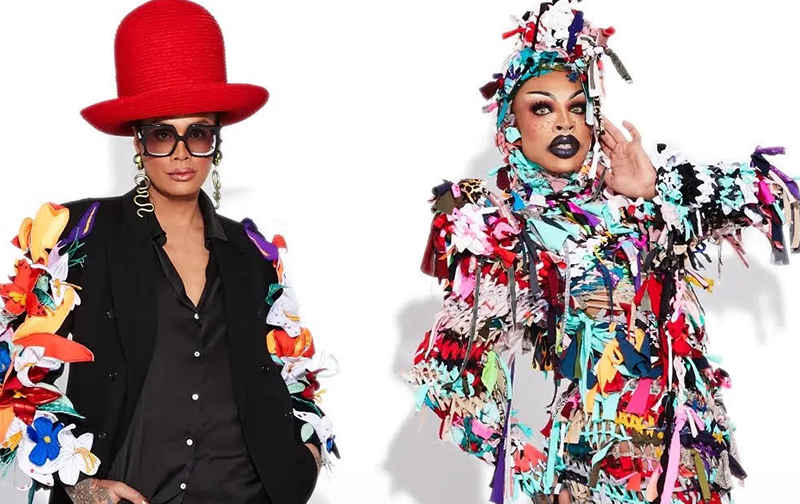
In the predawn stillness of a city, lights flicker on in countless bedrooms. Behind each window, a small act of faith unfolds: someone stands before a wardrobe, pondering who they will be today. A young professional fingers the fabric of two nearly identical shirts, as if one might hold the promise of a more confident day. A pensioner carefully knots a favorite necktie even though he has no appointment to keep—an homage to routine and dignity. A teenager experiments with her reflection, draping herself in a vintage jacket inherited from her mother and discovering, in its fit and feel, a new facet of identity. These everyday scenes seldom attract notice, yet collectively they form a quiet panorama of ritual as profound as morning prayers at dawn. The closet and mirror become a personal sanctuary where choices carry a weight beyond mere fashion—each garment selected is an intention set for the day, a step into a role. From time immemorial, humans have adorned themselves not just to shield against the elements but to communicate, to celebrate, to mourn, to seduce, to belong. Beneath the simple question “What will I wear?” lies another: “Who am I? and how shall I present myself to the world today?”
Fashion is often dismissed as superficial, but in truth it operates like a ritual weaving meaning into the fabric of daily life. Each morning, as light filters through the curtains, millions engage in a quiet ceremony: the selection of garments. Standing before closets and mirrors, we become both priest and supplicant, choosing vestments that promise transformation. A drab hoodie may serve as a comforting amulet on a gloomy day; a tailored suit might feel like ceremonial armor, because, as photographer Bill Cunningham quipped, “fashion is the armor to survive the reality of everyday life” . In these private rites of dressing, a secular modern person reenacts something ancient – the age-old human impulse to mark the transition from one state to another, to gird oneself in symbols before facing the world. The individual emerges from this daily dressing ritual not merely clothed but consecrated in a chosen identity, as if crossing a threshold from the profane stillness of sleep into the sacred performance of social life.
At first glance, slipping on a pair of shoes or deciding on a dress may seem mundane. Yet consider the almost reverential care many devote to these acts. There is a deliberate sequencing—a ceremonial order to grooming and attire—that mirrors religious ritual. We lay out clothes for a special occasion much as one lays offerings on an altar, or we ceremonially “dress up” for celebrations in ways that recall the donning of sacred vestments. Even in the language we use, remnants of ritual shine through: we speak of “dressing for the occasion” with the gravity of an initiate preparing for a rite. The anthropologist Victor Turner noted that in rites of passage a person enters a liminal space, “betwixt and between” their old and new identities . So too does the simple act of getting dressed create a liminal moment each day—neither here nor there—in which we shed the skin of our private self and assume a public persona. Covered by the “mask” of our chosen style, we often feel a change within; the performer “loses his previous identity and assumes a new one” along with the costume . What we wear, in effect, helps carry us across the threshold from who we are in solitude to who we become in society. In a very real sense, fashion is an everyday rite of transformation, a secular prayer of presence and presentation.
Underlying many of these examples is the notion that in everyday life we are all performing roles on a social stage. Our clothes are the costumes by which we manage the impressions we make on others. Sociologist Erving Goffman’s seminal work The Presentation of Self in Everyday Life compared social interaction to theater: individuals put on certain fronts (expressive equipment such as speech, demeanor, and dress) to suit the situation and audience. The “masks” we wear are often literal in the form of fashion choices. One wears a sober suit and glasses to a job interview to project professionalism (a character in the corporate drama), then switches to a favorite band T-shirt and ripped jeans at home to embody a relaxed, authentic self for an audience of friends or no audience at all. There is a ritual element to these shifts: the act of changing clothes marks the transition from one context and persona to another, not unlike a priest donning vestments to enter the sanctuary and then disrobing after service to return to ordinary life. We may not think of grabbing a jacket for a meeting as a rite, but seen through Goffman’s lens it is part of the continuous performative ritual that constitutes social existence. Each day, through small wardrobe adjustments—tie or no tie, heels or sneakers—we signal deference, solidarity, rebellion, or mood. In doing so, we reinforce the unwritten script of society. Thus, everyday fashion is embedded in the ritual of daily social performance: the morning decisions before stepping out the door are akin to an actor checking the script and putting on the appropriate costume for the scene to come. The stage may be secular, but the pattern—preparation, enactment, and later, the symbolic undressing—is ritual through and through.
This intimate connection between clothing and transformation has deep roots in human culture. In traditional societies, garments and adornments often carry overt sacred significance. The ancient Egyptian priest would wrap himself in linen embroidered with protective symbols before entering the holy sanctuary, each stitch a prayer. In Yoruba and Igbo masquerades of West Africa, the performer’s mask and costume are not mere decoration but the very embodiment of a visiting spirit; the wearer “assumes the spirit character” and is “exposed” to its power as if under a spell . During the ceremony, the boundary between human and divine blurs—the costume becomes the conduit. Likewise, in countless cultures a change of dress marks a change of state. When a boy of ancient Rome donned the white toga virilis, it signified his coming of age just as surely as any prayer or libation. In imperial China, an emperor’s dragon robe wasn’t merely sumptuous attire; its embroidered sun, moon, and constellation motifs symbolically joined the sovereign with cosmic order, making his very garb a statement of divine mandate. In Japan, the simple act of putting on a kimono for a tea ceremony is ritualized into a meditative discipline—each layer and fold arranged just so, transforming the wearer’s mindset into one of reverence and harmony before a single sip is taken. A bride in India draped in auspicious red, her arms jingling with ritual bangles, is not merely dressing up; she is adorning herself in symbols of Lakshmi and Parvati, invoking blessings for a new life. To put on these garments is to participate in a rite: clothing becomes a language of the sacred, communicating status, invoking protection, and ensuring the community recognizes the sanctity of the moment.
From the perspective of religious traditions, clothing often occupies a liminal space between material and spiritual. Many faiths prescribe specific vestments for clergy and devotees, recognizing that what covers the body can also signify the soul’s orientation. In Jewish tradition, the prayer shawl (tallit) placed over the shoulders creates a private tent of devotion around the body, its fringes (tzitzit) symbolizing sacred obligations that literally brush against the skin. In Islam, pilgrims on the Hajj adopt simple white garments (ihram) to efface worldly rank, each man and woman dressed alike to signify purity and equality before the divine. In medieval Christendom, to take the veil as a nun or to don the monk’s habit was to outwardly manifest an inward consecration. (The very word “habit” for a monk’s robe hints at the transformation of habitus—the everyday self—into something devoted and ritualized.) In the Bible, one reads injunctions to “clothe yourself with compassion, kindness, humility” as if virtues themselves were garments to be worn on the soul. The Bhagavad Gita goes even further, using clothing as a cosmic metaphor: “As a person sheds worn-out garments and wears new ones, likewise, at the time of death, the soul casts off its worn-out body and enters a new one” . Here the act of changing clothes becomes an image of reincarnation and transcendence. Such references are not mere poetry; they reveal a profound insight that our outer coverings reflect and affect our inner state. Traditional wisdom recognized that to dress the body was also, in some sense, to dress the spirit.
Modern, secular societies often imagine they have left such rituals behind. The prevailing narrative is that ours is a disenchanted world, stripped of the sacred. Indeed, as Mircea Eliade observed, “modern man has desacralized his world and assumed a profane existence” . Churches may be emptier and old dress codes loosened, but the impulses that gave rise to ritual do not simply vanish. Eliade wrote of the “camouflage or even occultation of the sacred” in contemporary life, describing how spiritual meaning survives in modern guise, “a larval survival of the original meaning” that becomes unrecognizable on the surface . In other words, the sacred does not disappear; it merely hides in new forms. The sociologist Émile Durkheim, in studying the elementary forms of religion, concluded that even the most “barbarous and fantastic rites” ultimately translate some human need or aspect of life, either individual or social . If overt temple ceremonies wane, subtler ceremonies emerge to take their place. Our arenas and theaters, our civic ceremonies and yes, our fashions, take on roles once played by religious ritual, providing structure, collective identity, and moments of transcendence for people who might never step inside a shrine.
Consider how collective enthusiasm coalesces around secular spectacles today. A rock concert or a football championship can generate an atmosphere uncannily like a revival meeting. Fans dress in the colors of their team or wear the band’s T-shirt as if donning ritual regalia, achieving what Durkheim called collective effervescence, a communal energy that verges on the sacred. In those moments, a logo on a jersey becomes a totem, a focus of shared identity and emotion. The stadium roar and the synchronized wave of spectators have the flavor of a liturgy, a “sensation of sacredness” born from unity of hearts and actions (as one scholar notes) . Though no formal religion is invoked, the group is bound together through symbols and gestures. The apparel is crucial: a crowd of ordinary people becomes a tribe when clad in matching colors and insignia. Under the banner of a sports club or a music fandom, secular individuals discover a kind of communion. Fashion in this context – whether face paint, team scarves, or band merchandise – operates as the outward token of inward belonging. It both marks the participants and, through the very act of coordinated display, helps create the social bond. As Durkheim noted, ritual not only expresses belief but “is the sum total of means by which that faith is created and recreated periodically” . So too, these secular vestimentary rituals actively manufacture a sense of community and fervor. The football final or the rock festival becomes, for a day, a makeshift church, complete with vestments and an ecstatic congregation.
The language of fashion also encodes rebellion and social change. Throughout the twentieth century and into the twenty-first, youth subcultures have repeatedly used style as a form of ritualized dissent. The punk with a razor-slashed shirt, spiked hair, and a profusion of metal studs is performing more than a fashion statement – it is an initiation into a counter-community with its own values and symbols. Sociologist Dick Hebdige famously showed how subcultures utilize style as a form of resistance against mainstream culture . By inverting and recontextualizing everyday items (a safety pin becomes jewelry, a school blazer becomes anarchic art), punks and other subcultures create a kind of anti-ritual: a deliberate profanation of bourgeois dress codes that paradoxically becomes sacred within their group. These style choices, initially shocking to outsiders, function internally as rites of solidarity. To put on the punk’s leather jacket or the goth’s all-black ensemble is to undergo an identity transformation sanctioned by the subculture. (For example, the hippies of the late 1960s grew their hair long and wore tie-dye and beads as a rejection of militaristic, buttoned-down norms—a “drop-out” uniform that signaled peace, love, and a return to natural simplicity. That too was fashion as counter-ritual, the creation of a new collective identity through style.) Here again Victor Turner’s insight applies: “prophets and artists tend to be liminal and marginal people, ‘edgemen,’ who strive…to rid themselves of the clichés of status… and to enter into vital relations” beyond the norm . The avant-garde fashion designer and the youth-culture iconoclast both operate at the fringes, using dress and adornment to challenge established structures – and in doing so, they too create new communal meanings. What begins as deviance often ossifies into convention over time (yesterday’s shock becomes today’s cool), but in the moment of its emergence, subversive fashion is a ritual of revolt, as charged with symbolic meaning as any heretic’s sermon.
Perhaps no modern secular ritual illustrates the persistent allure of costume and transformation better than Halloween. What began as a Celtic festival (Samhain) to mark summer’s end has evolved into a global annual masquerade, one that anthropologists note allows participants to explore taboo and fantasy in a socially sanctioned way. On Halloween night, ordinary people—children and adults alike—indulge in a carnivalesque suspension of norms by dressing as ghosts, superheroes, monsters, celebrities, or anything imaginable. This ritualistic donning of other identities for an evening is accompanied by time-honored activities: carved pumpkins glowing like protective talismans, the pilgrimage from door to door for “trick-or-treat” (a practice akin to a communal game with echoes of ancient begging rituals and the dispensing of blessings or curses), and festive gatherings where mischief and revelry are expected. For children, as anthropologist Cindy Dell Clark observes, Halloween provides a safe arena to “confront darker, often taboo subjects” by embodying them . A shy child might roar through the neighborhood in a dragon costume, discovering confidence behind the mask; a group of teenagers might coordinate costumes as their favorite music idols, forging group identity and shared purpose in play. Adults, too, often find liberation in the ritual—office workers become zombies or comic book heroes at parties, momentarily shedding the restrictions of their professional roles. Halloween’s power comes from its temporary inversion of the ordinary: fear becomes fun, ugliness becomes decoration, and disguises become vehicles of truth (the mild-mannered accountant’s surprisingly convincing devil costume might reveal a hidden flamboyance). Social boundaries soften as costumed strangers greet each other in the streets with admiration or mock-fear, participating in a collective make-believe. It is, in effect, a modern ritual of reversal, akin to the medieval Feast of Fools or the Carnival of Venice, where for a short time the world turns upside down. The same impulse toward transformative play fuels the thriving subculture of cosplay conventions, where each year thousands of fans gather in costume as anime heroes, movie villains, or game characters. For a weekend at Comic-Con or similar events, everyday hierarchies recede as accountants become Avengers and students become medieval knights; the convention floor turns into a liminal space of collective imagination much like Halloween writ large.
Even the mainstream fashion system, far from being a trivial commercial enterprise, has ritualistic rhythms and a quasi-mythological structure. It follows a calendar of seasonal collections – spring/summer, autumn/winter – that arrives with the regularity of religious festivals. There is anticipation, preparation (designers laboring like liturgical scribes over sacred texts of patterns and fabrics), then a grand revelation in the form of runway shows. These shows themselves unfold with ceremonial pomp: the dimming of lights, the processional music, models emerging in carefully orchestrated order akin to acolytes bearing symbols. The audience of fashion devotees sits in hushed, worshipful attention, eager for epiphany in silhouette and color. The fashion press, immediately after, disseminates the new “commandments” of style to the world. Semiotician Roland Barthes observed that the pronouncements of high fashion often carry an oracular tone – one can almost see, in a secularized form, the sacred halo of divinatory texts surrounding the latest trends . Editors and influencers interpret these texts for the laypeople, decoding what is ‘in’ or ‘out’ much like priests interpreting auguries. To be ignorant of the new fashion is to risk the stigma of being “unfashionable,” which Barthes likened to a kind of secular excommunication . Indeed, he remarked, “Fashion sits at the crossroads between chance and divine decree: its decisions become a self-evident fact” – a statement that captures how arbitrary whims of style are imbued with an aura of fate. For the faithful follower of fashion, the release of a new collection can feel like revelation, a renewal of the world as potent as spring itself. Through such cycles of novelty, which recur cyclically like sacred rituals , the fashion world enacts an ongoing drama of death and rebirth – last season’s looks cast off in order to be reincarnated in fresh form.
Fashion’s ritual power is also evident in the political realm. Social and political movements have long recognized that clothing can unite participants and convey ideology at a glance. Consider how revolutionaries and reformers adopt signature styles as a form of uniform and statement. The French revolutionaries of 1789 rejected ornate aristocratic dress and wore the plain carmagnole and red cap of liberty, consciously turning clothing into a symbol of egalitarian creed. Mahatma Gandhi, seeking to galvanize India’s masses, shed Western attire and appeared in a simple hand-spun cotton shawl and dhoti; this deliberate sartorial austerity became a sacred emblem of anti-colonial resistance and self-reliance (so much so that millions of Indians took up homespun cloth in solidarity, a daily spinning wheel ritual entwined with nationalist spirit). In 1960s China, Mao Zedong’s followers donned Mao suits – drab, collarless jackets – to erase distinctions of class and proclaim revolutionary virtue; attire was politicized into a constant public ritual of conformity, with every citizen a monk in the secular monastery of Maoism. Even in Western democracies, clothing is used to send potent messages: during the American civil rights movement, activists in Sunday best marched to underscore their dignity; in more recent times, protestors have worn hoodies (as in the “Million Hoodie March” for Trayvon Martin) or pink “pussyhats” (at the 2017 Women’s March) to create visual solidarity. These garments, imbued with political intent, become ritual vestments on the body politic. Uniforms especially carry near-magic authority: a police officer’s uniform or a soldier’s fatigues immediately signal legitimacy and command obedience, often reflexively. The charismatic aura of certain political leaders has been enhanced by carefully crafted attire—think of Nelson Mandela’s patterned Madiba shirts symbolizing reconciliation, or the clergy-like collar Nehru jacket adopted by Jawaharlal Nehru and later by others as a sign of post-colonial pride. At darker extremes, fascist movements have exploited the theatrical force of fashion: the ominous black shirts of Mussolini’s followers or the Nazi brownshirts and SS uniforms were designed to instill unity among adherents and fear in foes, effectively weaponizing style as ritual intimidation. In all these cases, what people wear becomes integral to how they collectively act and feel. A political rally where everyone wears a particular color or garment creates a shared identity through synchronization of appearance—much like priests donning the same liturgical color to signify unity of purpose. Thus, fashion serves as a kind of civil ritual toolkit, marshaled to inspire, to protest, to include or exclude, and to visibly enact the values and emotions that bind a political community.
In the marketplace of consumer culture, one also finds quasi-religious rituals centered on fashion and commodities. Shopping itself can take on a ceremonial quality: witness the dawn of a new sneaker release, when devotees camp outside boutiques in vigil, or the frenzied procession of Black Friday shoppers at the mall’s opening gates, a modern echo of pilgrims rushing toward a holy relic. Sociologist George Ritzer famously dubbed shopping malls “cathedrals of consumption,” designed with atriums and skylights that evoke the grandeur of cathedrals, inviting a kind of secular worship of goods. Brand loyalty frequently verges on cult devotion. A luxury handbag or a limited-edition streetwear hoodie can inspire zeal not unlike that of a sacred artifact; collectors speak of obtaining their “holy grail” piece, borrowing explicitly religious idioms. Fashion brands carefully cultivate mythology and community: consider the almost evangelistic fervor of Apple’s product launches, or how fans of the label Supreme treat its every drop (product release) as a rite that requires preparation, pilgrimage (often lining up overnight), sacrificial expenditure, and ecstatic payoff when the prized item is finally in hand. The economist Thorstein Veblen once described conspicuous consumption as a kind of display of merit, and indeed owning certain fashion items functions as a rite of social validation. But beyond signaling status, the practices around acquiring, caring for, and displaying beloved objects often mirror religious veneration. People build shrine-like displays for collectible sneakers or vintage dresses, carefully preserving them in dust bags and climate-controlled closets as one might store vestments or relics. Terms like “fashion shrine” or “sneakerhead temple” are used playfully to describe stores or personal collections, but the language reveals the underlying truth: there is a sacralization of these consumer practices. In a secular society, the energy that might have flowed into temple festivals can flow into events like Paris Fashion Week or the Met Gala – grand, orchestrated spectacles where the faithful (designers, models, attendees, viewers around the world) convene to witness creation and reaffirm shared values of beauty and creativity. Even the rituals of daily commerce – saving up for a coveted item, gift-wrapping it in luxuriant boxes and tissue as if it were something precious – carry a trace of ceremony. In these ways, consumer fashion culture provides an arena in which secular individuals enact rituals of longing, fulfillment, and belonging through the medium of material goods.
Yet, for all these profound functions, fashion’s detractors note its apparent triviality. Indeed, the very aspects of fashion that invite criticism—its ephemerality, its apparent futility—are precisely what align it with ritual and art. Ritual by nature often suspends practical function in favor of symbolic form; it is play enacted with utmost seriousness. In modern dress, we find a similar play of signs that can transcend everyday logic. Cultural critic Jean Baudrillard argued that fashion’s sublime frivolity is a kind of transgression: “in our culture, futility plays the role of transgression and fashion is condemned for having within it the force of the pure sign which signifies nothing” . What he meant is that fashion’s very emptiness of obvious utility—its gratuitous creativity—is its power. Like a mandala painstakingly created and then erased, fashion asserts meaning through form and cycle rather than through permanence. Susan Sontag, in her famous essay Notes on Camp, similarly noted that modern sensibility can embrace an “aesthetic experience of the world” as a substitute for moral or doctrinal seriousness: “Camp is the consistently aesthetic experience of the world. It incarnates a victory of ‘style’ over ‘content,’ ‘aesthetics’ over ‘morality’” . In a secular age, many partake of this sensibility of style. The devotion once perhaps reserved for the divine is, for some, poured into the pursuit of beauty and personal aesthetics. To immerse oneself in fashion—whether as designer, wearer, or observer—can feel like entering a magic circle where ordinary rules dissolve. Baudrillard noted that fashion “knows nothing of value systems, nor of criteria of judgement: good and evil, beauty and ugliness, the rational/irrational – it plays within and beyond these, acting as the subversion of all order” . There is a whiff of the sacred in this suspension of the ordinary. Just as medieval carnival rites turned the world upside down for a time, allowing people to step outside normal roles, the realm of fashion offers an arena in which one can reinvent oneself, defy norms, or simply revel in appearance for its own sake. In doing so, it provides a liberating sense of otherness—a brush with a freedom that, if not outright transcendence, certainly feels like stepping beyond the mundane.
It is worth noting that the seemingly contradictory impulses within fashion – to conform and to stand out – were observed over a century ago by sociologist Georg Simmel. In his classic 1904 essay on fashion, Simmel argued that it simultaneously fulfills a need for social adaptation and a need for individual distinction. By following a trend (say, all professionals wearing similar suits), one gains acceptance in a group, yet by introducing subtle differences or being among the first or last to adopt a style, one asserts individuality. Fashion as a ritual thus operates on two levels – communal and personal – much as religious rituals do (creating communal solidarity while allowing personal spiritual experience).
Yet if fashion sometimes subverts order, it also paradoxically reinforces it. Every ritual has rules, and the rites of fashion are no exception. Society inscribes its hierarchies and norms onto our very bodies through dress codes and expectations. Pierre Bourdieu famously showed how taste and style are not innate but cultivated—part of what he called the habitus, the internalized social training that guides our behaviors without our explicit awareness. Through this lens, everyday fashion is a form of social ritual that disciplines the body and signals our place in the world. Bourdieu pointed out, for instance, that “femininity is imposed for the most part through an unremitting discipline that concerns every part of the body and is continuously recalled through the constraints of clothing or hairstyle” . A woman tottering in stiletto heels and a corseted dress is enacting a culturally scripted performance of gender, her discomfort a silent testimony to the power of social expectations. Similarly, a businessman’s suit and tie—stifling in summer heat, restrictive in movement—nevertheless convey authority and propriety, reinforcing class and professional distinctions with every knot of the tie. These are rituals of conformity. Just as a novice monk learns to knot his belt a particular way or a soldier learns to shine boots to parade gloss, modern individuals learn that certain outfits are “appropriate” for weddings, funerals, job interviews, or daily office wear. By obeying these unwritten sartorial laws, we participate in the maintenance of social order. At times the enforcement is literal: a school uniform policy, a company dress code, or laws against public nudity all reveal society’s need to regulate the symbolism of clothes. Every morning when one chooses a conservative outfit instead of a flamboyant one to avoid censure, it is an enactment of what Durkheim might call the collective conscience—a tacit agreement to uphold shared values through personal ritual. We even trust clothing over individual character at times: a person in a police officer’s uniform will elicit obedience from strangers where an unbadged person would be ignored; studies have shown that subjects will heed instructions from someone in a security guard costume that they would disregard from a casually dressed person. Psychologists have coined the term “enclothed cognition” for the measurable influence clothing has on the wearer’s mind; in experiments, subjects asked to perform tasks while wearing what they believed was a doctor’s lab coat showed increased attention and accuracy, as if the garment itself conferred a mindset of carefulness. Through such subtle means, society’s costumes literally shape how we think and act. In this sense, fashion can be as much about social control as self-expression, a choreography of bodies moving in step with cultural norms.
One should also consider that “fashion” extends beyond clothes into the ways we modify and adorn our bodies more permanently – tattoos, piercings, cosmetics, and hairstyles all play a role in ritualizing identity. These practices often have origins in sacred rites. The tattoo, now a popular fashion statement, was once (and still is in many cultures) a sacred mark of initiation: from the Māori moko facial tattoos denoting lineage and social standing to the tattoos of Borneo signifying accomplishments and protective spirits. When a modern individual gets a tattoo to commemorate a personal milestone – a wedding date, the birth of a child, surviving a hardship – they are participating in a ritual of inscription, making their own flesh into a text of meaning. The process itself (needles, pain, healing) resembles a rite of passage, transforming both body and psyche. Piercings, similarly, hark back to ancient practices offered to deities or marking puberty; today one might get a piercing as a form of self-expression or solidarity with a subculture, but it still involves the ritual elements of deliberate pain, a skilled officiant, and the subsequent display of a symbolic ornament. Even the daily ritual of makeup application, or the haircut appointment,In the predawn stillness of a city, lights flicker on in countless bedrooms. Behind each window, a small act of faith unfolds: someone stands before a wardrobe, pondering who they will be today. A young professional fingers the fabric of two nearly identical shirts, as if one might hold the promise of a more confident day. A pensioner carefully knots a favorite necktie even though he has no appointment to keep—an homage to routine and dignity. A teenager experiments with her reflection, draping herself in a vintage jacket inherited from her mother and discovering, in its fit and feel, a new facet of identity. These everyday scenes seldom attract notice, yet collectively they form a quiet panorama of ritual as profound as morning prayers at dawn. The closet and mirror become a personal sanctuary where choices carry a weight beyond mere fashion—each garment selected is an intention set for the day, a step into a role. From time immemorial, humans have adorned themselves not just to shield against the elements but to communicate, to celebrate, to mourn, to seduce, to belong. Beneath the simple question “What will I wear?” lies another: “Who am I, and how shall I present myself to the world today?”