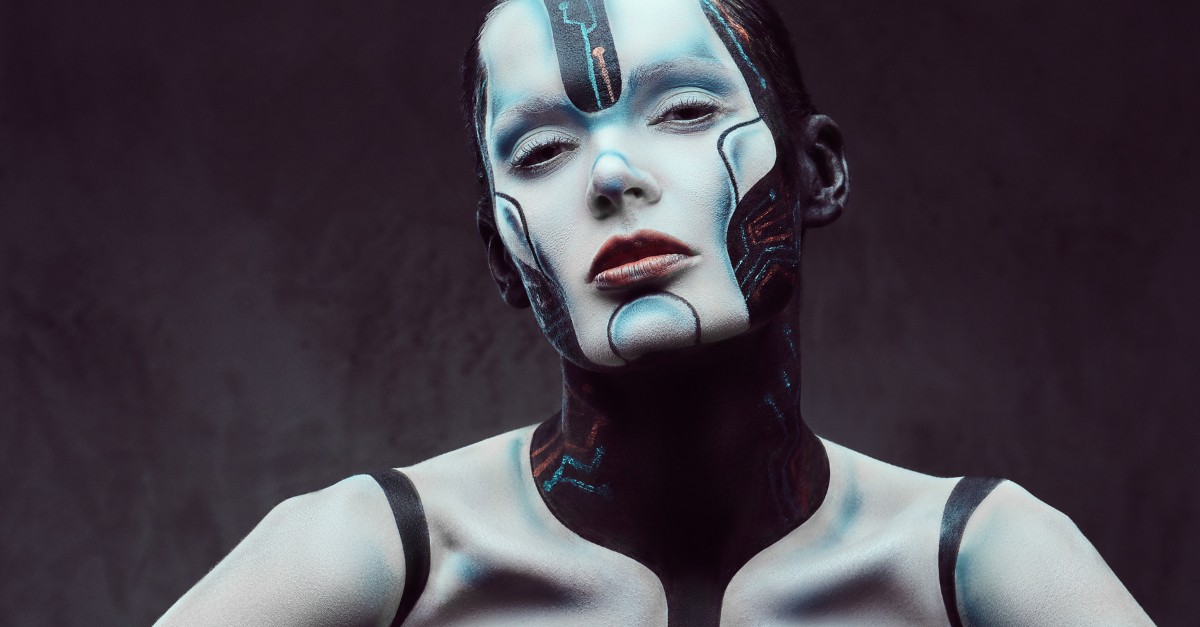
In 1855 Walt Whitman wrote, “I Sing the Body Electric” (1973, p. 93). The great apologist of bodily sensuality was using the adjective electric in the sense of exciting or thrilling. Today we might say “electrifying.” But Whitman not only enthusiastically championed the body’s grandeur. He also eulogized the landscapes of the nascent technical-industrial era.
Consider his celebration, in a famous poem, of the beauty of the locomotive, describing it as a “black cylindric body, golden brass, and silvery steel” (1973, p. 471). It was an “emblem of motion and power,” which Whitman saw precisely as a corporeal symbol of modernity.
Nevertheless, the “body electric” invoked by Whitman is not just a body capable, as it were, of electrifying us, of fascinating us to the point of enthrallment to its charms, its manifest or hidden beauties. Whitman was more probably thinking about a truly electric body—not only electrifying, but also electrified, a body unlike what had been known previously as the human body.
We can imagine that the poet was interpreting the belief then widespread that a new human body, an electric body, was about to be born. This new body was destined to take advantage of the world of electricity that was then just emerging. Although the 19th-century predictions of a body electric, sensu stricto, have proven to be more or less accurate, it would be more appropriate to speak of the body electronic.
This is not merely a question of terminology. Upon closer examination, the new body we are currently concerned with (and about) is actually an electronically equipped body, a body assisted by microelectronic devices. The pairing of the body with electronics is often seen as a turning point in the history of the human body.
This body will have become so artificial that some, perhaps with excessive nonchalance (as we see later in this chapter), even go so far as to speak of it as a post-human body. Nevertheless it would be a mistake to believe that the new body can be dubbed artificial only because of its capacity to incorporate electronic artifacts in its structure.
Others factors play an equally important role today. Examples include genetic engineering, assisted reproduction, and the use of psychotropic drugs. These technologies certainly are of enormous consequence, partly because they accelerate the process of artificialization of the body.
But artificialization in itself is not new. It did not begin with the use of these technologies. Even in the most distant past the human body manifested an innate tendency to become artificial, to be the object of artificialization. One thing is clear: a body in a “state of nature” has never existed since tribes were first organized.
In the final analysis the body has always been artificialized, because in one way or another the body has always been subject to the influence of culture. Therefore there is nothing new about the assumption that artificialization has played, and continues to play, a decisive role in the strategies of design (or redesign) of our bodies, strategies destined on an individual and collective level to meet evolutionary and environmental challenges.
What is new, however, is the very high degree of artificialization that the body is achieving in our time. I focus on a particular type of artificialization, involving technical devices known as prostheses. These are added to (or inserted inside) the body to assist or substitute for an organ whose functioning has been impaired.
In recent times the body has become assisted by prostheses of all kinds. Nevertheless, the prosthetic body, the body that functions as a technical (or technicalized) subject, is significant not only in terms of performance or therapy but also in cognitive terms. This is for the simple reason that equipping a body with a prosthesis usually implies a notable increase in our knowledge, both of the organs in question and of the techniques required to produce the prosthesis.
Though the process of artificialization through prostheses dates back to the emergence of humans, ideas about the structure and functioning of the body long remained vague and superficial. In fact, with hindsight we see that most of them were wrong. The cognitive importance of the artificialization of the body has become evident only in recent centuries as awareness grew of the potential functional complexity of prostheses.
Understanding began to change radically when, during the Renaissance, the process of artificialization began to affect areas in which a more precise knowledge of the body became indispensable. In other words, the body could no longer continue to be a “black box.”
Of course, the efforts to reveal its secrets, to make it less opaque, did not immediately achieve results. In fact they have required centuries of work, and the process is still in progress. Until the Renaissance, the only means available (to physicians as well as to others) were the senses of hearing, touch, and smell.
Sight was important, but considered less reliable than the other three. It was not until the arrival of the great anatomists (and dissectors) of the Renaissance—Leonardo da Vinci, Berengario da Carpi, Andrea Casalpino, Andrea Vesalio, and Girolamo Fabrici—that vision acquired a central role (Bynum & Porter, 1993; Kemp, 1993).
Vision was identified with dissection; it challenged the body’s presumed holiness, setting out to make visible what is invisible by meticulously investigating the construction and the functioning of the works—the fabrica—of the human body (Camporesi, 1985).
This was the beginning of the reign of the eye—that is, visually oriented diagnosis of, and research on, the body. The great breakthrough came with the revolutionary discovery of X-rays by Röntgen. Medical radiology was born, as its name indicates, from a convergence of the physics of radiation and medicine.
Yet Röntgen was not a doctor but an experimental physicist. Medical radiology is emblematic of the rapidly growing interdisciplinary nature of research and thinking in this area (Belloni, 1990). Since the early 1980s, computer graphics modeling and simulation have yielded new insights for medical radiology. These developments affect diagnostic, therapeutic, and even surgical applications.
They lead to research findings that enrich our knowledge of a universe previously concealed by somatic opacity, a universe that had given up few of its secrets, and then only through the most intrusive acts. What remained unresolved was the problem of how to translate this knowledge into three-dimensional simulations or models to permit operative, interactive, real-time intervention with the bodies in question.
Yet even this is being made possible by the new techniques of computerized medical radiology, as well as new virtual-reality systems that are beginning to bring the technical and biophysical systems together as an integrated whole. Thus medical imaging is enriched with new visualization tools and new solid modeling techniques.
Suddenly we can see the organs and the apparatus of our body in four dimensions (three spatial and one temporal) and in multiple structures (mechanical, electrical, and biochemical). Moreover, it is also possible to intervene (even surgically) in the body’s structures and functions. The latest, and perhaps the most innovative, step toward absolute transparency of the body is the “Visible Human Project” developed in the United States.
This project involves cross-sectioning frozen human cadavers in 1-millimeter slices. The images are digitally processed using tomography and magnetic resonance. And the results are astonishing: a three-dimensional map of the body of formidable realism.
Using this interactive model of representation, previously impossible investigations of the human body are now feasible. Apart from its macabre aspects and ethical conundrums, the “Visible Human Project” has obvious advantages for diagnosis, therapy, and surgery.
Up to this point I have analyzed the development of the prosthetic artificialization of the body and examined the influence in this process of progress in the field of imaging techniques. Though we may express doubts and perplexities about many aspects of this type of artificialization—just consider, for example, the question of implanting prostheses at the cortical level—these steps forward are the result of an act of faith in the human body, an act of faith that, in spite of all its weaknesses and shortcomings, the body is capable, with the help of sophisticated technical auxiliaries, of improving its conditions of life and its relationship with the surrounding world.
This act of faith is present even when the efforts fail or have undesired side effects. The underlying choice has to do with the will not to renounce the care of the human body in the present and future. A human body is not an abstraction, but the concrete, everyday body that each of us occupies in a given historical moment.
The human body has been our body for millennia, since the emergence of Homo sapiens sapiens. Certainly it is a temporary, vulnerable, imperfect body; a body never at peace with itself, constantly torn by conflicting experiences; a body that is a source of pleasure, but also of suffering; a body we love, and sometimes do not love; a body we wish were everlasting, but we know to be ephemeral.
Our body is not, as is commonly believed, what we have. It is—whether we like it or not—what we are. For this reason, and others, the defense of our body is, logically speaking, an obligatory choice. My perspective is that it is worth trying to ensure the continuation of the human species. This is quite different from the position of those who see the possibility of creating an apocalyptic transcendental alternative to the human body in the progress of artificialization.
This viewpoint is embraced by the exponents of “Body Art,” science fiction, and artificial intelligence. They do not esteem the human body; in fact, the more indulgent view it with resigned, benign distrust. Others disdain the body. For them, bodies are antiquated and obsolete. After millennia of stasis, suddenly the body should be replaced by another entity better suited for the pressing challenges imposed by an environment that is ever more strongly conditioned by new technologies.
Stelarc, an Australian artist famous for his imaginative bionic performances, wrote: “It is time to ask ourselves if a biped body, equipped with binocular vision and a brain of 1400 cubic centimeters, constitutes an adequate biological form.” His response is negative, and he added: “There is no longer any advantage in remaining human or in evolving as a species, evolution stops when technology invades the body” (Stelarc, 1994, pp. 63–65; emphasis in original).
Statements such as this are rather senseless, and in some ways even gloomy. But the media pay a lot of attention to them, and they seem to be gaining widespread credibility. In fact, many people, encouraged by the authoritative voice of Marvin Minsky, “think the body should be thrown away, that the wetware inside the skull, or namely the brain, should be replaced” (cited in De Kerckhove, 1994, p. 58).
I believe that what is at stake here, in philosophical and political terms, is too important for us to take such statements lightly. Such outrageous declarations of the need to throw the human body (brain included) onto the trash heap of obsolete objects raise the suspicion (or more than a suspicion, in my case) that they conceal Christianity’s historical aversion to the body.
But this time the aversion is garbed in a neo-mechanistic, sci-fi ideology. There is little doubt that the prejudice against the body—the “abominable” body (Le Goff, 1969)—is a legacy that has profoundly influenced our relations with others and ourselves. Nietzsche (1960) had already glimpsed this, despising those who were “despisers of the body” (“die Verächter des Leibes”).
This legacy must not be forgotten: Disdain for the body (especially that of others) too often leads to the brutal destruction of the bodies of women, men, children, and babies. The proof is there for all to see in the experience of the Nazi death camps, but also in the Inquisition, with its history of murder, massacre, and torture carried out by the “Holy Office.”
So it is best to proceed with caution in this matter of a theory of an obsolete, inefficient human body worthy of being scrapped, as well as the idea of a body to be redesigned, based on some ideal model. This biological essentialism too takes us back to some very unpleasant memories.
But although the theories of these modern “despisers of the body” may have, as we have seen, morally and politically abhorrent implications, this does not mean that the theme of the relationship between the body and technology is unimportant. To the contrary, it is crucial in hypermodern society. The problem is not the defense to the bitter end of the natural sacredness of the body, in the belief that moments of functional convergence between the body and the technical cannot exist (after all, they have always existed).
Certainly the borderline between natural life and artificial life appears to be increasingly elusive today. The thesis put forward 30 years ago by Georges Canguilhelm (1971) about the continuity between life and technique, between the organism and the machine, seems to be meeting with definitive confirmation. We do not have androids on the one hand and nonandroids on the other.
Exchanges between them are now intense and frequent, and phenomena of (near) hybridization and symbiosis are the order of the day. After all, the body has always been conditioned (and even determined and formed) by sociocultural techniques. Just consider Marcel Mauss’ “techniques of the body” (Mauss, 1968) and Michel Foucault’s social (or practical) techniques of coercion applied to a body that has become an object, a “body-object” (Foucault, 1975).
The former explain how people, in any society, know how to make use of their own body; the latter explain how people, in any society, make use of others’ bodies for their own ends. We have already discussed how the artificialization of the human body is conditioned today by the growth of new technologies.
Within this theme, I would like to probe certain questions that have emerged in the field of robotics. Many experts in this field, although they do not advocate total substitution of the human body (an approach supported, as we have seen, by the champions of the “cyberbody”), are convinced that some of our sensory faculties could be made more efficient through the use of artificial sensors.
In particular, they are interested in the artificial tactile sensors that are fundamental parts of robots designed for manipulation and assembly functions. Recently great progress has been made in the artificialization of touch (tactile sensors and effectors). In the overwhelming majority of cases these are devices that involve pressure and the “retroactivity of force.”
But when attempts are made to develop synthetic skin and fingers capable of feeling, for example, the smooth or rough surface of an object, the results are not even remotely comparable to the performance of natural skin and fingers. One very important point is usually overlooked: A person’s natural sense of touch does not consist only of contact; touching is not just touching. Our sense of touch perceives multiple factors even without true direct contact with our skin.
That skin that covers the entire surface of our body is not a passive wrapper that protects us from the external environment and separates us from the world. The skin is one of the most effective mechanisms for interaction with the world. It is the locus of a very wide range of types of sensitivity. “The skin has eyes,” Diane Ackerman (1990, p. 94) wrote, using an exaggerated but apt metaphor.
To stretch the metaphor even further, we might add that the eyes have skin. In other words, sight can be understood as an extension of touch, but touch can also be an extension of sight. We have to admit that today’s artificial touch is but a pale imitation of natural touch.
And, given the present state of our knowledge, it is hard to imagine how the situation could change in the future. In conclusion, I would like to return to Stelarc’s declaration that “evolution stops when technology invades the body.” Here we can clearly glimpse the thesis, also supported by Moravec (1988), that the human species is destined to disappear and in its place, sooner or later, a new species will appear, a posthuman or nonhuman species.
The advocates of this position have not indicated exactly what bodily form the new posthuman species might take. They usually prefer to remain rather vague regarding such matters. However, the most uninhibited of them suggest that the appearance of the posthuman body will be very similar to what we have recently become accustomed to in science fiction novels and horror movies, namely the image of “cyborgs” or androids.
One among the many arguments used to support this disconcerting scenario deserves particular attention. I refer to the assertion that the defense of our species is prompted exclusively by the continuing existence of an affected anthropocentrism, a stubborn refusal to admit that our species, like any other species, might vanish to facilitate the appearance of a more advanced one.
This appeal to anthropocentrism, in this context, has implications that should not be underestimated. We all know that the end of the geocentric cosmogony, thanks to Copernicus, Kepler, Galileo, and Newton, also marked the end of anthropocentrism. Their work inadvertently led to the downfall of the idea, deeply rooted in the theological/religious tradition, that human beings, as inhabitants of an earth believed to be the center of the universe, could also be considered to be at the center of that center.
With the collapse of this worldview, a relativism emerged regarding the role of our species in the universe. This relativism has had particularly fertile results in a wide range of fields of knowledge, including anthropology. Since World War II, in fact, relativism has been the dominant orientation of anthropology, especially of cultural anthropology.
Nevertheless, it must be noted that certain illustrious exponents of cultural relativism have recently shown signs of impatience with its overly dogmatic, reductive version. For example, Clifford Geertz (2000) hypothesized a cultural relativism with new basic tenets, a relativism that uses some of its adversaries’ pertinent critical objections to develop a more subtle, articulated version.
He called this “anti-anti-relativism.” In my opinion, such critical revision should also be applied to antianthropocentrism, and in particular to the caricature-like forms it has assumed in our time in the wild, obscure theories that have been concocted regarding a future posthuman species. I want to be clear: I am not suggesting that, out of principle, we should exclude prehuman and posthuman worlds from scientific and philosophical study, worlds in which we humans, as a species, have been or will be absent.
Nothing could be more irrelevant to my way of thinking than the obtuse anthropocentrism that for centuries obstructed the development of knowledge in every fields. I nevertheless feel it is understandable, if not justifiable, that we humans, as members of the anachronistic human species, are not highly motivated to work on the advent of a posthuman species, a species that would, moreover, have the job of replacing us.
I believe it is our more than legitimate right not to get involved, any more than is necessary, with promises of possible (or impossible) worlds in which the life of our species is excluded. By raising this objection, I know I may be suspected—perhaps with some justification—of accommodating anthropocentrism.
But I am convinced that a certain amount—a very small dose—of the old anthropocentrism might help restore our hopes regarding the fate of our body, and therefore of our humana conditio, at a time when the gloomiest prophecies about its future are tending to capture the attention of a growing audience.
All things considered, anthropocentrism contains a nucleus of good sense, which it could be useful to recover in the face of the excesses of antianthropocentrism. The Italian physicist Toraldo di Francia observed: “We might as well recognize the fact that it is biological—and therefore natural—law that mice are mousecentric, cats are catcentric, and men are anthropocentric. Otherwise … no species would be saved from extinction”.