Rather, I think that it is ordinary people living everyday lives that more often than not wrestle with it and devise what philosopher Michel de Certeau called a “tactics” to cope with it. However, most people do not leave easily accessible records of these struggles, unlike artists, who do record those tactics and name them art.
So, in the work of writers, painters, musicians, and filmmakers, we find people who wrestle with the question of meaning when their labors and skills are minimized, erased, or simulated because of mass production.
It is in this sense that I do think contemporary art has also held up the mirror to nature, though the nature of life has changed, and what these artists reflect can no longer be called natural. The mirror is nonetheless there, and by looking into it, perhaps we can better understand the problems of life in a readymade culture and also see how at least a few people have found ways of making it meaningful.
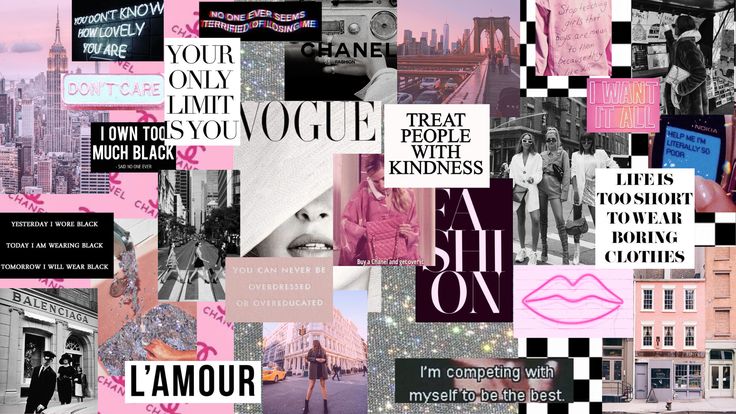
The most familiar image of collage as an aesthetic strategy is defined in the verbal and visual works of the avantgarde. For artists from Pablo Picasso to Kathy Acker, collage techniques enabled a powerful critique of anything from the visual plane of painting to literary ideologies of gender.
Cutting apart readymade images and words and then assembling them into new works of art challenged the romantic ideology of the creative artist, and often yielded works of intense and telling juxtapositions. In his seminal essay “Beyond Painting,” Surrealist Max Ernst asks: “What is the most noble conquest of collage?”
His answer, unsurprisingly, emphasizes the critical functions of collage for avantgardists: “The irrational. The magisterial eruption of the irrational in all domains of art, of poetry, of science, in the private life of individuals, in the public life of peoples. He who speaks of collage speaks of the irrational” (17).
For Ernst, as for the surrealists and other critical collage artists, the process of cutting apart source texts and reassembling them into new works with shocking or telling juxtapositions reveals the fragile nature of ideologies–what Ernst characterizes as both the domains of public and private life. Thus both the ideologies of nationalism and capitalism, as well as seemingly private ideologies of sexuality are exposed to the transformative powers of the irrational cuts of collage.
Indeed, Ernst is at pains to underscore the magical, transformative potentials of collage: “One might define collage as an alchemy resulting from the unexpected meeting of two or more heterogeneous elements, those elements provoked either by a will which–from a love of clairvoyance–is directed toward systematical confusion and disorder of all the senses (Rimbaud), or by hazard, or by a will favorable to hazard” (16).
Like the aestheticized serial killer, the collage artists of the avantgarde are emphatically described as transgressors of social norms and creators of new, irrational possibilities. Ernst, closer to the beginning of the twentieth century, is responding to the sameness underwritten by mass production and commodity culture’s onedimensional logic.
However, as much as mass production is a sign of sameness, it is also an operation of vast fragmentation, and the very irrationality that Ernst celebrates as a transgressive potential is the structural principal of capitalist overproduction.
Thus, the history of collage traces the fundamental ironies of late capitalism, for while its cuts and juxtapositions rend and reshape older ideologies, it remains a mirror of the larger forces of economic fragmentation that are cutting up and restructuring a global world.
The culture of the twentieth century has often been grasped as an unprecedented shattering: the Fordist assembly line and Taylorization broke apart manufacturing processes; the rise of mass media ruptured traditional narrative and visual art forms; technologies of communication and transportation fractured social relationships; and the development of a consumer culture of readymade, massproduced commodities all served to fragment everyday life.
Indeed, as Daniel Bell wrote in The Cultural Contradictions of Capitalism, “The modern movement disrupts the unity of culture … shatters the ‘rational cosmology’ that underlay the bourgeois world view of an ordered relation between space and time.”
Bell’s abstract identification of this fragmentation can be grasped in more immediate and concrete terms by looking to the forces of modernization in sectors of both production and consumption. As Thomas P. Brockelman, Karsten Harries, Fredric Jameson, and others have pointed out, the ordering functions of literal frames and generic boundaries that once held together a hierarchical order have come crashing down.
The fragmentation associated with mass production is only one side of a dialectical process. Massproduced commodities, from durable goods like cars to ephemeral media such as newspapers, demand consumers who purchase and use these commodities less to satisfy basic needs than to engage in the fundamentally aesthetic work of exchanging signs.
In For a Critique of the Political Economy of the Sign, Jean Baudrillard accounts for this labor of consumption: “under this paradoxical determination, objects are not the locus of the satisfaction of needs, but of a symbolic labor” (33).
Like the artist who chooses fragments to insert into a collage, the consumer too works with readymades, picking and choosing, sometimes in obedience to a code, but just as often entering into aesthetic transgressions: “That is to say, they use it [symbolic codes] in their own way. They play with it, they break its rules, they speak it with their class dialect” (37).
Baudrillard’s formulations can be found in the work of other Marxists, from the Frankfurt school that precedes him to later theorists such as Pierre Bourdieu. However, Baudrillard’s emphasis on the role of readymade commodities and the labor of making them speak for the consumer is particularly useful to understanding the role of collage in a readymade world of consumer goods of all kinds.
Baudrillard is at pains to emphasize the role of these commodities over and above less tangible sorts of cultural capital (like vocabularies, worldviews, attitudes, etc.) Baudrillard imagines the consumer selecting from a vast system of commodities, playing with an arrangement of objects, from refrigerators to couches, clothes to cars, in negotiating a place in the world.
Like the collage artist who selects readymade elements to make a new statement, the consumer assembles a new totality out of an infinite number of individual fragments, literally shopping (or sometimes scavenging, stealing, or faking) new identities.
Technologies of mass production not only created an abundance of things but also drove a complete transformation of media and human relationships to information and images of all kinds. Essentially, what before existed as unique moments of performance (telling a story, playing a song) or irreproducible works of art (a painting in oils) became just one more commodity turned out by the assembly lines.
Suddenly words and images were simply everywhere, reproduced in newspapers, advertising posters, and new technologies such as cinema and later, radio and television. Information embodied and disseminated in these forms became more and more like the objects of consumer culture: simply there to be used, cutup, and manipulated. No need to have an almost religious attitude to the reproduction of a painting or a print of a film.
These could now be treated as casually as used bus passes. While states used this newfound media explosion to disseminate ideology, collage became the strategy of political intervention. Yet collage still could also serve other, more conservative desires as well. Indeed, the meaning of collage is often dependent on which moment–cutting or pasting–the artist or the audience privileged.
However, as the process of collage is a dialectic, either moment necessarily implies the other. This article frames the twentieth century in terms of collage. Throughout, the argue is that the physicality of mass production and the consumption of objects are best grasped through the practices of collage, but both the practices and even more shockingly the metaphorics of collage breakdown in our digital world with its seemingly infinite and effortless circulation.
While the twentieth century was a century of the massproduced object and all that attends it for everyday life and art, the twentyfirst century is about the reign of codes, and the concept of copying proves far more flexible than that of collage. From the perspective of the copy and its digital worlds, the anxieties and transformations of the twentieth century become suddenly clearer; collage is the art of the assembly line, the newspaper, the film, the fragment. As these forms have been exceeded and enmeshed in the digital, collage has been liquidated or mutated into a process of copying