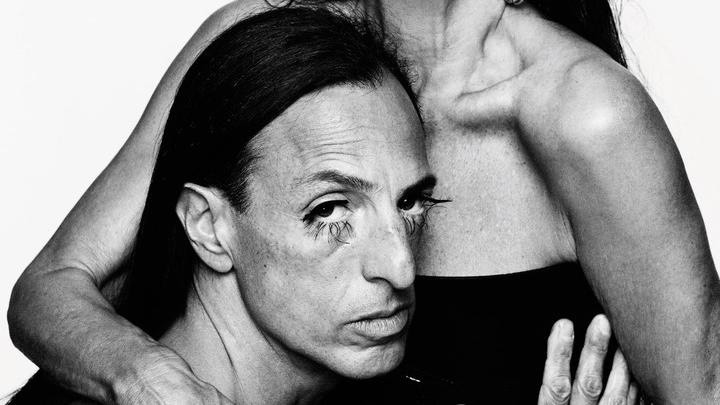
Rick Owens, the American-born, Paris-based fashion designer, is widely recognized for his avant-garde aesthetic, dystopian minimalism, and architectural silhouettes. While his work is often associated with dark, monastic, and futuristic themes, Owens’ inspirations extend beyond aesthetics into the realm of left-wing ideology, drawing from progressive political thought, countercultural movements, and radical artistic expression. His work challenges traditional fashion norms, critiques consumerism, and reflects a broader rejection of hierarchical and oppressive structures. Owens’ engagement with left-wing philosophy manifests in his designs, casting, and brand ethos, making him one of the most intellectually provocative figures in contemporary fashion.
One of the most significant ways Owens incorporates left-wing ideals into his work is through his rejection of conventional beauty standards and rigid gender norms. He consistently embraces nontraditional casting, featuring models of diverse body types, unconventional appearances, and varying ages. By doing so, Owens challenges the fashion industry’s historically elitist and exclusionary approach to representation. His gender-fluid silhouettes and rejection of hyper-masculinity in menswear further align with progressive views on gender as a social construct. The draped tunics, skirts, and elongated silhouettes in his collections reflect an androgynous ideal, reinforcing the idea that clothing should not be confined to binary definitions. This aligns with the broader left-wing ethos of deconstructing societal norms and embracing fluidity in identity.
Owens’ work also critiques the excesses of capitalism and consumer culture, aligning with leftist critiques of commodification. His aesthetic leans into rawness, imperfection, and deconstruction, rejecting the polished, hyper-commercialized vision of luxury fashion upheld by traditional high-end brands. His use of distressed fabrics, unfinished edges, and an often apocalyptic tone in his collections can be seen as a critique of overconsumption and mass production, echoing leftist concerns about environmental degradation and the exploitative labor practices inherent in fast fashion. Unlike many luxury designers who focus on seasonal trends and mass-market appeal, Owens maintains a consistent artistic vision, resisting the pressures of market-driven demands. His anti-establishment approach disrupts traditional luxury fashion’s emphasis on status symbols, exclusivity, and conformity.
Beyond his designs, Owens’ references to countercultural movements and radical leftist art further reinforce his political inclinations. He has drawn inspiration from movements such as punk, brutalism, and Dadaism—each of which embodies an anti-authoritarian, subversive spirit. His embrace of brutalist aesthetics, for example, reflects an admiration for the ideological underpinnings of the movement, which was rooted in socialist principles of functionality, egalitarianism, and rejection of excessive ornamentation. His stage designs and runway presentations frequently evoke elements of political protest, performance art, and societal upheaval, reflecting an engagement with revolutionary thought.
Additionally, Owens’ collaborations and creative partnerships often align with radical leftist figures and subcultures. He has worked with artists and musicians known for their progressive, anti-establishment views, reinforcing his position as a designer deeply engaged with left-wing discourse. His partnership with Converse, for example, took a ubiquitous, working-class shoe and reinterpreted it through his dystopian, deconstructed lens, aligning with leftist ideals of democratizing fashion while still critiquing capitalist consumer culture. Owens has also spoken openly about his admiration for figures like Karl Marx, Michel Foucault, and Guy Debord, whose theories critique power structures, capitalism, and the spectacle of mass media.
Moreover, Owens’ runway shows often contain symbolic gestures of political resistance. His Spring/Summer 2014 “Vicious” collection, for instance, featured step dancers performing in military-inspired garments, a powerful nod to African American cultural expression and defiance against systemic oppression. Similarly, his Fall/Winter 2019 collection referenced climate change and societal collapse, reflecting concerns that are often central to left-wing activism. Owens’ ability to use fashion as a medium for political and philosophical commentary sets him apart from many designers who engage with aesthetics in a purely commercial or decorative sense.
However, Owens’ relationship with left-wing ideology is not without contradictions. While he critiques capitalism and mass consumerism, he remains a luxury designer whose pieces sell at high price points, accessible only to a select clientele. This paradox is inherent in many avant-garde designers who operate within the fashion industry’s commercial framework while simultaneously critiquing it. Owens acknowledges this contradiction, often expressing an awareness of his own complicity within the system he critiques. His approach can be seen as an attempt to work within the structures of capitalism while subtly subverting them, much like radical artists and intellectuals who have historically used institutional platforms to challenge dominant ideologies.
Rick Owens’ engagement with left-wing inspirations is evident not only in his aesthetics but in his broader philosophical approach to fashion. His work challenges the rigid structures of gender, critiques consumerist excess, embraces countercultural radicalism, and engages with themes of societal collapse and resistance. While his position within the luxury industry complicates his anti-capitalist leanings, his consistent rejection of traditional beauty, his alignment with radical artistic movements, and his deconstruction of hierarchical fashion norms make him one of the most politically engaged designers of his generation. Owens’ legacy is not just one of dark, monastic fashion, but of intellectual provocation, artistic rebellion, and a commitment to challenging the status quo.
Michèle Lamy, the enigmatic creative force behind Rick Owens and a cultural icon in her own right, embodies a radical left-wing ethos that extends beyond fashion into art, philosophy, and activism. As a designer, performer, and entrepreneur, Lamy has cultivated an aesthetic and intellectual world deeply influenced by anti-establishment thought, social justice, and avant-garde movements. Her philosophy, rooted in rebellion and countercultural resistance, reflects progressive ideals that challenge traditional power structures, capitalism, and societal norms.
Lamy’s left-wing inclinations can be traced back to her early life and intellectual influences. Born in France in 1944, she grew up in the post-war era, a time of intense political transformation and philosophical reckoning. As a law student, she was deeply influenced by the 1968 student protests in Paris, a movement that sought to dismantle capitalist and patriarchal systems while advocating for worker rights, free expression, and radical democracy. The intellectual ferment of this period, shaped by thinkers like Jean-Paul Sartre, Michel Foucault, and Guy Debord, left a lasting imprint on her worldview. Debord’s critique of the “Society of the Spectacle,” which exposed the ways in which capitalism turns human relations into commodities, is particularly relevant to Lamy’s later work, which often challenges the commercialization of art and identity.
Her move to Los Angeles in the 1970s and 1980s further immersed her in countercultural and leftist circles. Lamy became a key figure in the underground art, music, and fashion scenes, running nightclubs and restaurants that served as gathering spaces for radicals, intellectuals, and artists. These spaces were more than just businesses; they were living experiments in community-building, self-expression, and cultural resistance. Her infamous Les Deux Cafés became a hub for creatives who rejected mainstream Hollywood elitism in favor of raw, unfiltered artistic exchange. This embrace of subcultures and rejection of mainstream consumerism aligned with anarchist and Marxist ideals, which critique the commodification of creativity under capitalism.
Lamy’s political leanings are also evident in her approach to fashion. Unlike many figures in the luxury industry, she eschews conventional notions of glamour, instead championing rawness, imperfection, and authenticity. Her collaborations with Rick Owens reflect a commitment to deconstructing rigid aesthetic hierarchies and gender norms, much like leftist thinkers who challenge the artificial binaries imposed by capitalist and patriarchal systems. By favoring inclusivity, androgyny, and unconventional beauty, she aligns herself with progressive movements advocating for a more fluid, liberated understanding of identity.
Beyond aesthetics, Lamy’s engagement with leftist ideas extends to activism and ethical production. She has been outspoken about the exploitative nature of global fashion supply chains, advocating for sustainable and ethical labor practices. Her collaborations often involve artisans and craftspeople from marginalized communities, supporting traditional techniques while resisting the dehumanizing effects of mass production. This emphasis on craftsmanship over industrialization resonates with socialist critiques of alienated labor and the loss of artistic autonomy under capitalism.
Lamy’s engagement with political resistance is further exemplified by her support for social justice movements. She has openly expressed solidarity with leftist causes, whether through artistic projects, fundraising efforts, or public statements. Her involvement with projects like LAMYLAND, a multidisciplinary initiative blending art, music, and activism, reflects a belief in the transformative power of culture as a tool for resistance. She has used her platform to amplify issues such as climate change, racial justice, and workers’ rights, embracing the ethos of radical left-wing thinkers who view art as an inherently political act.
Despite existing within the world of high fashion—a notoriously elitist and capitalist industry—Lamy navigates this paradox with a self-awareness that mirrors the contradictions of many leftist intellectuals operating within institutional frameworks. She acknowledges the tensions between commerce and rebellion but seeks to subvert traditional luxury through her emphasis on community, artistic integrity, and the rejection of mass-market commercialism. Her work challenges the notion that fashion must be purely about consumption, instead positioning it as a space for dialogue, disruption, and radical expression.
Michèle Lamy’s left-wing ideologies are evident in her lifelong commitment to countercultural movements, artistic subversion, and resistance to oppressive structures. Whether through her embrace of radical philosophy, her critique of capitalist exploitation, or her efforts to create alternative artistic and social spaces, she represents a living embodiment of fashion as political rebellion. In a world where the boundaries between commerce and culture are increasingly blurred, Lamy continues to defy conventions, proving that true creativity—and true revolution—lies in the refusal to conform.