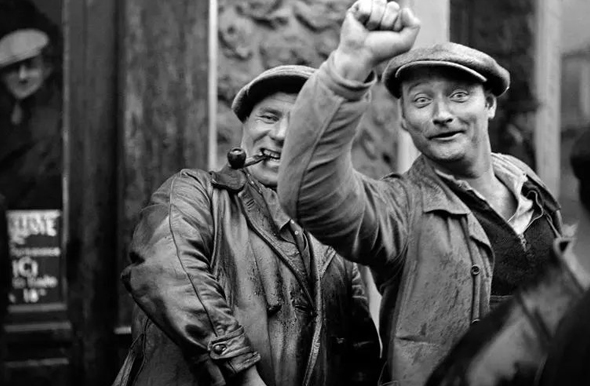
Fashion has long been a mirror reflecting the ideological currents of its time, and the interplay between Marxist and socialist thought and the world of style reveals profound insights into the fabric of society. In the discourse of fashion Marxism, the idea that clothing is not merely a superficial adornment but a manifestation of deeper social structures takes center stage. At its core, Marxist theory posits that the material conditions of life, including the means of production and distribution, shape human consciousness and cultural expression. This perspective naturally extends to the realm of fashion, where the garments we wear become symbols of class, identity, and even political allegiance.
Historically, fashion has often been an arena in which the tensions between the ruling classes and the working masses are played out. In capitalist societies, clothing is commodified, marketed, and transformed into a status symbol that both reflects and reinforces social hierarchies. The glitz and glamour of haute couture and luxury brands stand in stark contrast to the functional, often austere garments associated with the working class. Marxists argue that this division is not accidental but a deliberate feature of a system designed to perpetuate inequality. The idea that fashion can serve as an ideological tool is rooted in the belief that what we wear communicates not just personal taste but also our position within the socio-economic order. As Marx once observed, the superstructure of culture is built upon the economic base, and in this sense, fashion becomes a potent indicator of the class struggle.
Socialist approaches to fashion have sought to subvert these hierarchies by advocating for clothing that reflects values of equality, practicality, and communal solidarity. In various socialist movements around the world, there has been a conscious effort to promote styles that reject ostentation and embrace functionality. The proletarian aesthetic, with its emphasis on simple, utilitarian design, was conceived as a rejection of bourgeois excess. This approach to fashion was not merely about practicality but also about the democratization of style. In a socialist framework, clothing is envisioned as a common good—an expression of the collective will rather than the individual pursuit of conspicuous consumption. Such ideas challenge the notion that beauty and elegance are reserved for the privileged, instead asserting that sophistication can arise from simplicity and that style should be accessible to all.
The cultural critique embedded in socialist fashion is also a reaction to the pervasive commodification of art and aesthetics under capitalism. In a society where every aspect of life is subject to market forces, even the realm of creative expression risks being reduced to a product to be bought and sold. This dynamic has profound implications for how we understand the role of fashion. Socialist critics contend that when style is dictated solely by profit motives, it loses its capacity to serve as a vehicle for meaningful expression and social change. Instead of inspiring collective imagination, it reinforces consumerist ideologies that keep individuals trapped in cycles of desire and dissatisfaction. In this context, left-wing fashion emerges as an antidote to the superficiality of mass-market trends, offering instead a vision of style that is rooted in ethical considerations, sustainable practices, and a commitment to social justice.
Throughout the twentieth century, various movements and designers have embraced these ideals, using fashion as a platform for political expression and social critique. In the Soviet Union, for example, socialist realism in art extended to the realm of design, where the ideal was to create clothing that embodied the virtues of the working class. Garments were designed to be functional, durable, and devoid of ostentation—a stark contrast to the flamboyant styles of the bourgeoisie. While critics have sometimes argued that such approaches can lead to a sterile and uninspired aesthetic, proponents maintain that the goal was not to create art for art’s sake but to forge a visual language that resonated with the lived experiences of ordinary people. In the words of one designer who embraced socialist principles, “Clothes should be an expression of our shared humanity, a uniform that unites rather than divides us.”
In Western countries, the countercultural movements of the 1960s and 1970s brought a new dimension to the discussion of fashion and ideology. Artists and designers began to question the dominant narratives of consumerism and corporate control, instead advocating for styles that were self-expressive, anti-establishment, and deeply political. The era witnessed the rise of punk fashion, with its DIY ethos and anarchic energy, as a reaction against both capitalist excess and conventional social norms. Punk fashion, with its ripped garments, safety pins, and provocative slogans, became a symbol of resistance, embodying the belief that fashion could be used to subvert authority and challenge oppressive power structures. In this spirit, influential voices in the movement proclaimed that “style is a weapon in the struggle for freedom,” encapsulating the idea that what we wear can be a radical act of defiance.
Philosophers and theorists have also contributed significantly to our understanding of fashion Marxism and socialist aesthetics. Theodor Adorno, a stalwart critic of the culture industry, argued that the commodification of art under capitalism leads to a loss of genuine creativity and critical capacity. For Adorno, mass-produced fashion was emblematic of the broader dehumanization wrought by capitalist society, reducing art to mere spectacle and stifling its potential to challenge social norms. His critique reminds us that when art becomes subsumed by market demands, it loses the transformative power that lies at the heart of creative expression. Similarly, Antonio Gramsci’s concept of cultural hegemony emphasizes how dominant ideologies infiltrate even the realm of fashion, shaping tastes and values in ways that maintain the status quo. Gramsci’s insights suggest that in order for fashion to serve as a revolutionary force, it must resist the co-optation of corporate interests and instead foster an independent, counter-hegemonic culture.
Yet the challenges facing left-wing fashion are not confined solely to its ideological underpinnings. The practicalities of producing and disseminating politically charged aesthetics in a globalized market present their own set of difficulties. In a world where fashion is often synonymous with luxury and exclusivity, socialist principles face the paradox of appealing to mass audiences while rejecting the consumerist ethos that underlies much of the industry. Designers committed to these ideals often struggle with issues of scale and sustainability, trying to balance the desire to create meaningful, politically engaged work with the realities of economic constraints. This tension has led to a vibrant dialogue within the fashion community, as activists, designers, and consumers grapple with questions of authenticity, accessibility, and the true meaning of style in a postmodern, globalized world.
Contemporary examples of left-wing fashion can be seen in the growing emphasis on eco-fashion and sustainable design, where environmental and social justice issues converge. Many modern designers draw on socialist ideals to promote ethical production practices, fair labor conditions, and a rejection of fast fashion’s wasteful cycles. In this context, fashion becomes a platform not only for aesthetic expression but also for political and environmental activism. The idea that every garment should reflect a commitment to a more equitable and sustainable world resonates with a generation increasingly aware of the social and ecological costs of consumption. As one prominent advocate for sustainable design remarked, “Fashion must evolve from an instrument of exploitation to a beacon of responsibility and hope.”
Despite these noble aspirations, critics of left-wing fashion continue to point out its inherent contradictions. Some argue that by attempting to merge art with politics, the movement sometimes ends up diluting both. When political messages become too overt or formulaic, they risk overshadowing the artistry and individuality that give fashion its power to move and inspire. This criticism echoes the concerns expressed by cultural critics who caution against the dangers of ideological rigidity, warning that a singular focus on political correctness can stifle the creative impulse. The balance between serving as a tool for social change and maintaining artistic integrity is a delicate one, and left-wing fashion remains engaged in an ongoing struggle to navigate this terrain.
Another persistent shortcoming is the challenge of communicating complex social ideas through a medium that is, by its nature, visual and immediate. While a t-shirt emblazoned with a political slogan can capture attention and provoke conversation, it may also oversimplify the nuanced debates that underpin socialist and Marxist theory. The risk is that fashion, in its quest to be accessible and impactful, might reduce profound ideological concepts to catchy phrases or images that lack the depth required to fully articulate the vision of a just society. In such cases, the transformative potential of fashion is undermined by a tendency to favor immediacy over complexity. This issue has been a topic of lively debate among theorists and practitioners alike, highlighting the need for ongoing innovation and critical reflection within the movement.
Ultimately, the interplay between fashion, Marxism, and socialism is a testament to the enduring power of art to reflect, critique, and shape the world around us. It is a dynamic field where aesthetics and ideology meet, clash, and sometimes coalesce into new forms of expression that challenge conventional wisdom and inspire radical rethinking of social norms. The revolutionary promise of left-wing fashion lies not in its ability to offer simple answers, but in its capacity to provoke critical dialogue and to serve as a catalyst for change. As Karl Marx famously noted, “The ideas of the ruling class are in every epoch the ruling ideas,” yet it is precisely in challenging these ideas through creative expression that new possibilities emerge.
In this light, fashion Marxism and socialist aesthetics continue to evolve, informed by both historical legacy and contemporary struggles. While the movement faces significant challenges—ranging from the risk of commodification to the oversimplification of complex political ideas—it also offers a powerful critique of the consumerist excesses of modern society. The pursuit of a style that embodies principles of equality, sustainability, and collective well-being remains a radical endeavor in a world increasingly dominated by profit and individualism. The dialectical tension between art and ideology that has characterized left-wing fashion for over a century is not a flaw to be eradicated, but a dynamic process that continually redefines what it means to dress, to express, and to resist.
It is through this process of deconstructing old forms and challenging entrenched ideologies that fashion can renew itself and remain a vital force in the struggle for a more just society. The conversation between aesthetics and politics is ongoing, and as new generations of designers, activists, and thinkers take up the mantle, they will undoubtedly find innovative ways to harness the power of style as a tool for social transformation. Through its persistent questioning of the status quo and its embrace of both beauty and critique, left-wing fashion continues to affirm its relevance in the fabric of society, inviting us all to reconsider not only what we wear but also the values we choose to embody in our daily lives.”