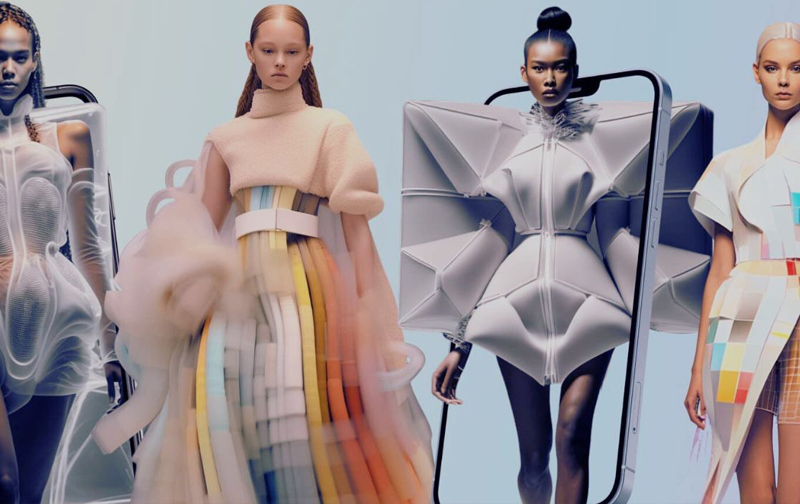
Personalization through artificial intelligence (AI) is redefining the fashion industry, merging technological advancements with the deep-seated human desire for self-expression and individuality. In an era where digital innovation is rapidly evolving, AI-driven personalization is not merely a trend but a profound shift in how consumers interact with fashion. It is transforming the very fabric of the industry, enabling brands to cater to individual tastes, body shapes, and even psychological inclinations in ways that were once inconceivable. This phenomenon is not only a technological revolution but also a sociological one, raising significant questions about identity, consumer behavior, and the commodification of personal expression.
Fashion has always been a reflection of society, embodying cultural values, historical moments, and social hierarchies. Georg Simmel, a pioneer in sociology, examined fashion through the lens of social differentiation, arguing that trends are shaped by a constant tension between imitation and distinction. AI-driven personalization intensifies this dynamic, offering consumers tools to stand out while paradoxically relying on algorithms that categorize and predict behavior. According to Simmel, “Fashion is a form of social relationship that allows individuals to express their uniqueness while simultaneously belonging to a larger group.” This duality is at the heart of AI-driven personalization, where individuals seek distinction through algorithmic customization.
The emergence of virtual stylists and AI-powered recommendations is a testament to the desire for individualized fashion experiences. Unlike traditional retail, where customers browse through generic selections, AI-driven platforms analyze vast datasets to suggest outfits tailored to personal tastes, past purchasing behavior, and even real-time mood analysis. Brands such as Stitch Fix, Zalando, and Farfetch are pioneering this shift, utilizing machine learning models to curate wardrobe suggestions that align with consumer preferences. This approach not only enhances the shopping experience but also challenges conventional retail models, where mass production and uniformity once reigned supreme.
Pierre Bourdieu, a renowned sociologist, explored the concept of “habitus”—the deeply ingrained habits, skills, and dispositions that shape human behavior. He argued that fashion choices are not merely aesthetic but are deeply tied to social structures and personal histories. AI-driven personalization operates within this framework, reinforcing existing tastes while subtly influencing future preferences. The paradox of AI-based personalization is that while it seemingly grants individuals greater control over their fashion choices, it also subjects them to algorithmic influence, subtly guiding their preferences through predictive modeling. This raises critical questions about agency and autonomy in consumer choices. Are individuals truly choosing their styles, or are they being led by an AI’s interpretation of their past behaviors?
The integration of 3D body scanning technology further amplifies the role of AI in fashion personalization. By capturing precise body measurements, brands can create bespoke garments that cater to an individual’s unique physique, addressing the longstanding issue of sizing inconsistencies in the fashion industry. Companies like True Fit and Bold Metrics are leading the charge, leveraging AI to ensure that clothing fits perfectly, reducing return rates and minimizing fashion waste. This innovation aligns with the broader movement towards sustainability, as personalized sizing reduces overproduction—a key contributor to the industry’s environmental footprint. Sociologically, this development signifies a shift in consumer expectations, where the demand for mass production is gradually being replaced by a preference for tailored experiences.
Max Weber, another influential sociologist, analyzed the role of rationalization in modern society, describing how increasing efficiency and calculability shape human interactions. AI-driven fashion personalization can be seen as an extension of this rationalization process, where clothing selection becomes a data-driven endeavor rather than an organic, spontaneous act. The efficiency of AI in predicting consumer desires raises important ethical and philosophical considerations. If an algorithm can determine what one wants before they even articulate it, does this erode the emotional and exploratory aspects of fashion? Weber’s concept of the “iron cage” of rationalization warns against excessive reliance on bureaucratic systems, which may ultimately limit individual creativity and spontaneity.
Beyond practicality, AI-driven personalization is deeply intertwined with self-expression and identity formation. Erving Goffman’s theory of “the presentation of self” highlights how individuals curate their outward appearances to align with social expectations and personal narratives. Fashion has long served as a medium for self-presentation, and AI-based customization tools enhance this process by offering hyper-personalized recommendations. Virtual fitting rooms, augmented reality try-ons, and AI-generated fashion sketches empower consumers to experiment with their style in ways that were previously constrained by physical limitations. However, this level of personalization also introduces new challenges. If AI systems curate an individual’s wardrobe based on data-driven insights, does this reinforce existing biases? Do consumers risk being pigeonholed into a particular aesthetic without room for exploration?
The intersection of AI and fashion also raises critical discussions about privacy and data ethics. The vast amount of personal information collected by AI systems—from body measurements to purchasing habits—poses significant concerns about data security and surveillance. Michel Foucault’s concept of “panopticism” is particularly relevant here, as it explores how individuals modify their behavior when they know they are being watched. In an era where AI monitors consumer preferences, there is an implicit pressure to conform to algorithmic suggestions, potentially diminishing genuine sartorial experimentation. The question then arises: does AI-driven personalization enhance individuality, or does it subtly coerce consumers into algorithmically optimized identities?
Moreover, AI is reshaping the very definition of exclusivity in fashion. Historically, luxury fashion was defined by rarity and craftsmanship, with haute couture symbolizing bespoke artistry reserved for the elite. AI is democratizing personalization, making customized fashion accessible to a broader audience. Brands like Gucci, Louis Vuitton, and Burberry are incorporating AI into their customer experience strategies, offering digital customization tools that allow users to co-create their pieces. This shift challenges traditional notions of luxury, as exclusivity is no longer determined by price alone but by the uniqueness of an algorithmically crafted design. Thorstein Veblen’s theory of conspicuous consumption suggests that people consume goods not merely for their functional value but as a means of social distinction. AI-driven personalization complicates this dynamic by making exclusivity more widely available, prompting a reevaluation of what constitutes “status” in fashion.
As AI continues to evolve, its impact on fashion personalization will extend beyond clothing into the realms of virtual and digital fashion. The rise of the metaverse and digital wearables signifies a new frontier, where consumers can purchase AI-generated fashion items for their avatars in virtual spaces. This shift introduces profound sociological implications, blurring the lines between physical and digital identities. If one’s digital persona becomes as important as their physical appearance, will AI-driven fashion dictate not only what we wear in real life but also how we present ourselves in digital realms? The implications of this shift are immense, shaping not only the aesthetics of fashion but also the psychology of self-perception and identity construction.
Personalization through AI is not merely a technological advancement; it is a sociological phenomenon that reflects broader societal transformations. It embodies the human desire for individuality while operating within the structures of mass consumption and algorithmic governance. It challenges traditional notions of creativity, agency, and exclusivity while offering unprecedented opportunities for self-expression. As we navigate this evolving landscape, we must critically examine the balance between technological convenience and the preservation of human creativity. In the words of Karl Marx, “The production of too many useful things results in too many useless people.” As AI personalizes fashion to an unprecedented degree, we must ask ourselves whether we are enhancing human expression or automating it into predefined digital molds. The future of fashion lies not only in the algorithms that power it but in the philosophical and sociological questions that it compels us to confront.