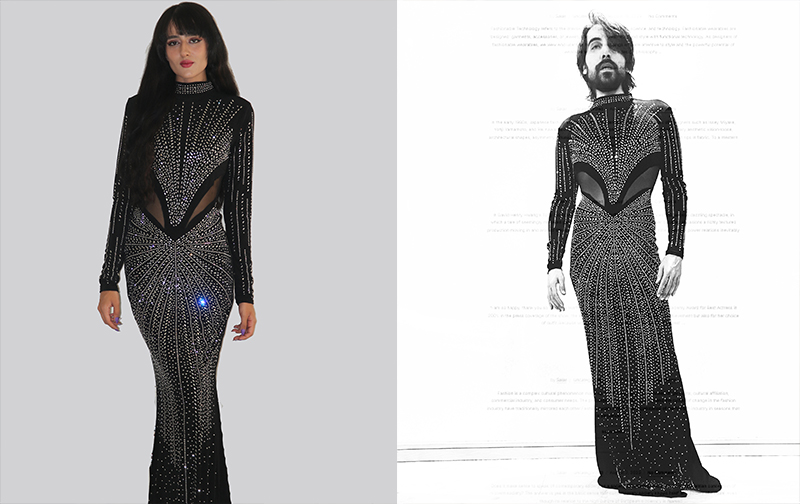
In the early decades of the twentieth century, a significant cultural and aesthetic shift took place that changed not only how art was created and perceived but also how identity and gender were performed and expressed. Two seemingly separate cultural icons emerged during this time: the flapper girl, a symbol of liberated femininity in the 1920s, and Marcel Duchamp’s alter ego Rrose Sélavy, a conceptual persona that blurred the boundaries of gender and authorship. Although these figures originated from different spheres—fashion and social rebellion in the case of the flapper, and avant-garde art in the case of Rrose Sélavy—they intersect in meaningful and provocative ways, particularly in their shared embrace of performance, subversion, and modern identity construction.
The flapper girl was a product of the post-World War I era, a time when traditional values and gender norms were being questioned across Western societies. Young women who had entered the workforce during the war years began to experience a new sense of autonomy and self-expression. The flapper emerged as a visual manifestation of this transformation. Her aesthetic was strikingly modern for the time: bobbed hair, cloche hats, heavily rouged cheeks, kohl-rimmed eyes, and lipstick that dared to emphasize the mouth. The clothing was equally revolutionary. Instead of corsets and long skirts, flappers wore drop-waist dresses that allowed freedom of movement, emphasizing a straight, androgynous silhouette. Their skirts rose to reveal knees—a shocking statement at the time—and they adorned themselves with beads, fringe, and sequins that caught the light in dim jazz clubs where they danced the Charleston and smoked cigarettes, claiming a space in public life that had long been denied to women.
This visual and behavioral rebellion was not merely a matter of fashion; it was a statement. Flappers challenged the Victorian ideal of the modest, domesticated woman. They embraced modernity in every aspect of life—from jazz music to cinema, from voting rights to sexual liberation. The flapper was, in many ways, a political figure disguised in glamour, using style as a tool to subvert the expectations placed upon her.
It is within this cultural atmosphere of rebellion and redefinition that Marcel Duchamp, a French-American artist associated with the Dada and Surrealist movements, introduced Rrose Sélavy in 1921. Duchamp was already well-known for his radical approach to art, having scandalized the art world in 1917 by submitting a urinal as a sculpture titled Fountain, under the pseudonym R. Mutt. With Rrose, Duchamp extended his critique of the art world into the realms of gender and identity, embodying an alter ego that was both playful and profoundly subversive.
Rrose Sélavy (a pun on the French phrase “Eros, c’est la vie,” meaning “Eros, that’s life”) was more than just a disguise. Duchamp, donning a wig, makeup, and feminine clothing, posed for a series of photographic portraits taken by Man Ray, transforming himself into a chic, enigmatic woman. These images are not simple drag performances; they are calculated performances of femininity that challenge the fixity of gender and identity. The visual language Duchamp used for Rrose—short bobbed hair, elegant garments, pearls, and carefully applied makeup—echoes the flapper aesthetic that dominated the decade. This connection is more than coincidence. Duchamp was acutely aware of contemporary trends and was adept at appropriating them for artistic ends.
In becoming Rrose, Duchamp was not mocking femininity, but rather revealing its performative nature. His use of a female persona disrupted the conventions of authorship in art. Works signed by Rrose Sélavy created confusion about their origin, questioning whether art needed a stable, authentic self behind it to be meaningful. This act of artistic cross-dressing was a conceptual gesture that asked viewers to reconsider their assumptions about gender, identity, and creativity. Just as flapper girls used fashion and behavior to defy expectations, Duchamp used costume and persona to do the same within the high-stakes world of modernist art.
The overlap between the design of the flapper and Rrose Sélavy is not only in the outward appearance but in their symbolic function. Both figures are rooted in artifice, glamour, and rebellion. The flapper’s clothing was not only stylish but deliberately constructed to reject the past—its lines were geometric, its structure minimalist, its movement fluid. This aesthetic suited the modern world of fast cars, jazz music, and urban nightlife. Likewise, Rrose’s appearance is meticulously curated. She is not Duchamp in casual drag; she is a stylized, iconic presence that evokes both mystery and sophistication.
Importantly, both the flapper and Rrose are situated within a historical context that saw a broader questioning of binaries—of male and female, of public and private, of high and low culture. The 1920s was a decade that danced on the edge of social revolution, where the old hierarchies of class, gender, and morality were giving way to new, fluid realities. The flapper may have been a real woman walking the streets of New York or Paris, but she was also a media creation, shaped by film, photography, and advertising. Rrose, meanwhile, existed entirely through artifice, but her impact was equally real. She disrupted expectations and expanded the possibilities of who could be an artist and what art could be.
Another dimension to consider is the relationship between these figures and sexuality. The flapper was often portrayed as sexually liberated, a woman who dated freely, drank openly, and even hinted at bisexuality or lesbianism in the more avant-garde circles. Rrose, too, exists in a liminal sexual space. By taking on a female persona, Duchamp explored not only the fluidity of gender but also the erotic power of ambiguity. The name Rrose Sélavy, with its play on eros and life, reinforces this connection. Some of the Dada and Surrealist works associated with Rrose include puns, erotic wordplay, and absurd juxtapositions that further emphasize her role as an embodiment of desire and enigma.
What is remarkable is how both figures—the flapper and Rrose—used surface, style, and image to communicate deeper truths. In an era obsessed with authenticity and moral virtue, they offered a radical alternative: that identity could be performed, that appearances could lie, and that lying could be a form of truth. In this way, they anticipated many of the debates that would later become central to postmodern theory, queer studies, and feminist art. They weren’t just ahead of their time—they were shaping the time to come.
Moreover, their connection invites reflection on the power of fashion and image as tools of transformation. The flapper’s wardrobe was not simply decorative; it was revolutionary. By shedding the corset and embracing freedom of movement, she redefined what it meant to inhabit a female body in public. Duchamp, by dressing as Rrose, did something similarly revolutionary: he redefined what it meant to be an artist, showing that identity itself could be a readymade, a construct open to manipulation and interpretation. Both the flapper and Rrose are icons not just of style, but of metamorphosis.
Their legacy is undeniable. The image of the flapper still resonates in popular culture, echoed in everything from fashion revivals to feminist discourse. Rrose Sélavy remains a potent symbol in art history, frequently cited in discussions of gender performativity and conceptual art. Together, they stand as twin emblems of a moment when the world was renegotiating its terms—when being a woman, being an artist, or simply being oneself became questions rather than givens.
In exploring the relationship between the design of flapper girls and Marcel Duchamp’s Rrose Sélavy, we uncover a shared language of resistance, performance, and radical self-expression. Though they came from different realms, they spoke to the same cultural anxieties and aspirations. They looked to the future and dared to reimagine it—not through grand declarations or manifestos, but through gesture, dress, and a carefully chosen name. And in doing so, they both changed the world in their own provocative way.