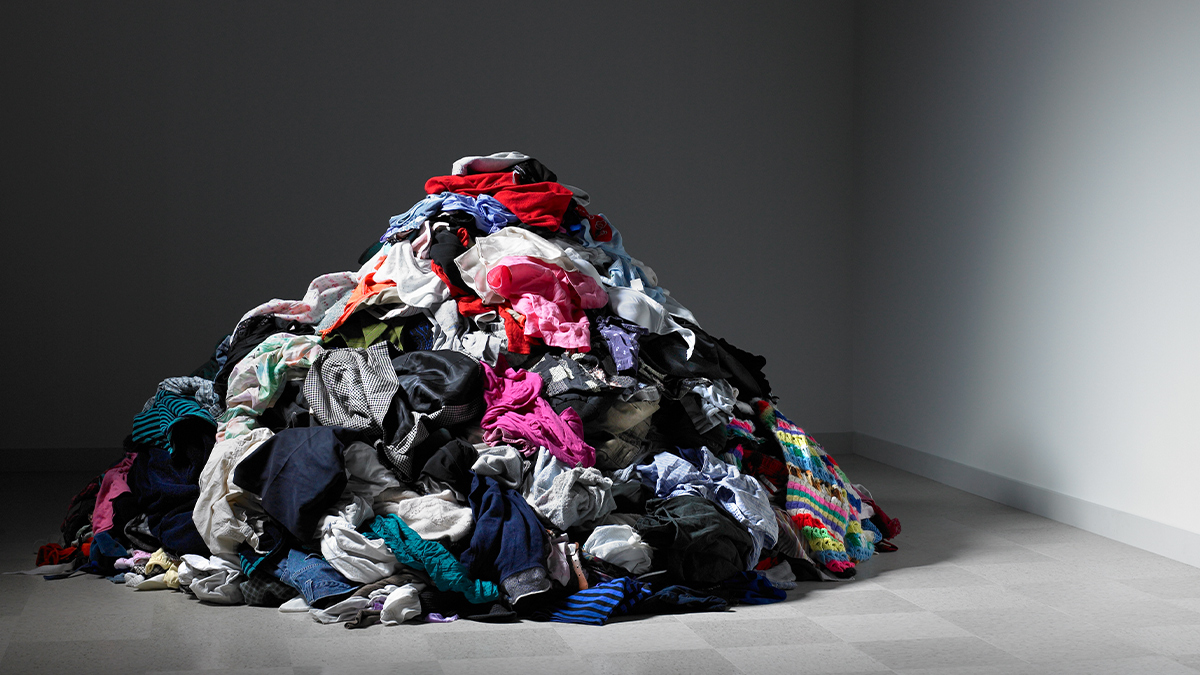
The fast fashion companies seem able to do everything in less time compared to traditional companies, the point where we can ask ourselves how the latter can withstand the cyclone are going against them. Enrico Ciettá – La rivoluzione del fast fashion. The history of fast fashion back in the mid-1980s when the American mass production system across the ocean as highlights Doeringer and Crean (2006). According to Linden (2016), the dependence of large retailers on supply chains in developing countries has been directed by customer choice and increased exposure to ever-lower vineyard products. Linden (2016) points out that the process of industrialization and the beginning of wage labor stimulated the garment industry, as people no longer had time after work. To meet the demand of the sales season, it was necessary for retailers to make a large order, which generated large inventories that required equally large storage space. The fast fashion concept first emerges in the late 1990s as a way of characterizing the rapid change in fashion and its form of consumption that some companies have begun to adhere to. According to Shimamura and Sanches (2012), “the phenomenon of fast-fashion, even though it is not a novelty in the sector, draws attention to the high profitability achieved and the continuous expansion” since when the model was adopted by major brands in the years 1990. Zara, a Spanish brand belonging to the Inditex group, is today the main representative of this marketing model. Still according to Shimamura and Sanches (2012) speed is an important part of the process, but it is not the only characteristic. A revolution in the way fashion is consumed is required, since each citizen is not only the audience but also produces, finances, collaborates and disseminates fashion. The “slow food” movement, which emerged in Italy in the 1980s as a reaction to the growth of the fast food lifestyle, inspired the concept of “slow fashion”. According to Fletcher (2007), the factor “time” is not so important in production, since the planning is done in the long term and does not requires subcontracting and temporary workers. In 2007, Hermés handkerchiefs, regarded as timeless and made at reduced speed due to special production techniques, were associated with “slow fashion”. Therefore, many people still assimilate low speed to high-cost products. To preserve the natural resources that are consumed globally by the fashion industry, the “slow fashion” movement seeks to promote sustainable innovations, multifunctional and timeless design, reuse of textile materials and services based on alternative strategies such as leasing (or leasing) of fashionable garments and accessories (Angel and Gardetti 2017). The fast fashion companies seem able to do everything in less time compared to traditional companies, the point where we can ask ourselves how the latter can withstand the cyclone are going against them. Social media are fundamentally changing the way we communicate, collaborate, consume, and create. They represent one of the most transformative impacts of information technology on business, both within and outside firm boundaries. Social media have revolutionized the ways organizations relate to the marketplace and society, creating a new world of possibilities and challenges for all aspects of the enterprise, from marketing and operations to finance and human resource management. Social networks have drastically changed the way we consume, above all, fashion. At first, social media was created for non-commercial use, but brands saw the opportunity to connect with their consumers through them. Products and brands have the ability to convey messages to others from the products they use and thus styles dictate how consumers communicate. Consumers have become true co-creators and play a key role within fashion companies. Social networks act as a thermometer and, through them, it is possible to determine if a trend has been successfully adopted by a specific number of people or not, in addition to making possible the perception of the value of the product to the user. Both companies and industries use social networks to promote and communicate with their target audience. Consumers no longer depend on companies for information about a particular product. Even such companies use information provided by their own customers, turning them into researchers. Many young women, especially those born between 1982 and 2000, have become their own celebrity in the virtual environment, recording every moment of life and watching others. In peer-to-peer communication, users can choose what kind of information they want to share. Summer dresses in January and winter coats in July, fast fashion have never been so fast! A world globalization trend to ever changing the fashion industry, it made global brands to adopt a seasonless cycle of designing clothes and relocating manufacturing activities at underdeveloped countries in a way to support the cost of mass production, but the transition went with ignoring the working conditions and the environmental costs. Fast fashion led to several disasters that have had a huge impact on planet earth and the overall humanity, it also led to a massive consumption along with unsustainable demand, this is not the extraordinary consumption of ordinary people but rather the ordinary and fast consumption of ordinary people. Fast fashion is today subject to unsustainable progress that is frustrating an entire economy with a big shift in consumers’ behavior, and this fact raised the debate around the problem of sustainability in the apparel industry. So, it is interesting to see how sustainability may generate a new perspective to the fashion industry, by bringing not only the most innovative strategies and technologies into the production process, but also the most genuine ideas to satisfy the need of fashionable customers, that are not interested anymore in only acquiring the latest trends, but also involved in promoting a more sustainable fashion to a point of spreading a new mindset for pushing consumption toward consciousness, and especially to forge an ethical appeal for brands, it goes to say that the problems behind sustainability brought a radical change to the fashion industry and it may play to its advantage for having different concepts and resourceful solutions. So, can fast fashion be sustainable? The 21th century, seems to be the century of you are what you buy, and you buy to be. Even mainstream movie such as Confession of a shopaholic seems to emphasize this need of buying. Buying could be a new part of the Maslow pyramid. This frenzy around buying is using more and more resources and create poor working conditions for the worker in the garment industry. Fast fashion is the top emerged part of the iceberg that impacted earth resources and society. However, in the same time, public and corporation are aware that the resources are limited, this paradoxal thoughts set foot in western society. They want to buy but at the same time they know that buying too much could damage the planet and could not be sustainable on a long term vision. So for fast fashion corporation they have to make a choice between staying the way they are and in 20 or 30 years not being able to reach public demand or find a way to be sustainable. Sustainability, is a big word, born in the late 80’s from the Brundtland report (1987), which put the basis of what could be thereafter becoming “sustainable development”. This report came after oil crisis, that rose public and corporation awareness about the fact that resources are not unlimited; the eighties are also marked by several environmental and industrial catastrophes. Those catastrophes had a huge impact on the public opinion and this idea of protecting environment and resources started to grow in people’s mind. Sustainable fashion is today the most debated topic and an undergoing competition worldwide, it could be identified as an umbrella term to describe ethical, green, and eco fashion; Then, according to the Free Encyclopedia, it could be defined as the trend of sustainability and part of the growing design philosophy, developed to create a system which can be supported in terms of human impact on the environment and social responsibility. From a first insight, it could be considerate as an alternative trend against fast fashion, whereas new structures are designed to reduce or partially eliminate the detrimental impact of mass producing clothes, adding to that different mechanisms are set to work on relatively improving the apparel industry and promoting new ethical standards. It appears that sustainability became the strategy used by the big fashion retailers, to some extent it could be perceived as a tactic to attract more customers and increase consumerism which falls in greenwashing activities, but it seems that it could also be the strategy for educating present and future generation toward a sustainable consumer trend that will address economic, social, and environmental sustainability at all the levels and at the same time, because these are complementary and constitute the mainstay of the well-functioning of a sustainable system. Furthermore, the spread of information is forcing large corporations to be more transparent for their actions. With an ever-growing planetary challenge, the consumer cannot be anymore dumped even when they fall into greenwashing activities, there will always be a way to educate them, especially with the extensive work of some associations that keep watching and tracking even the smallest clothing manufacturer. So, the future of sustainable fast fashion depends on the use of advanced technologies and innovations to be able to market a new consumer trend to foster the desire of quickly acquiring catwalk designs that follow both sustainable marketing strategy and manufacturing process.
‘Sustainable fashion’ is one of the most widely used terms in the fashion industry today. It is not only about the trend of socially responsible brands with ecofriendly products or coming up with some regulatory policies but also for catering to upcoming demands of conscious consumers to adopt sustainable fashion. Consumers have evolved over the ages and have become educated about the materials and manufacturing process, which results in their growing interest to make socially responsible choices while updating their wardrobes with a value tag. In fact, International brands like Patagonia, People Tree, H&M, Thought, Indigenous, Rent the Runway, Stella McCartney have become more focused to approach fashion in as ethical and transparent manner as possible considering both environment and customers. Emerging slow fashion brands like 11.11, [Ka] [Sha], Doodlage, Raw Mango, Bodice, Rustic Hue etc. are dedicated to design and offer clothing made using fair and ethical means such as providing safe working conditions to the factory workers, working with handloom weavers and artisans to create handcrafted products, sourcing organic or recycled raw materials and up-cycling post-production and post-consumer wastes. The gradual shift from fast fashion to a sustainable and socially responsible fashion is clearly visible around the globe. Both new and old fashion brands, are undergoing transformation day by day with new business models, new age fashion labels and supply chain practices to address the awareness and demand for sustainable clothing. Here we discuss on the forms of sustainable fashion, sustainable fashion brands strategies, consumer transparency and the driving forces and scopes; how fashion brands and consumers are advancing towards sustainable fashion. Sustainable fashion, with synonyms such as eco-fashion or green fashion or ethical fashion or slow fashion, has become a trending topic today. Where ‘Fashion sustainability’ is trending as a buzzword to gain attention and credibility, fashion brands are re-thinking about their business models and switching to more sustainable production and operation approaches. Consumers with growing awareness of the movement are supporting the brands that are environmentally conscious and produce ethically. Consumers’ positive mindset towards sustainable brands with environment concern, business plans and techniques is increasing. The fashion industry has witnessed remarkable changes in terms of sustainability over the past few years. ‘Sustainability’ in fashion has become the major focus for long-term growth and environmental impact. Being the second most ecologically harmful industry with 1.5 million tons of waste, the fashion industry puts into landfills every year. Sustainable fashion is becoming an expectation, as brands, designers, retailers, and manufacturers are becoming cognizant of the devastating effect of fast fashion on the surroundings. Fashion movements like #WhoMadeMyClothes are trying to bring transparency to the back end process of manufacturing to the consumers by keeping them informed (Fashion Revolution 2018). Consumers today want to pick styles meticulously not only to feel good about themselves but also how much they contribute to the person’s life who makes them (Grazia 2018). Sustainability is now crucial for fashion businesses due to consumers’ escalating consciousness about the ecosystem (Shen 2014). Environmental sustainability is now being considered as a management agenda. It is being put on high priority across many fashion brands. It’s all about maximizing benefits while minimizing negative impact. These brands are diving their society, environment, employees and customers in the right direction. Establishing a brand takes a much longer time than to spoil it. Design labels are adapting fair-trade practices, conscious design techniques like recycling and upcycling, and collaborating with craftspeople to bring in a sense of responsibility in their design creations. Brands realize that they need to connect with their customers in order to establish a strong relationship with them. They are putting strenuous effort to expand the emotional connection customers have with them by generating a more personal connection with marketing strategies like supporting charitable organizations, which are meaningful to their customers or offer ecologically friendly fashion choices. The digital influencer campaign is one such marketing strategy. Clothing is the basic need for human beings, but in the middle of a fast fashion culture, the industry has ended up witnessing serious consecutions for people and the planet. Eco-fashion has become a key trend for consumers especially the young mass. Documentaries, public campaigns, celebrities, and political figures have all made ethical fashion a major buzzword. Recently, in an interview, His Royal Highness—The Prince of Wales, Prince Charles shared his views on sustainable fashion and how the challenges can be tackled in the industry. He believes in the concept of reuse, repair or mending clothes instead of just throwing them away. He feels the need of growing awareness among consumers to head towards a circular type of economy. Emma Watson (Actor, Activist, UN Goodwill Ambassador, Time’s Up Advocate) made a media buzz with her five-piece red carpet look in monochrome at the Met Gala 2016 designed by Calvin Klein. The body part of the outfit was formed from three different kinds of fabrics all woven from yarns out of recycled plastic bottles, the zippers from recycled materials and the inner bustier from organic cotton. Not only the materials, the entire outfit was also repurposed and could be used as separates with different styling in future. Emma has been a strong supporter of eco-fashion, which is clearly evident when she wore outfits approved by sustainability consulting group Eco Age for the promotion of her films ‘Beauty and the Beast’ and ‘The Circle’ and documented it on Instagram. As a guest editor of March 2018 issue of Vogue Australia which themed ‘Designing the Future’, she shares her view on sustainable fashion, encourages everybody to be thoughtful about fashion and challenges to all make a one-degree shift as a small change to bring in a huge difference. Sustainability is not free from challenges. There are many standards to achieve from ensuring minimal carbon footprint to utilization of leftover fabrics. The use of organic raw materials, fair trade practices and artful management also makes clothing more expensive compared to the mass-produced products. But in the long run, sustainable fashion breaks even by lasting longer—and getting better with wash and wear with a positive impact on artisans as well. The awareness about sustainable fashion is in a nascent stage as it is still not as popular as fast fashion. The main drawback in going eco is the cost factor. The use of sustainable fashion products and materials will cost much more than using conventional materials in some cases. The manufacturers fear that the increase in cost will make clothes pricier and beyond the reach of ordinary families with middle-class economic background. From the current point of view of designing clothes, much attention are now being paid whether, those are sustainably produced and are fashionable—they have to be something that people want to wear with a socially responsibility. Fashion is a language through which one’s individuality is expressed. Customers want to feel great about their clothes, and that includes feeling great about how they were made with a concern of social responsibility. Fair wages and happy workers are being included in ethical policies—and they are a strong selling point too. Switching to fashion that is more ethical option does take forethought; the health of the planet and the safety of workers in developing nations are taken seriously. Ethical fashion must be promoted for a secure, healthy and sustainable future. It is the collective responsibility of everyone in the product value chain from producer to final consumer, to ensure that no harm to the surroundings during the overall cycle of production and consumption. It is essential to value our environment and traditional craft heritage for true growth and prosperity as unsustainable practices can give immediate benefits but it will strike back in the long run.