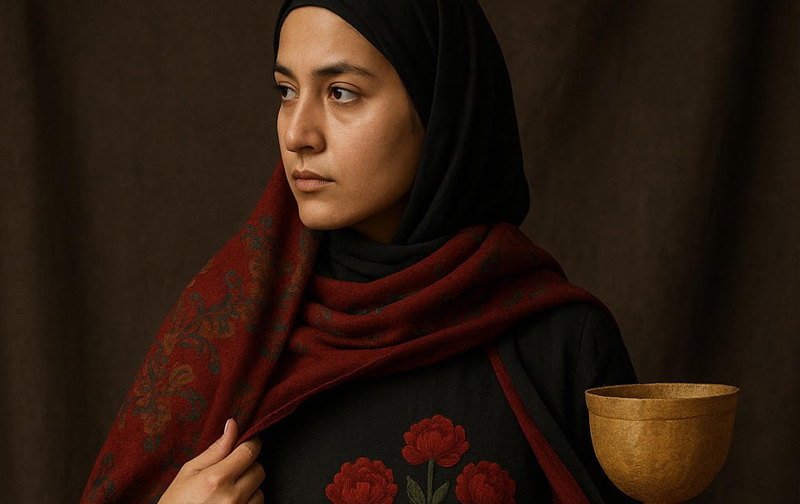
“Man is least himself when he talks in his own person,” wrote Oscar Wilde. “Give him a mask, and he will tell you the truth” . This epigram captures the paradox at the heart of theatrical costume under censorship. When tyrants and censors silence speech, artists learn to speak in code – and often that code is woven in fabric, color, and disguise. Throughout history, costume has been a second language for playwrights and designers, a visual rhetoric of hidden meanings and daring symbolism. Under repressive regimes and strict moral codes, what actors wear (or don’t wear) on stage becomes more than mere decoration; it becomes a form of political expression. In times and places where words are monitored and scripts are scoured for sedition, the cut of a coat, the color of a dress, or the choice to don a mask can proclaim truths that would otherwise be forbidden. As the old Shakespearean maxim goes, “the apparel oft proclaims the man” – and, in oppressive contexts, apparel can proclaim dissent, hope, and defiance as well.
Costume has always carried social and symbolic weight. Who gets to wear what is a question bound up with power. Authoritarians well understand this, often imposing dress codes on and off stage to assert control. Yet, as history shows, artists are resourceful. They have turned costume into a subtle weapon, weaving subversion into seams and hems. Anthropologists note that in many cultures, public festivities like carnival traditionally allowed a temporary inversion of power: commoners don the king’s robes, men dress as women, the lowly parade as high – a ritualized upending of hierarchy . In these carnivalesque performances (celebrated from medieval Europe to the Caribbean), costume and masquerade provide a licensed outlet for social critique, cloaking rebellion in revelry. Cultural theorist Mikhail Bakhtin observed that carnival’s use of masks and disguises carries “subversive potential… inverting social hierarchies and challenging official culture.” During carnival, political satire and ridicule of elites are camouflaged behind the face of the fool or the antics of costumed clowns, allowing people to voice dissent under cover of “play.” What was true in folk pageantry holds equally in political theatre: disguise can be a delivery system for truth. Indeed, power often finds it “hard… to incorporate humour and satire in its system of control,” as dissident playwright Dario Fo wryly noted . The jester’s motley, the clown’s painted face, or the comedian’s outrageous garb can smuggle sharp criticism past the censors’ gaze by presenting it as farce. “Comedy,” wrote Fo – who spent a career outwitting Italian censors with hilarious, barbed farces – “makes the subversion of the existing state of affairs possible.” In other words, a laughing mask can speak truth to power safely, telling jokes that carry the sting of reality.
Around the world, theatre artists under authoritarian rule have had to become experts in camouflage – not in the military sense, but the theatrical. Censorship necessitates creativity. When direct speech is curtailed, indirect expression flourishes. Scholars have observed that creators under repressive regimes strategically adapt every element of stagecraft – from set design to lighting to actors’ movement – in order to communicate ideas without overtly stating them . Costume design, in particular, emerges as a crucial arena of innovation. A recent study of Iranian theatre under strict social regulations found that directors developed a whole repertoire of visual codes and alternatives to forbidden content. In scenes that the official censors would cut – an intimate embrace, a politically charged gesture – directors substituted metaphorical imagery and choreographed suggestion . Symbols take the place of the explicit. As researcher Mehdi Tajeddin documents, Iranian artists employ “symbols and auditory elements instead of visual elements,” and they cleverly use “narrative, stage design, stage direction, costume design, props and cross-dressing as devices to circumvent censorship” . In other words, when an action or phrase is banned, a prop might stand in for it, or a costume might silently signify what cannot be spoken. Under these constraints, the costume designer becomes a kind of covert author, encoding unspoken dialogue into clothing. A shawl’s color, a motif on a garment, a sudden costume change – each can be loaded with significance recognizable to the audience but plausibly deniable to the authorities.
The twentieth century offers abundant examples of this sartorial subterfuge. In Communist Eastern Europe, for instance, theatre artists became adept at double-coded design. Romania under Nicolae Ceaușescu was one of the most brutally censored environments, yet its theatre thrived on ingenious symbolism. As one commentator notes, by the early 1980s Romanian producers realized that “anything with a concrete reference” to current hardships (such as food shortages or unheated homes) “could become an issue for the censors.” Even “symbolism was something censors were afraid of as well,” since a symbolic costume or prop “could have any interpretation, or a subtext.” Thus “costumes, stage design, lighting, music – everything could be a matter of double interpretation and thus of censorship.” . Nothing on stage was innocent; a coat worn slightly tattered might suggest the poverty of Romanian life, and therefore it risked being cut. A character shivering and wrapping himself in a blanket could be read as a seditious comment on the lack of heating fuel in peoples’ flats . In response, Romanian directors cultivated a highly poetic, stylized theatre that spoke in metaphors accessible to those living the reality, yet opaque to those policing the art. Realistic contemporary dress was largely abandoned (too easily “incriminating” if it reflected the drab reality of daily life); instead, productions turned to fantastical costumes, period outfits, or allegorical ensembles that provided a cover of “artistry” under which real criticisms could hide. One famous Romanian director, Liviu Ciulei, advocated for replacing literal realism with a “fantastic world” on stage – doing things “different from the immediate reality,” creating poetical images, precisely because the “immediate reality was impossible” to represent under censorship . In essence, Romanian theatre became a theater of disguise: by camouflaging contemporary issues in historical or mythical costume, it could slip critical ideas past the state. Audiences, hungry for truth, learned to decode the signs – a certain color scheme on a nobleman’s robe might allude to the Romanian flag and thereby to patriotism; anachronistic pieces of modern clothing smuggled into a classic costume could hint at current events. This code-switching in design kept theatre politically alive. It is telling that despite intense surveillance, the 1970s–80s were later hailed as “the era of great Romanian theater,” precisely because artists managed to embed “a language of symbolism” in their productions that “reflect[ed] a tragic view on existence” under dictatorship . Those productions – often reimagined classics costumed lavishly in metaphor – gave audiences a rare space for “reflection and communication,” a place where, in coded form, “the prevailing ideology and lack of freedom” were being critiqued on stage . Viewers became adept at reading the double meanings, knowing that a king’s pompous attire or a clown’s ragged suit was not just about kings and clowns at all.
In the Soviet Union, too, costume carried coded dissent – though the dance between artists and censors took a different form as times changed. Immediately after the 1917 Revolution, there was an explosion of avant-garde theatre design. Visionary directors like Vsevolod Meyerhold teamed up with constructivist artists (Lyubov Popova, Alexander Rodchenko, and others) to create radical new costumes and sets that embodied the revolutionary spirit . For a few brief years, freedom of expression flourished, and design was boldly experimental – geometric costumes, worker overalls, outlandish futurist fashions – all intended to celebrate a utopian future. But when Stalin came to power, these innovations began to look dangerous to the regime. A striking example is Mayakovsky’s satirical play The Bedbug (1929). Meyerhold directed it, and the avant-garde artist Rodchenko designed its costumes. On the surface, The Bedbug was a comedy about a boorish NEP-era Soviet man who gets frozen and thawed out in a distant future. Rodchenko, embracing the sci-fi premise, created inventive costumes that looked like proto-space suits – shiny overalls and gas masks, an imaginative vision of the future proletarian style . The production was wildly popular, and audiences packed the theatre. But beneath the laughter, people detected a subversive subtext. As one retrospective analysis notes, the play ultimately suggested that despite grand promises, the future hadn’t eliminated the pettiness and “backward attitudes” of 1929 – in the year 1979 (as imagined in the play), society was still recognizably flawed . This implied critique “created a dangerous and subversive meaning” in the eyes of Stalin’s cultural watchdogs . Even though official censors had initially approved the script, the visuals and the audience’s interpretation gave it an edge. “Even with censorship of the play,” writes one commentator, “another meaning” emerged – one pointing to the stagnation and hypocrisy creeping into Soviet life . Rodchenko’s inventive costumes, which optimistically invoked technological progress, ironically served to underscore the lack of social progress by the story’s end . The authorities were not amused. Shortly after, in 1932, Stalin’s regime imposed the infamous doctrine of Socialist Realism, clamping down on the avant-garde. Out went Rodchenko’s bold designs; in came more traditional, “realistic” costumes portraying idealized workers, happy peasants, and glorious leaders. The dictatorship decreed that art must present a “rigorously optimistic” picture of society, with no room for satire, ambiguity, or abstract symbolism . The flamboyant metaphor of The Bedbug had proven how dangerously a clever costume could “undermine political interference” by offering multiple interpretations. After that lesson, Soviet censors kept a tight grip.
Yet, despite the heavy hand of censorship, Soviet-bloc theatre people did not stop finding creative workarounds. In later decades, especially from the 1960s onward, directors in Poland, Czechoslovakia, Hungary, and other Eastern European countries became masters of allusion. They staged classic plays – Shakespeare, Molière, Greek tragedy – but dressed and directed them in ways that resonated with contemporary audiences’ realities. The costuming of Shakespeare in particular became a popular vehicle for dissent behind the Iron Curtain. Because Shakespeare’s texts were canonical and ostensibly “apolitical,” they often passed the text-censorship stage. But once on stage, directors gave them sharp topical twists. For instance, a production of Hamlet in East Germany might clothe Claudius (the usurping king) in a modern military uniform resembling an East German party official, or a Polish staging of King Lear might dress the foolish king in a manner evoking the country’s communist leader. Audiences caught the parallels instantly. As a scholarly survey notes, in late-communist Poland, theatre makers routinely “avoided censorship by resorting to allusions and mocking parodies” – often in visual form, through costume and gesture – “to critique tyranny.” A tragic hero’s tattered cloak could hint at a nation’s ruin; a usurper’s rich robe might be tailored to resemble a Politburo member’s suit. Such devices let directors comment on tyranny while technically just doing Shakespeare. This double vision required spectators to be co-creators of meaning, actively reading between costume lines. It was risky – sometimes the authorities caught on, as when a satirical costume choice got a show shut down – but often it was successful. In Czechoslovakia, Václav Havel (both a playwright and later a dissident president) praised the capacity of theatre to mirror political reality slyly. “Drama assumes an order,” Havel wrote, “so that it might – by disrupting that order – surprise.” Through careful design choices, theatre disrupted the false “order” of official propaganda, surprising audiences with glimpses of the suppressed truth.
Even in places where the text itself was not explicitly political, costume could inject a pointed message. Consider the tradition of the theatrical fool or clown – an archetype that great dramatists from Shakespeare to Beckett have employed as truth-tellers under the guise of nonsense. The court jester in King Lear, for example, capers in motley attire and speaks in riddles, but his barbed jokes contain piercing commentary on the King’s folly. This dynamic, sanctioned under medieval monarchs as a harmless amusement, was in fact an early form of managed dissent: the fool’s costume granted him license to speak truth, so long as he kept the tone comic. Centuries later, Dario Fo resurrected this figure in modern Italy – literally donning clownish costumes and adopting the persona of the giullare (medieval jester) – to poke fun at corrupt officials, the Church, and other powerful targets. In his satirical one-man shows, Fo might appear wearing a mishmash of ridiculous garments, a clown nose, or a slapstick prop, invoking the medieval tradition. Audiences understood the reference: the clown on stage was the only one who could dare call out the kings of contemporary society. Fo’s work, often censored on Italian state TV and harassed by authorities, proved the enduring truth of the saying that jesters do oft prove prophets. It also affirmed his own maxim that “a theatre… that does not speak for its own time has no relevance.” By dressing as jesters, fools, and madmen, Fo and others could speak for their time under cover of laughter – sneaking radical ideas into the mainstream clothed as jokes.
Nowhere is the politics of clothing more literally contentious than in the Middle East, where regimes not only censor art but even regulate citizens’ dress. In the Islamic Republic of Iran, for instance, women on stage and screen must by law wear the hijab (headscarf) and cover their bodies modestly, regardless of the role they play. This creates a perpetual costume challenge for creators: a play set in ancient Persia or a modern private home – contexts where women would normally not veil among family – must still show every female character with covered hair. How to maintain realism or artistic intent under such constraints? Iranian costume designers have turned this restriction into an opportunity for subtle invention. Some incorporate the veil into the character’s identity in creative ways, so that it doesn’t appear purely as an imposed censoring device but rather as part of the storytelling. In a historical play, a designer might choose fabrics and draping for the hijab that evoke the traditional attire of the period, blurring the line between mandatory covering and intentional costume. Alternatively, directors sometimes shift key actions offstage and indicate them through costume-related symbols onstage. For example, because showing a man and woman kissing is forbidden, a scene might end with the woman gently placing her scarf on the back of a chair that the man sits in – a poetic signal of intimacy and union, understood by the audience. In one ingenious case documented by scholars, Iranian directors faced with a censored love scene substituted cross-dressed acting: the romantic pair embraced in darkness, then reappeared swapping an item of clothing (like a coat or a hat) with each other – a stylized way to imply physical closeness and exchange without any banned depiction of touch . Cross-gender casting itself has a long history in Iran’s traditional performing arts (male actors played female roles in Ta’ziyeh passion plays for centuries), and modern directors have used it sparingly as a tool to sidestep gender segregation rules. For instance, if a female character must appear without a headscarf in a private setting, one solution is to have a male actor portray her disguised in women’s costume – an ironic reversal (men in hijab!) that highlights the absurdity of the rule, yet technically complies with it. As Tajeddin’s research indicates, such cross-dressing and costume manipulation serve as “devices to circumvent censorship,” allowing the essence of a scene to be conveyed albeit in altered form .
Iranian theatre artists also embed political commentary through more subtle sartorial signals. Colors carry great significance in Iranian culture and politics – green, for example, was the color of the 2009 opposition movement, while black chadors represent conservative religiosity. A savvy stage designer might dress a sympathetic young character in a green shawl or accents to suggest her hope for change, or conversely costume an antagonistic authority figure in an overly formal black suit that echoes the somber uniform of state officials. Such choices can speak volumes to those in the know, without ever being explicit. The audience, living in the same environment, picks up on these visual cues instantly. Meanwhile, the censors – often looking primarily at the script and overt actions – might overlook the meaning of a mere color or style choice. In one recent Iranian production of Chekhov’s The Cherry Orchard, designers navigated the censors’ ban on showing women dancing with men by choreographing a scene where the women dance alone with pieces of flowing fabric as partners – turning a censored social waltz into an expressive solo veil dance that conveyed the emotion of the moment abstractly. The “fabric-partner” was a costume prop born of necessity, yet it added a lyrical metaphor: the women of the story were ultimately dancing by themselves, lamenting absent freedoms. Through such imaginative staging and costuming, Iranian theatre continues to comment on social constraints even while bound by them. The ingenuity demonstrated affirms that “artists use their creativity to express themes… in the face of censorship and obstacles,” finding alternatives in everything from narrative to wardrobe .
Other Muslim-majority countries have seen similar tactics. Under the first Taliban regime in Afghanistan (1996–2001), virtually all theatre was banned and female performers were outlawed. Yet some clandestine performances occurred. One poignant image from that era: a lone actress performing a monologue completely shrouded in a burqa, the all-enveloping garment enforced by the Taliban. On the surface, the actress was “properly” covered – just a blue ghost on stage – but within that restriction she found ways to make powerful statements. Her voice, her gestures with the burqa’s fabric, the occasional deliberate reveal of just her eyes – these were her tools. The burqa itself became a symbolic costume, one that spoke of oppression and erasure while being, ironically, the only costume that allowed her to perform at all. In post-Taliban years, Afghan theatre and film remained under pressure to conform to conservative norms. Female characters might be shown only in strict modest dress, but directors often write scenes where those costumes themselves become part of the story – women adjusting their hijabs anxiously (expressing the fear and societal weight they carry) or a splashes of forbidden color peeking out from under cloaks to signify personal identity resisting effacement. In Osama (2003), the first Afghan film after the Taliban’s fall, a young girl must disguise herself as a boy to survive – a life-and-death instance of cross-dressing as strategy. Her transformation is achieved simply by cutting her hair and changing clothes, but that costume change drives home the film’s critique of gender tyranny. The act of putting on trousers and a cap becomes a poignant act of protest against a system that denies women personhood. These examples underscore that in environments of extreme censorship, even compliance with dress codes can be turned into a form of commentary. The very absurdity of, say, seeing a female character in a medieval harem scene wearing a modern Islamic headscarf (to satisfy censors) can itself be leveraged by an astute director to make the audience conscious of the censorship. The anachronistic costume stands out, inviting the audience to share a knowing, critical glance – a silent collective acknowledgement of “look what we are forced to do”. In this way, the restricted costume ironically points beyond itself, highlighting the repressive context that mandates it.
In many authoritarian contexts, traditional and folk costumes have also been used as veiled defiance. In Franco’s Spain, for instance, regional cultural expressions were suppressed in favor of a unified Spanish identity. Theatre companies in Catalonia or the Basque country, therefore, would sometimes incorporate traditional local dress or folkloric costume elements into their productions as a quiet celebration of identity that the regime wished to erase. A Catalan play might dress its characters in the old rural costumes of Catalonia – attire that on the surface was simply realistic for a peasant drama, but which also stirred pride in Catalan heritage. To the censors in Madrid, a farmhouse tale in provincial costume might seem harmless, but to audiences it carried a resonance of cultural resistance. Similarly, in Eastern Europe under communism, some theatre-makers embraced the folk costume as a repository of national history and a subtle rebuke to Soviet homogenization. In Poland, the “Solidarity” era saw a renewed interest in Polish folk dances and costumes on stage, partly as a way to invoke patriotic sentiment that official Soviet aesthetics tamped down. A director might stage a classic Polish play by Wyspiański with actors wearing authentic 19th-century folk garb, implicitly valorizing the national past and Polish uniqueness in defiance of the “Soviet man” ideal. The use of ethnic costume in these cases said what could not be said openly: “We remember who we are.” It was a visual protest against cultural censorship and imperialism.
Conversely, some regimes themselves tried to weaponize costume to their advantage – only to have artists subvert it. Consider the lavish propaganda spectacles of Nazi Germany and Fascist Italy, where costumes and uniforms were central to the imagery of power. The Nazis understood the theatrical value of costume all too well: the uniform of the brownshirts, the Hitler Youth outfits, and the iconography of swastika armbands were carefully stage-managed representations of authority and ideology. Nazi theatre and film enforced strict codes – villains could not wear Nazi uniforms (that would be unthinkable), and heroes had to appear in approved guises. But towards the end of World War II and immediately after, German and Austrian theatre practitioners turned this on its head. Erwin Piscator, a pioneer of political theatre, fled the Nazis but in exile he and Bertolt Brecht worked on plays that would later return to German stages after 1945, deliberately depicting Nazis in metaphorical costume. Brecht’s play The Resistible Rise of Arturo Ui (written in 1941) famously portrays Hitler as a Chicago gangster – complete with pinstripe suit and fedora. By cloaking Hitler in the costume of a trivial, if murderous, thug, Brecht managed to critique the fascist leader even while direct portrayal was impossible. When the play was finally staged in Germany years later, audiences saw through the 1930s gangster attire and recognized the satirical mirror to Nazi tyranny. Brecht’s philosophy was that art must not merely reflect reality but act to change it: “Art is not a mirror held up to reality but a hammer with which to shape it,” he declared . This ethic guided him and others to use analogous costumes – gangland outfits, historical dress, clown suits – as a hammer to crack the façade of fascism. In Italy, Nobel laureate playwright Fo (mentioned earlier) often impersonated authority figures in caricature – donning a bishop’s robes, a judge’s wig, or a general’s uniform as a grotesque parody – to expose their abuses. Of course, he could never impersonate Mussolini on stage during Il Duce’s reign, but after the war Fo’s scathing costume parodies of Church and State figures continued that legacy of using the ruler’s own symbols to mock him. He even remarked that “it is not the place of the theatre to show the correct path, but to offer the means by which all possible paths may be examined.” By dressing wrongly as those in power, Fo’s performances invited audiences to examine and question the pretensions of the real figures.
In democratic societies, overt political censorship of theatre has been less common, but moral censorship loomed large – and here too costume played a key role in battles over expression. The 19th and early 20th centuries in London and New York, for example, were governed by prudish laws about stage content. In Victorian Britain, the Lord Chamberlain’s Office scrutinized plays for any hint of indecency or sedition. Low-cut dresses, lewd dancing, or the suggestion of nudity could get a production shut down. Ever enterprising, producers found creative cheats. One popular trick in fin-de-siècle Paris and later elsewhere was the tableau vivant: performers would pose motionless on stage in artistic tableaux, sometimes nearly nude, as if they were marble statues or figures in a painting. Because they did not move, the censors often tolerated these displays as “art” rather than obscene performance . Showgirls effectively became living sculptures, wearing flesh-colored body stockings or strategically placed props to give an illusion of nudity while maintaining technical modesty. In the cabarets of the Belle Époque, a performer might appear to be nude under stage lights, yet upon closer inspection she was adorned in a sheer bodysuit glittering with sequins – a costume of illusion that satisfied both the audience’s expectation of titillation and the letter of the censorship laws. The famous American impresario Florenz Ziegfeld in his 1920s Follies similarly dressed his chorus of women in extravagant, translucent costumes – feather fans, jewel-encrusted “bras” and “briefs” that covered very little – and posed them in glamorous still arrangements. Photographs of Ziegfeld performers like Virginia Biddle in 1927 show them draped in pearls and ribbons, nearly nude yet technically clothed, representing how far designers would go to “dress down” while not quite crossing the legal line . Audiences got the message (these were the limits being pushed), and indeed part of the thrill was seeing how cleverly the costumers flirted with what was forbidden.
As the 1960s brought cultural revolution, theatre artists began confronting censorship more brazenly. Nudity itself became a political statement on stage – a rejection of old moral constraints and an assertion of honesty. When the musical Hair opened in 1968, its nude scene – a whole ensemble standing bare under lights singing of peace and freedom – caused a sensation. It directly challenged the remaining censorship statutes (in London, those laws were overturned that same year, partly because the tide of public sentiment had shifted). In Hair, the lack of costume was the message: the young generation was shedding the costumes society gave them (clothes often signify role and status) to reveal a more truthful, egalitarian human state. After Hair, many avant-garde and political theatres embraced nudity in the 1970s as a liberatory device, reclaiming the body from prudery and by extension claiming expression free from government control. Even here, though, the interplay with authority continued: some cities tried to ban such shows, leading to court battles over obscenity. To sidestep these bans, productions sometimes employed comical half-measures – for example, actors appearing nude but with comedically oversized fig leaves or comically painted bodies, effectively satirizing the censorship itself. The costume of protest might be no costume at all, or an absurd token gesture toward one (like the stripper’s pasties, invented so that a performer wasn’t literally topless – a tiny garment that exists entirely thanks to censorship rules) . These small pieces of costume, whether a G-string or a pair of adhesive pasties, became symbols of the absurd dance between artists and moral legislators: by covering just a few square inches of skin, the performer was suddenly “decent” in the eyes of the law, highlighting how arbitrary the line was. Many burlesque historians note that such inventions “provided the perfect compromise: performers could maintain the illusion of nudity, while club owners avoided fines or closure.” This notion of an “illusion” satisfying the law neatly encapsulates the entire phenomenon of costumes under censorship. The illusion of compliance often suffices, while the substance of the message sneaks through in form.
What emerges from all these cases – whether it’s a Belarus Free Theatre production in modern Minsk using mimed actions to evade censors, or a Nigerian playwright costuming actors in masquerade regalia to allude to political corruption via folklore – is a portrait of human ingenuity in the face of repression. Clothing and costume, as a fundamental form of non-verbal communication, become a canvas on which artists project their resistance. Censorship, which aims to erase certain ideas from public view, is continually undermined by costume designers’ and directors’ ability to reinterpret the rules and images in their own way. A dictator may decree that all actors must wear official-approved attire, but a clever theatre-maker will find a way to imbue that attire with irony or unexpected meaning. Even something as simple as how an actor wears a garment can be subversive – a military coat worn inside-out or sloppily can suggest the incompetence or farcical nature of a regime, a nuance not explicitly stated but visually hinted.
It is often said that theatre is a mirror to society. Under censorship, that mirror is usually shattered – but the shards can still reflect truth in flashes. Costume is one of those shards, angled just right to catch the light. The audience, for whom these signals are intended, learns to become an active decipherer. In Prague in the 1980s, a theatergoer might whisper to a friend after the show, “Did you notice the flag on his lapel wasn’t the real one?” – catching that an actor’s small costume detail was actually the banned old flag of Czechoslovakia, a patriotic nod. Or a viewer in Tehran might note how a female character’s chador (full-body veil) was designed with an atypical floral lining that she revealed only in one moment – perhaps representing a burst of individual identity under imposed uniformity. These small epiphanies create a bond of shared understanding between artist and audience, a quiet collective defiance. In a way, the audience’s appreciative gaze completes the subversive act. As Augusto Boal, the Brazilian theatre activist, argued, “Theatre is a form of knowledge; it should and can also be a means of transforming society. Theatre can help us build our future, rather than just waiting for it.” When direct confrontation is impossible, the theatre builds the future in the shadows and margins – in a coded language of costume and play. Each secretly imbued costume is a seed of thought planted in the audience’s mind, perhaps to blossom later into open action when the time is ripe.
From an anthropological perspective, one could say that humans have always “dressed” to convey meaning – to signal rank, to attract, to intimidate, to belong. Under censorship, this basic human habit takes on acute political significance. A simple piece of clothing can become taboo or compulsory by law (consider the outlawing of certain colors or styles – e.g., wearing a humble monk’s robe was seen as sedition in Henry VIII’s England after he banned Catholic orders; or more extremely, in 1789 revolutionary France, the tricolor cockade rosette in one’s hat could get one executed under the wrong regime). Artists operating under watchful eyes turn these charged symbols to their advantage. The mask, as Wilde observed, allows truth to surface. In many performances past and present, literal masks – a staple of many theatrical traditions – have allowed performers to voice criticisms behind an anonymizing visor. The masked chorus of Greek tragedy, for instance, could weigh in on the king’s actions with impunity; in modern politically charged theatre, we have seen performers wear masks of political leaders to ridicule them, or animal masks to depict leaders as beasts (a sly way to insult without explicit naming). In 1940s Japan, when open critique of the militarist government was impossible, some experimental theater artists staged plays with actors in traditional Noh masks and costumes, reciting classical texts but inserting tone and emphasis that clearly resonated with contemporary anxieties. The government sensors, steeped in reverence for Noh, struggled to accuse such performances of disloyalty – after all, they were performing 14th-century plays – yet the audiences palpably felt the modern undertones.
The negotiation between political expression and aesthetic choice in costume design is thus a kind of cat-and-mouse game. The censor says, “You may not show X.” The artist then asks, “Alright, may I show Y, which implies X?” Sometimes the censor is outwitted by a particularly deft implication. Other times, censors become wise to the visual code and clamp down further. In Ceaușescu’s Romania, as noted, eventually even a reference to cold weather on stage (like actors wearing sweaters) was disallowed because it hinted at Romania’s heating crises . The censor’s paranoia can reach absurd extremes – a real historical example: in the Soviet Union during Stalin’s paranoia, there was a period when images of clocks showing certain times were forbidden on posters or sets, because Trotsky had used a clock metaphor in a critique. Such granular control is a losing battle, however. Artists will simply move to another register of meaning. It’s like trying to plug leaks in a dam: plug one, another sprouts. The more censors cut, the more cleverly the meaning flows through costumes, gestures, lighting, even pauses and silences.
At times, this dynamic produces moments of exquisite irony and poetic justice. One could argue that the very richness of 20th-century theatre – its inventive styles and symbolic techniques – owes much to the pressures of censorship that forced artists to elevate their game. As the Romanian essayist Andrea Tompa put it, “the less personal freedom behind the Iron Curtain, the greater artistic values were produced in art and culture.” This is not to glorify oppression, but to acknowledge a historical pattern: constraint can be the midwife of creativity. When directors could not show the literal “real,” they crafted stunning “imaginary universes” on stage that spoke truth obliquely . When costume designers could not dress a woman in a revealing gown, they might create an extravagantly layered costume that through its very excess made a point about restraint. For instance, in some Victorian-era parodies, actresses spoofed the prudery by wearing ludicrously multilayered undergarments (petticoats upon petticoats) – a comic costume choice that gently mocked the repression of the era. In the Soviet bloc, some designers responded to Socialist Realism by pushing stylization to the limit – if they had to show happy peasants, they made them hyper-real, with almost cartoonishly bright costumes, edging into subtle satire by exaggeration. Everything on a censored stage can become a sign, and great theatre minds play with those signs as a musician plays an instrument, modulating here, accenting there.
To be sure, not all such efforts succeed or are even noticed by audiences. There have been misunderstandings and controversies – sometimes an audience misses the hidden meaning (or sees one that wasn’t intended), or a heavy-handed costume metaphor backfires and draws unwanted official attention. The risk for theatre under censorship is always high; some creators paid with imprisonment or exile when the regime sensed a mockery. Yet the testament to their courage and craft is that so many persisted, leaving behind works that we now admire not only for their artistic merit but for their moral ingenuity.
In our contemporary world, overt political censorship of theatre has lessened in some regions but unfortunately intensified in others. Wherever it exists, however, we can be sure that costume will continue to serve as a battleground and a refuge for expression. One need only look at the recent protests in various countries to see theatricality at play. In Hong Kong’s 2019 demonstrations, protesters donned creative costumes – from Pepe the Frog masks to laser-pointer “light sabers” – turning the street protest into a kind of performance art cleverly exploiting symbols (like the Guy Fawkes mask from the film V for Vendetta, itself an icon of resistance). Protesters understand the semiotics of clothing very well: a color revolution isn’t called that for nothing – wearing a certain color becomes a unifying costume for a political statement. On the flip side, regimes also understand it – which is why authorities have sometimes banned people from wearing particular colors at rallies or even in daily life (for example, some authoritarian governments banned all yellow clothing in public during certain protests, knowing that was the movement’s chosen hue). The simple act of choosing one’s attire thus becomes a declarative act.
For theatre artists, whose medium is the live embodiment of ideas, these stakes are even clearer. To costume a character is to declare who that character is, and by extension to comment on the society that character inhabits. When societies are free, those declarations can be bold, direct, and even purely aesthetic. But under censorship, every costume decision carries double weight: it must satisfy the censor’s rules while serving the playwright’s intent. The great costume designers in repressive contexts are unsung heroes of dramaturgy – they contribute as much to the subtext as the writer does. They know, for instance, that a hat is never just a hat on stage when censorship looms. It might be a clue, a provocation, or a shield.
To conclude, one might picture a scene that encapsulates this theme: Imagine an oppressive court where the king’s minister (a stern censor) stands ready to cut out the tongue of the court poet for any misstep. The poet has written a bold satire but knows he cannot recite it openly. So, at the court pageant, he presents a masque – actors come out in elaborate costumes, enacting a seemingly innocuous folk tale. The king and minister watch, initially pleased by the splendid colors and dances. But slowly, layer by layer, the performance reveals its critique: the lead actor wears a donkey’s head that suspiciously resembles the king’s features; the queen’s character is dressed in a gaudy gown that the court knows is a parody of her vanity. The language of the play is metaphorical, but the visual resemblance is striking. The courtiers chuckle under their breath; the king shifts uneasily but can’t quite object – after all, it’s just a fairy tale, just costumes and masks. The minister glances at the king: should he intervene? The king hesitates. Is this sedition or just silliness? In that uncertainty lies the artist’s victory. The performance continues, delivering its criticism under layers of brocade and paint. The audience has gotten the message loud and clear – without a single forbidden word spoken. This imaginary vignette is essentially how censorship and costume have danced throughout history.
Theatre, ultimately, is an art of illusion – but through carefully crafted illusions it can expose reality. When censorship demands silence, costume can speak in paradoxes: hiding truth in plain sight, proclaiming it through indirection. And when censorship attempts to stifle the soul of theatre, creative costumes ensure that the show goes on – the truth slips through a mask, the revolution dresses up in rags or rhinestones and steps defiantly on stage. As Dario Fo, who knew this game so well, said: “Our homeland is the whole world. Our law is liberty.” And indeed, for costume designers and theatre-makers negotiating with censorship, their law is liberty – the liberty to imagine and express – and they will cleverly bend the aesthetics at hand to uphold that law. They know that a cloak can carry a cause, a gown can signal dissent, and even in darkness, “a little light we banish night.” Each thread they sew is, in a sense, a thread of resistance. The final picture is one of profound resilience: against the overweening might of censors and tyrants stand these seemingly innocuous garments – masks, veils, suits, dresses – imbued with the irrepressible human urge for truth. In every stitch of a secretly subversive costume, there is an act of hope, a quiet insistence that art will not be muzzled. The aesthetic choices of courageous designers and directors become a negotiation – and ultimately a triumph – of political expression over repression, with costume as the ever-resourceful mediator. Their work continues to inspire, reminding us that even under the harshest regimes, creativity finds a way to flutter its colors, like a forbidden flag sewn into the lining of a coat, close to the heart, waiting for the moment to be revealed